
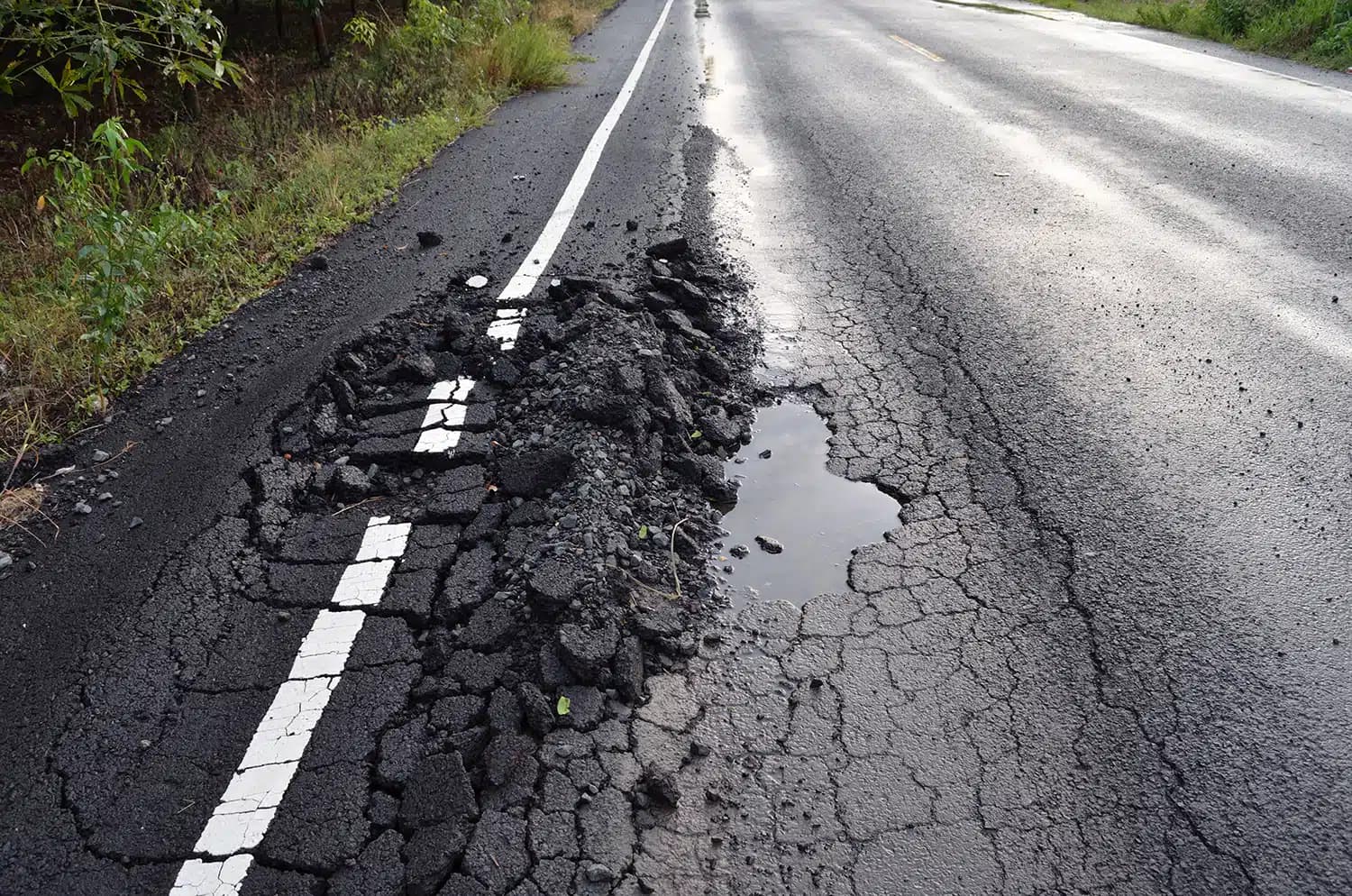
Asphalt rutting is a pavement distress that shows up as long depressions in the wheel paths. The grooves form when the asphalt layers, or the soil and base beneath them, permanently deform under repeated traffic. Rutting is easiest to see after rain, when water collects in the depressions. Left alone, it hurts ride quality, raises hydroplaning risk, and speeds up structural failure. The good news: a solid foundation, a suitable mix, good compaction, and good drainage go a long way toward preventing it. When ruts do appear, the first step is finding out which layer is deforming.
Key Takeaways
- Rutting speeds up under heavy loads and high pavement temperatures.
- A strong, well-drained subgrade and an adequate base are the first line of defense.
- Rut-resistant mixes, the right binder grade, and performance-tested mix designs help, especially on heavy-traffic pavements.
- Compaction quality and drainage make or break performance.
- Inspect every spring and act early; shallow ruts are far cheaper to fix than structural failure.
- A rut's appearance alone can't tell you which layer is responsible; investigation should identify the mechanism before choosing a repair.
What Causes Asphalt Rutting?
Traffic Loads and High Temperatures
Rutting is a load-related distress. Repeated wheel loads compact asphalt or push it sideways, and the effect accelerates on hot days when the binder softens. Heavy trucks, dumpsters, and equipment trailers make it worse, especially when they park or turn in the same spot in summer.
Subgrade Stability
The subgrade (the supporting soil) must be uniform and well compacted. A weak, poorly compacted, or saturated subgrade lets the pavement flex and settle, creating deep structural ruts that are often accompanied by cracking. Water intrusion and variable soils are common triggers, which is why the foundation material below the asphalt deserves as much attention as the surface.
Subbase Thickness & Load Distribution
The aggregate base spreads wheel loads out over the subgrade. If the base is too thin or poorly compacted for the loads and soils, the pavement can rut. As a rough planning example (thicknesses are after compaction):
- Residential driveways: about 2½–3 in of compacted asphalt over a compacted stone base, commonly 4–6 in or more depending on soils.
- Commercial lots: thicker asphalt and base, sized for the traffic expected.
- Truck routes, loading areas, and dumpster pads: heavier sections still, ideally from a pavement design rather than a rule of thumb.
These are examples, not a Connecticut requirement or a complete frost-protection design. The right materials, excavation, and compacted thickness of each layer depend on the soils, drainage, and loads found at the site.
Asphalt Mix Design
Unstable mixes, such as those with excess binder, poor gradation, or rounded aggregate, are more prone to rutting. Superpave mix design, stone-matrix asphalt (SMA), and performance-graded (PG) binders improve rut resistance when backed by good quality control. Stone-on-stone contact in a coarse aggregate skeleton is a defining feature of gap-graded mixes such as SMA; mixes designed by the Superpave method vary in gradation, so not every Superpave mix relies on it. TxDOT's guide to hot-mix asphalt mixtures describes the dense-graded, open-graded, and gap-graded categories. Laboratory tests such as the Hamburg wheel-tracking test and the IDEAL-RT rutting test can be used to check how a mix will hold up, where the project or agency specification calls for them.
Polymer-Modified Asphalt & Additives
Polymers such as SBS, crumb rubber, and other modifiers stiffen the binder at high temperatures and make it more elastic, improving rut resistance. They are most common on highways and heavy-duty pavements.
Current Practice: Balanced Mix Design (BMD) & Recycled Materials
Balanced Mix Design (BMD) uses performance tests to check a mix for rutting and cracking resistance before it is approved, rather than relying only on volumetric properties. The Federal Highway Administration has supported state highway agencies as they move toward BMD, and adoption varies from state to state. It's an engineering approach used mainly on agency and larger projects; a typical local driveway mix isn't necessarily designed or tested this way, so ask for the project or supplier specification before assuming a particular test applies.
Recycled materials, mainly reclaimed asphalt pavement (RAP), are routine in many mixes (see recycling asphalt). RAP stiffens a mix, which helps against rutting but can hurt cracking resistance if not balanced; recycled plastics are still being studied.
For homeowners, the mix comes from a local asphalt plant, so the levers you control are the base, the drainage, and the paving crew.
Compaction & Densification
If asphalt isn't compacted enough during paving, traffic finishes the job, and that shows up as ruts. Proper asphalt compaction means reaching target density at the right mat temperature with a consistent rolling pattern.
Drainage & Moisture
Water is the enemy of pavement. Proper cross-slope, working catch basins and gutters, and subsurface drains where needed keep the base and subgrade dry. Saturated layers lose strength and rut quickly, so drainage and grading problems should be fixed before any repaving.
Environmental Factors
Heat, freeze–thaw cycles, and seasonal swings all affect rutting, but through two different mechanisms. In hot weather, the asphalt itself softens and can deform under heavy or slow-moving loads; that's rutting within the asphalt layers. In spring, thawing ground can leave the base and subgrade wet and weak, so the pavement loses support from below; that's structural rutting, and in Connecticut spring is the riskiest time for it. Water that freezes under the pavement also causes frost heave, which often shows up alongside rutting on poorly drained pavements.
Effects on Safety & Pavement Performance
- Safety: Water-filled ruts increase hydroplaning risk and pull vehicles into the wheel path; in winter they can hold ice.
- Serviceability: Ruts degrade ride quality and lead to secondary cracking and potholes.
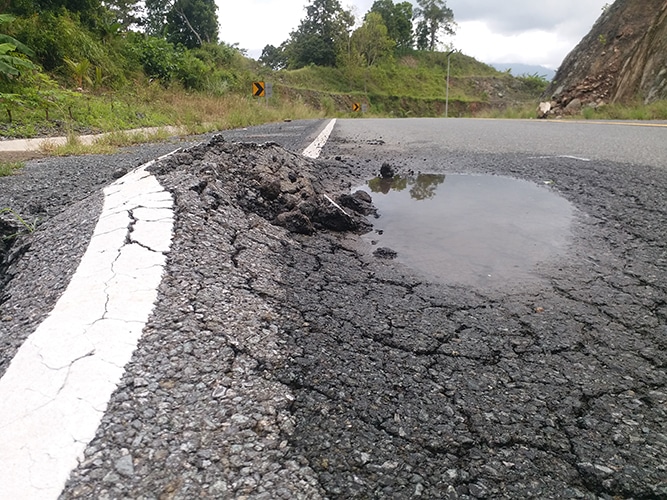
- Drainage: Depressed wheel paths trap water, which worsens moisture damage below.
Preventing Asphalt Rutting
Site Preparation & Subgrade Treatment
- Check the soil: Identify soft, wet, or organic soils. Depending on what's found, the design may call for undercutting and replacing them, or for stabilization with geotextile or geogrid. These are design choices for specific conditions, not universal cures.
- Uniform compaction: Compact the subgrade evenly and correct soft spots before the base goes in.
- Adequate base thickness: Size the aggregate base for the traffic, soil, and drainage conditions, and compact each lift.
Material Selection
- Appropriate binders: PG binder grades selected for the climate; polymer-modified binders for heavy loads.
- Rut-resistant mixes: Superpave mixes with angular aggregate, or SMA, which relies on stone-on-stone contact in its aggregate skeleton.
- Performance testing: On larger projects where the specification requires it, mixes verified with lab rutting and cracking tests, including any recycled content.
Construction Practices
- Compaction: Reach density targets with the right rollers at the right temperatures.
- Lift thickness & temperature: Place uniform lifts and manage haul times and paving temperatures. Lift-thickness rules of thumb are tied to the mix's aggregate size; the governing specification sets the actual requirement.
- Joints & smoothness: Build tight, well-compacted joints and keep thickness uniform.
Maintenance & Repair
- Sealcoating & crack sealing: Help limit water and oxygen getting into the pavement. These are surface treatments; they don't add structural strength or correct existing ruts.
- Drainage upkeep: Keep inlets, gutters, and underdrains clear and preserve cross-slope.
- Timely intervention: Mill and overlay before ruts deepen; rebuild where structural rutting is severe.
What We Look For on Connecticut Driveways and Lots
When we inspect a rutted pavement, the first question is whether the ruts are only in the asphalt or come from the layers below. Rutting can reflect permanent deformation within the asphalt, the aggregate layers, or the subgrade, and appearance alone can't settle which. Surface ruts with no cracking alongside can suggest a mix or compaction issue, which may be correctable by asphalt milling and a new surface course. Wide, deep ruts with cracking along the edges, especially where water sits or trucks turn, can point to weak support in the base or subgrade. Investigation, such as checking the layers and drainage, should identify the mechanism before selecting mix changes, localized repair, or reconstruction.
Where investigation confirms a structural failure, patching the surface only buys time. The lasting fix is to rebuild the base, either by excavating and replacing it or, on larger areas, through full-depth reclamation. Select the repair after identifying the affected layer and the cause; reclamation may also need separate drainage or subgrade improvements where those contributed.
Frequently Asked Questions
What is asphalt rutting?
Rutting is a set of long depressions in the wheel paths caused by permanent deformation of the asphalt layers, the supporting base and soil, or both, under repeated traffic.
Do recycled plastics or rubber help?
Rubber and some recycled materials can stiffen a mix and improve rut resistance, but results vary and research on recycled plastics is still ongoing. Performance testing is the way to confirm that a mix still resists cracking and lasts.
Can rutting be fixed once it starts?
Yes. Shallow ruts can sometimes be corrected with a leveling course and an overlay; see when you can pave over old asphalt. Moderate ruts are typically milled and overlaid. Severe rutting that comes from the base or subgrade needs the support rebuilt, through reconstruction or full-depth reclamation. If you're not sure which you're dealing with, contact us to have it looked at and get a free estimate.