
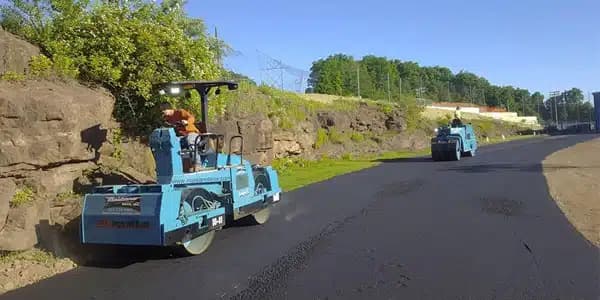
Compaction is the step that turns a fresh layer of hot asphalt into a dense, durable pavement. The goal is the specified density for the mix, not the removal of every air void: a properly designed mix keeps a controlled amount of air void structure. If the mat isn't rolled to that density while it's still workable, too much air stays behind. Those extra voids let in water and oxygen, so the surface can age faster, ravel, and rut under traffic. Whether the job is a new driveway or a commercial parking lot, these four practices make the biggest difference.
1. Adequate Temperature Control
Hot mix asphalt can only be compacted while it is hot enough to move. Industry references such as Pavement Interactive give roughly 275°F down to about 175°F mat temperature as an illustrative compaction window for a conventional mix. That is not a universal specification: the right range depends on the binder, the mix design, the lift thickness, the weather, and whether a warm-mix process is used. Use the mix supplier's and project's temperature and density requirements. Once the mat has cooled past its workable range, extra rolling does little except risk cracking the surface.
The temperature at which the mix leaves the plant doesn't by itself tell you whether it can be compacted; what matters is the condition of the mix as it is delivered and placed. Plan transport, placement, and rolling so the material can be compacted within the appropriate working window: short hauls, tarped loads, and rollers right behind the paver. Thin lifts, cool ground, and wind all shorten the window. That's why we schedule work inside Connecticut's paving season (roughly April through November) and watch late-fall forecasts closely. Warm mix asphalt (WMA) technologies, which can lower production and compaction temperatures, can change the working window and cut fuel use at the plant.
2. Proper Rolling Technique
Compaction is usually done in three stages: breakdown rolling right behind the paver, where most of the density is gained; intermediate rolling; and finish rolling to remove roller marks. Each asphalt lift is compacted this way before the next one is placed, as our outline of the asphalt paving process explains. Crews use static steel-wheel rollers, vibratory steel-wheel rollers, and on larger jobs pneumatic-tire rollers.
The rolling pattern matters as much as the equipment. Good crews compact joints and unsupported edges carefully, work from the low side of the pavement toward the high side, overlap each pass, and use the same pattern across the whole area so density stays uniform. Rollers should keep moving: stopping or turning sharply on a hot mat leaves dents and shoves.
Vibratory rollers are very effective in breakdown rolling. Vibration is generally switched off when the roller stops or reverses and once the mat has cooled, because it can crack the surface instead of densifying it. Crews select the rolling mode and amplitude for the mix, lift thickness, temperature, and the roller manufacturer's instructions, and that includes whether to vibrate on a thin lift.
3. Proper Moisture Content
Moisture matters most in the layers below the asphalt. The subgrade soil and stone base are compacted at the right moisture content so they lock up tight, which is why the foundation material below the asphalt gets so much attention before any paving starts. Asphalt should never go down on a base that is saturated, muddy, or frozen.
When the asphalt is placed, the only water the crew adds should be the drum-wetting spray needed to keep hot mix from sticking to the steel drums. That is separate from the controlled water some warm-mix processes use at the plant. Too much water on the mat cools it and shortens the compaction window. Rain on a fresh mat causes the same problem, so paving is usually postponed in wet weather, a call made for each site and project.
4. Compaction Density Testing
Density testing confirms that rolling reached the specified density. On specified commercial and public work, crews often take quick readings during rolling with nuclear or non-nuclear (electromagnetic) density gauges, and the work may be checked against cores cut from the finished pavement and tested in a lab, as the project specification requires.
Formal density testing is less common on a residential driveway, and no single testing method or frequency applies to every home project, so the result depends mostly on an experienced crew, the right equipment, and a consistent rolling pattern. If you're worried about a recent job, our article on the signs your asphalt driveway may have a compaction or construction problem covers what to look for, including early raveling and rutting in the wheel paths, and why those signs call for an inspection rather than a quick diagnosis.
Conclusion
Good compaction comes down to working within the mix's temperature window, a disciplined rolling pattern on every lift, a compacted and drained base, and checking the result against the specified density. If you're planning a paving project and want to talk through how we'd build it, contact Maisano Brothers Inc. to request a free estimate.