
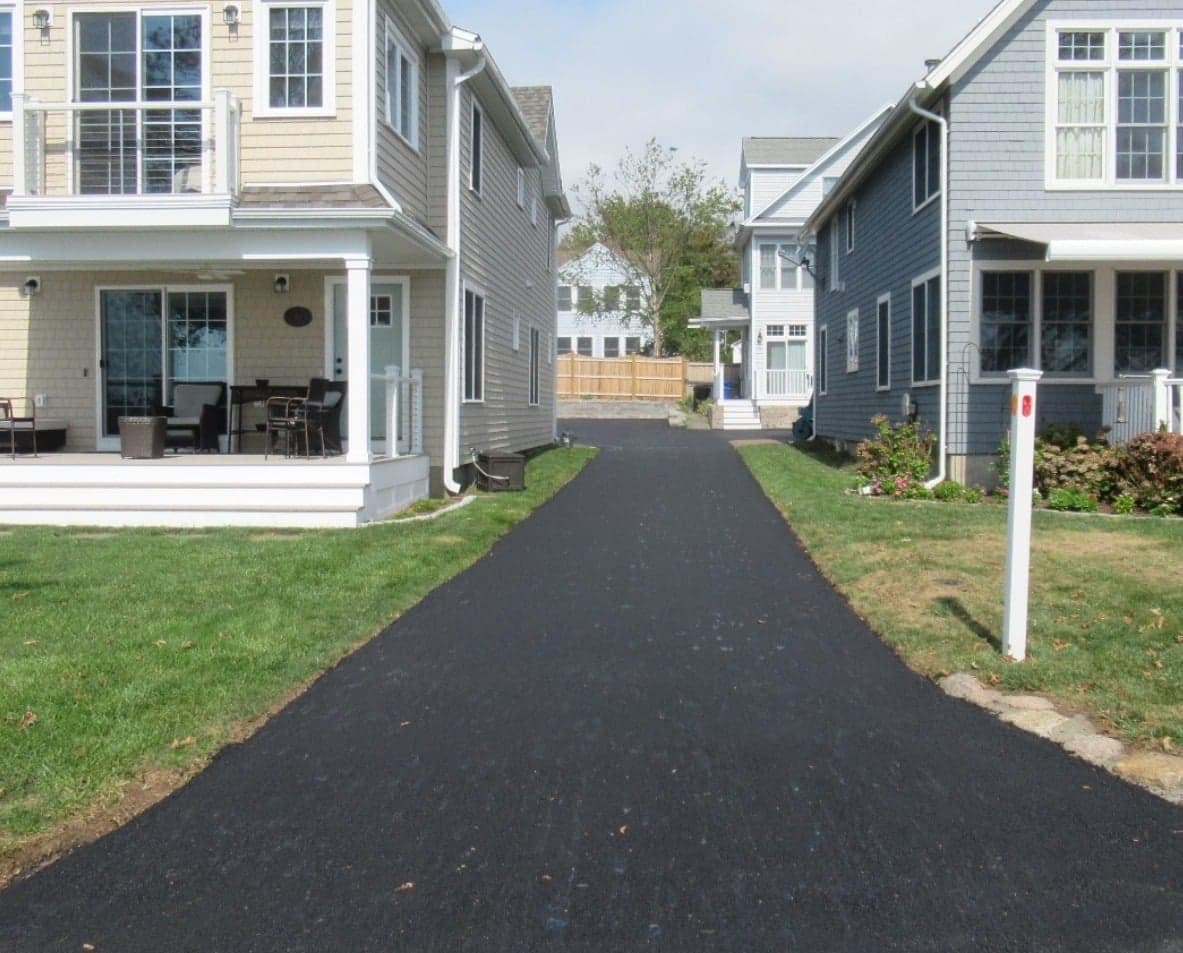
Short answer: many well-built, well-maintained asphalt driveways last roughly 15 to 30 years; that's a planning range that depends on construction, drainage, traffic and maintenance, not a guarantee. In Connecticut, one built on a proper base, with good drainage and regular maintenance, has the best chance of reaching the upper end of that range; a driveway with a thin base, poor drainage, or years of neglect can fail far sooner. Construction is set when the driveway is built, but drainage upkeep and timely maintenance are largely in your control.
Key Takeaways
- Keep it clean: remove leaves, debris, and spills that hold moisture or soften the asphalt.
- Repair early: fill cracks before winter so water can't get in and freeze.
- Reseal on a plan: base the timing on the pavement's condition and the sealer used, not on color alone.
- Manage drainage: water should run off and away from the driveway, never pool on it or along its edges.
- Get professional help for sealcoating, resurfacing, and anything structural.
Understanding the Lifespan of Asphalt
The 15 to 30 year range is wide because so much depends on what's underneath. It's a conditional planning range, not a measured Connecticut average or a warranty, so judge an existing driveway by its condition rather than its age alone. A driveway built on a properly graded and compacted stone base, paved to the right thickness, and pitched to shed water will usually outlast one laid over a thin or soft base no matter how well the surface is cared for. Climate and use matter too: Connecticut's freeze–thaw cycles and road salt are hard on pavement, and heavy vehicles wear a driveway faster than a couple of cars. Our guide on how long an asphalt driveway lasts in Connecticut goes into the details.
Key Maintenance Practices
Regular Cleaning
Sweep or blow off leaves, dirt, and debris, especially in fall, because wet leaves hold moisture against the surface and stain it. Clean up oil and fuel drips promptly, since petroleum products can soften the asphalt binder, and clean up any other automotive fluid spill promptly following the product's spill-cleanup guidance. An occasional rinse with a hose is all the washing most driveways need.
Prompt Repair of Damage
Small cracks become big problems when water gets in and freezes, which happens many times each Connecticut winter. Fill cracks in late summer or fall, before the cold arrives, and deal with soft spots and potholes before they spread. Professional driveway repair makes sense when cracks are wide, connected in a pattern, or the surface is sinking.
Sealcoating
Sealcoating helps protect the asphalt surface from UV rays and water and slows surface oxidation. It is a surface treatment; it doesn't restore structural strength or fix structural cracking. We generally recommend resealing a driveway every two to three years, depending on its condition and the sealer used. For a new driveway, our usual practice is to wait at least 90 days after paving. Reaching that minimum doesn't by itself mean the driveway needs sealing; the pavement's condition and the sealer manufacturer's instructions decide. More often isn't better: too many coats can build up and peel. See our sealcoating service for how we do it.
Drainage Maintenance
Water is one of the biggest threats to any driveway. Keep gutters and downspouts directed away from the pavement, keep the edges clear so water can run off, and watch for spots where puddles form after rain. Where standing water reaches and weakens susceptible base or subgrade material, it can lead to sinking, cracking, and potholes.

The Impact of Weather
Connecticut weather is tough on asphalt. Summer heat softens the surface so it scuffs and dents more easily, and over time sun, heat, and oxygen age and stiffen the binder through oxidation and other weathering processes. Exposure, mixture properties, construction, loading, and maintenance affect how quickly distress develops. In winter, water in cracks freezes and expands, again and again, and in some soils the ground itself can lift; see our article on frost heave. Road salt and other deicers also take a toll, so use them sparingly, shovel or plow before ice bonds, and fix minor issues before winter.
Professional Inspection and Services
A driveway's service life depends on its construction and conditions. Inspect changes in drainage, movement, cracking, and material loss so maintenance or repairs can be matched to the cause. Having a professional look at your driveway every few years can catch problems that aren't obvious, such as weak support starting under a section or drainage that's slowly changed. When the surface is worn but the base is still sound, resurfacing with a new asphalt overlay can add years of service at a lower cost than full replacement; how many depends on the existing pavement, the repairs made first, traffic and drainage.
DIY vs. Professional Help
Homeowners can handle cleaning and small crack filling with store-bought products used according to their instructions. Packaged patch products vary: some are meant only as temporary fixes, while some specialty products are sold for permanent repairs when their substrate, compaction, temperature, and sealing instructions are followed. No patch product fixes underlying movement or drainage problems. Potholes that keep returning, sinking or uneven areas, and widespread or connected cracking need investigation by a professional, and whole-driveway sealcoating is also best left to a pro. Our pothole repair and patching guide explains what a proper repair involves.
A Professional Tip
When you hire a contractor, check reviews, ask for proof of insurance, and confirm their Connecticut Home Improvement Contractor registration. In Connecticut, contractors doing covered residential home-improvement work must be registered with the Department of Consumer Protection, and you can verify a registration at elicense.ct.gov. Registration isn't a state guarantee of workmanship, so check references too. Our list of questions to ask a paving contractor is a good starting point.
Summary
A driveway's lifespan is set by how it was built and how it's maintained. Keep it clean, fill cracks before winter, reseal on a schedule that fits the pavement and the sealer, and keep water moving off it, and your asphalt has a good chance of lasting many years.
Is Your Driveway Cracked, Crumbling, or Faded?
If you're not sure what your driveway needs, we're happy to take a look. Maisano Brothers Inc. has been paving Connecticut since 1967. Contact us for a free estimate.