Key Takeaways
- Potholes usually involve water infiltration, freeze-thaw cycles, traffic, and weakness in the layers beneath the asphalt.
- Cold patch is not one product: conventional cold patch is generally a temporary repair, while some proprietary cold-applied products are sold for permanent repairs when their instructions are followed.
- Choosing a product labeled for the defect and following its preparation and compaction instructions is critical to preventing early failure.
- Recurring potholes call for an inspection, because they often point to base, drainage, or design problems that no patch fixes.
- Preventive maintenance like crack sealing, drainage upkeep, and sealcoating can slow surface damage and reduce water entry.
A pothole can become visible quickly, even when the deterioration behind it has been developing for some time. What starts as a small crack or weak spot in your asphalt can develop into a larger problem if left untreated. For homeowners, potholes in a driveway are more than just an eyesore. They can create safety hazards, damage vehicles, and lead to larger repairs if ignored.
If you’re dealing with surface damage, addressing driveway repair issues early can save you time and money. This guide explains what causes potholes, how to choose and use a repair method, and when it’s time to call in a professional.
What Causes Potholes in Asphalt Driveways?
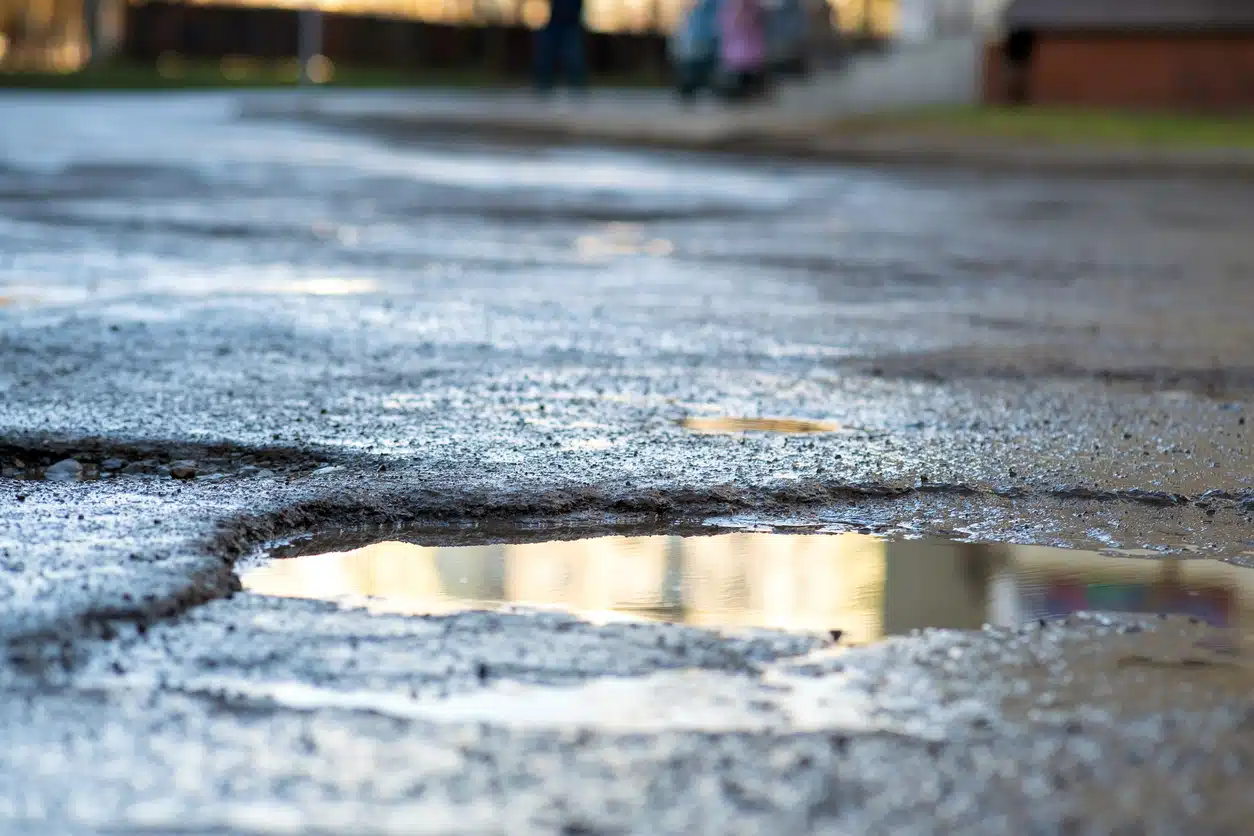
Potholes are typically the result of water infiltration combined with weakness beneath the asphalt surface. While they may look like surface-level damage, the real problem often starts below.
Water Infiltration
Water enters through small cracks in the asphalt surface. Once it penetrates the pavement, it can weaken the underlying base layers.
Freeze-Thaw Cycles
In climates like Connecticut, water freezes and expands during colder months. This expansion creates pressure within the pavement, leading to cracks and voids beneath the surface.
Traffic Stress
As vehicles drive over weakened areas, the asphalt begins to break apart. Over time, this repeated stress causes the surface to collapse.
Base Failure
When the subgrade or base layer becomes unstable, the asphalt above it can no longer support weight. This is a common reason potholes continue to return after being patched.
Why Prompt Pothole Repair Matters
Delaying pothole repairs can lead to more serious and expensive issues. What may start as a small patch job can grow into a larger repair if ignored.
Improved Safety
Potholes create uneven surfaces that increase the risk of trips and falls, especially for children and older adults.
Vehicle Protection
Driving over potholes can damage tires, wheels, suspension systems, and vehicle alignment.
Preventing Further Damage
Once water enters the pavement, deterioration can accelerate. Addressing potholes early helps keep the damage from spreading.
Lower Long-Term Costs
Understanding the cost of pothole repair helps homeowners see why early maintenance is usually more affordable than major reconstruction.
Types of Pothole Repairs
Choosing the right repair method depends on the size, depth, and cause of the pothole, and on the traffic the repair has to carry.
Cold Patch Asphalt
Cold patch isn’t a single product. Conventional bagged cold patch can be applied without specialized equipment and is generally a temporary repair, which makes it useful for stabilizing a hole quickly, especially in colder weather. Some proprietary cold-applied products, such as Aquaphalt and EZ Street, are sold by their manufacturers as permanent repairs, including in wet or cold conditions. Those are manufacturer claims, not a guarantee that every repair will last, and results depend on following each product’s instructions for preparation, lift depth, compaction, temperature, and storage. No patch product fixes base movement or a drainage problem underneath. Our article on repairing an asphalt driveway in winter covers cold-weather options.
Hot Mix Asphalt
Hot mix asphalt is the conventional material for durable patches. It requires proper placement and compaction with the right equipment, which is why hot-mix patching is usually professional work. See the difference between hot mix and cold mix asphalt for how the materials compare.
Full-Depth Patching
This method involves removing both the damaged asphalt and the compromised base beneath it. The area is rebuilt from the ground up, which is often the right repair when an inspection finds the base has failed under a recurring pothole.
Step-by-Step Guide to Repairing a Pothole
The steps below describe a small homeowner repair with a packaged patch product. Saw-cutting, handling hot material, and repairs that require excavation or compaction equipment are professional jobs.
1. Assess the Damage
Determine the size and depth of the pothole. Look for loose edges, cracks, soft areas, and signs of base failure. A hole that keeps coming back, or sits in a sinking area, needs a diagnosis before more material goes in.
2. Select the Right Product
Select a repair product labeled for the defect and expected traffic. Read its instructions before you start; preparation, water, temperature, and depth requirements differ from product to product.
3. Prepare the Area
Remove loose asphalt, debris, and dirt. Follow the product’s instructions for cleaning and for moisture: some materials need a dry hole, while others are formulated to be placed in water or require it.
4. Apply Patch Material
Fill the pothole in the lift depths the product specifies, rather than a single generic thickness, and overfill only as much as the instructions call for.
5. Compact the Material
Compact each lift with the tool and method the product’s instructions require, such as a hand tamper or plate compactor. Proper compaction is what gives the patch a chance to bond and resist settling.
6. Seal Only When Permitted
Seal over the patch only when both the patch and sealer manufacturers permit it, and after any waiting time they specify. Sealcoat is a surface treatment; it is not a required final step for every patch, and it doesn’t make a weak repair stronger.
When a Patch Isn’t Enough
Not all potholes can be fixed with a simple patch. In some cases, the issue runs deeper than the surface.
- Potholes that repeatedly return
- Soft or sinking areas in the driveway
- Multiple damaged sections
- Poor drainage or standing water
In these situations, it’s best to have the driveway evaluated. Depending on what the inspection finds, the answer may be a localized full-depth repair, drainage work, resurfacing, or, if the structure has failed broadly, reconstruction.
Preventing Future Potholes
Maintaining your residential driveway paving helps reduce the chance of potholes forming in the first place.
Sealcoating
Resealing every two to three years is typical guidance, but whether a driveway needs it depends on its condition and the sealer used, so follow the product label. Sealcoat can help protect the surface from water, UV rays, and some chemicals; it does not add structural strength, make the pavement fuel-proof, or repair structural damage.
Crack Filling
Addressing suitable cracks early helps reduce how much water reaches the base layers.
Proper Drainage
Ensuring water flows away from your driveway reduces the risk of subbase erosion.
Parking Habits
Varying where you park can reduce concentrated wear, especially in hot weather, but it does not correct a pavement that was too thin or poorly supported for its loads. Recurring settlement under parked vehicles needs a diagnosis.
DIY vs Professional Pothole Repair
When DIY Makes Sense
Small potholes with stable bases can be suitable for a homeowner repair with a packaged product labeled for the defect. A conventional cold patch is generally a temporary repair; a specialty product sold for permanent repair may last longer when its instructions are followed, but it still can’t fix a failing base.
When to Hire a Professional
Larger potholes, recurring damage, sinking areas, drainage problems, or signs of base failure call for an assessment and, often, saw-cutting, excavation, hot material, and compaction equipment.
Conclusion
Pothole repair is an essential part of maintaining a safe, durable driveway. Addressing issues early helps limit damage and repair costs. Whether you handle a minor repair yourself or bring in a professional for more complex work, choosing the right material for the defect matters as much as acting quickly.
If potholes keep coming back or the damage runs deeper than the surface, it may be time for a professional assessment. Request a free estimate from Maisano Brothers Inc., paving Connecticut since 1967.
Frequently Asked Questions
What is the best method for pothole repair?
It depends on the cause. Hot mix asphalt is the conventional material for a durable patch, full-depth patching is the usual approach when the base has failed, and some specialty cold-applied products are designed for permanent repairs under the conditions their manufacturers specify.
How long does pothole repair last?
It depends on the product, the installation, and what is happening underneath. Conventional cold patch is generally temporary, while a properly installed hot-mix repair or a specialty permanent patch product used according to its instructions is intended to last much longer. No patch lasts if the base or drainage problem beneath it isn’t addressed.
Can I repair a pothole myself?
Yes, small potholes on a stable base can be suitable for a packaged product labeled for the repair. Larger, recurring, or sinking areas need a professional assessment.
Why do potholes keep coming back?
Recurring potholes often point to base weakness, poor drainage, or a pavement that is too thin for its loads. An inspection is the way to find out which; see our guide to signs your driveway needs repair vs. replacement.
Does sealcoating fix potholes?
No, sealcoating protects the surface but does not repair structural damage.
When is the best time to repair potholes?
Hot-mix repairs are usually done from spring through fall, when plants are open and conditions suit compaction. In winter, a hazard can be stabilized with a cold-applied product, and some specialty products are designed for permanent repairs in cold or wet conditions according to their manufacturers.
What causes potholes in driveways?
Water infiltration, freeze-thaw cycles, traffic stress, and weak base layers are the primary causes.
How can I prevent potholes from forming?
Regular maintenance, crack sealing, proper drainage, and sealcoating help reduce the risk. If you’d rather not do it yourself, ask us about driveway sealcoating.