
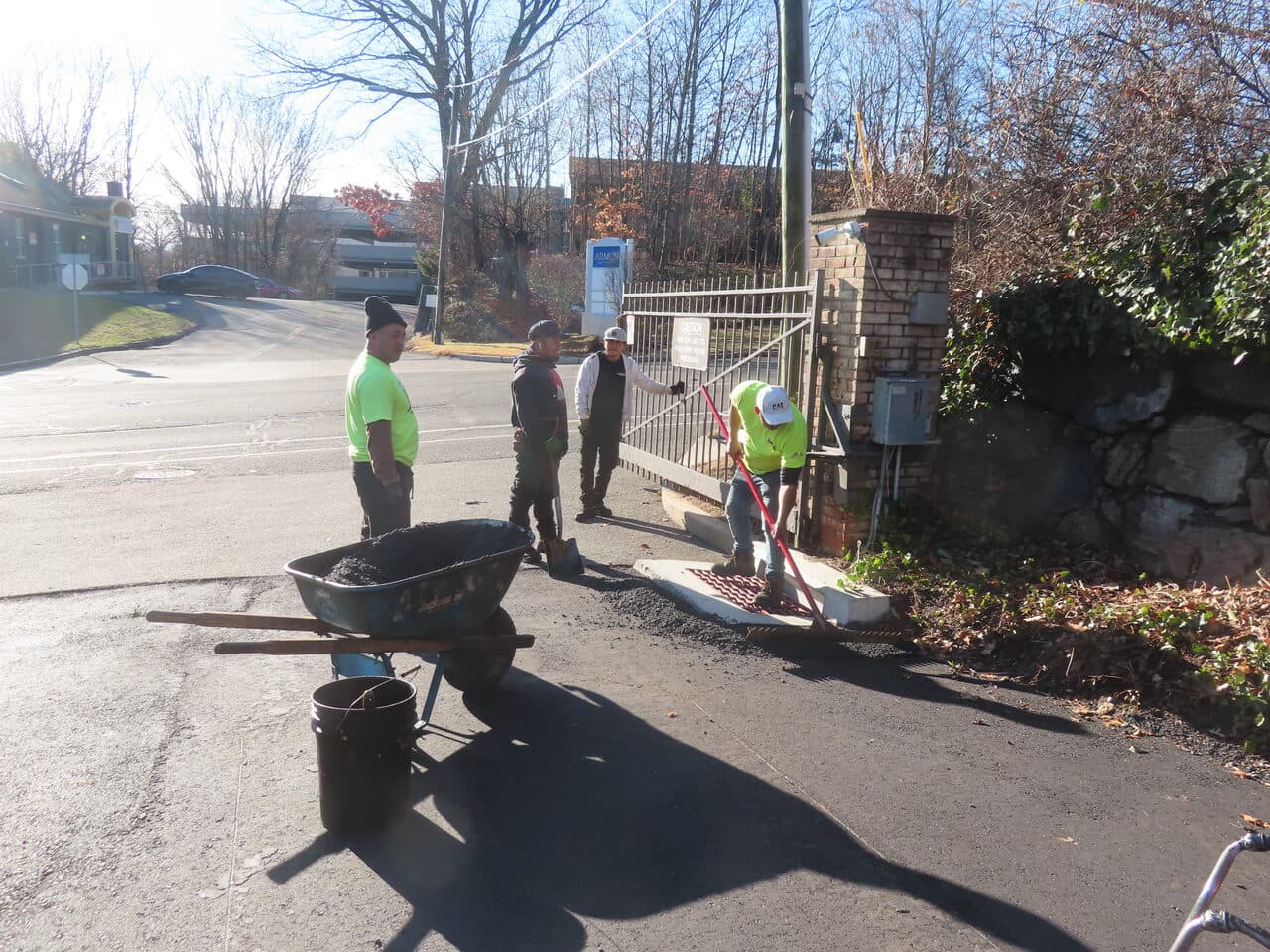
Winter repairs depend on the defect and the materials available. Conventional cold patch is often used for temporary stabilization, while some specialty products are designed for permanent repairs under specified conditions. Conventional hot mix is harder to get and place in winter: in Connecticut, the usual paving season runs roughly April through November, and many plants cut back or close in the cold months. Whatever you use, a recurring failure still needs an assessment of its cause, and larger corrective work is best planned for when site and production conditions are suitable.
Winter Repair Challenges
Winter works against asphalt repair in several ways:
- Ice, slush, and debris get in the way of a good bond. Conventional patch material won't bond well to ice, slush, or a dirty, frozen hole, so it can pop out under the first few tires. Some specialty products are formulated for wet application or even require water, so follow the instructions for the product you're using.
- Hot mix asphalt has limited winter availability. Many hot-mix plants in our region cut back or shut down for the winter, and cold temperatures shorten the time hot mix stays workable for compaction.
- Products differ in how they compact and cure. Conventional cold patch stays workable in low temperatures but generally doesn't perform like compacted hot mix, so it's more likely to settle or ravel. Some proprietary cold-applied products, such as Aquaphalt and EZ Street, are sold by their manufacturers as permanent repairs, including in wet or cold conditions. Those are manufacturer claims, not a guarantee that every repair will last, and results depend on following each product's instructions.
- The base may be the real problem. Many winter potholes start with water in the base freezing and thawing beneath the pavement. No patch product fixes base movement or a drainage problem underneath. See our guide to winter damage on Connecticut driveways for how this happens.
Cold-Weather Repair Solutions
For a pothole or broken edge that needs attention now, here's how to get the most from a cold-applied repair:
- Choose a product labeled for the defect and the conditions. Decide whether you need a conventional temporary patch or a product sold for permanent repair, and check that it's labeled for the temperature, moisture, and traffic involved. Store it the way the instructions say so the material stays workable.
- Prepare the hole the way the product requires. Clear out loose chunks, snow, and debris. Some products need a dry hole; others are designed to go into water or need it to set. Follow the instructions rather than one generic rule.
- Place it in the lifts the instructions specify. Lift depth and how much to overfill vary from product to product.
- Compact it with the method the product calls for. Use the tamper, compactor, or other method in the instructions; compaction requirements are part of what separates a lasting repair from one that settles.
- Watch it and plan the next step. If you used a conventional temporary patch, plan a more permanent repair when conditions allow. Any patch that settles, loosens, or fails again is a sign to have the cause assessed.
Our pothole repair and driveway patching guide covers the step-by-step process in more detail, and the difference between hot mix and cold mix asphalt explains how conventional patches, specialty products, and hot mix compare.
What About Cracks in Winter?
Most crack sealants need a clean, dry crack and temperatures above the minimum on the product label, so crack sealing is usually best left for spring through fall. In winter, the practical goal is to keep water and ice from making cracks worse: clear snow off the driveway promptly, keep downspouts and meltwater draining away from the pavement, and avoid piling snow where it will melt across the driveway and refreeze. Late summer and early fall are a good time to seal cracks before the next winter.
Protecting Your Driveway Until Spring
A few habits limit winter damage while you wait for warmer weather:
- Keep your plow contractor's blade slightly raised and avoid scraping patched areas. Our article on snow removal best practices has more tips.
- Remove snow mechanically first, then use a de-icer suited to the pavement temperature and conditions at its labeled rate. Avoid excess application, manage meltwater, and watch for refreezing.
- Mark large potholes and broken edges so they aren't hit by plows or tires.
- Keep an eye on patches and top them off, following the product's instructions, if they settle.
Larger Repairs in Spring
Once the ground has thawed and drained and hot-mix plants are producing, it's a good time for larger corrective work. In Connecticut that's often around April or May, but it depends on the actual thaw, drainage, plant availability, and site conditions, not the calendar alone. Depending on the damage, that might be cutting out and replacing the failed area with hot mix, fixing the base underneath, sealing cracks, or resurfacing if damage is widespread. Spring is also a good time to look at whether drainage is feeding the problem. If you're not sure whether a patch will do, our guide on signs your driveway needs repair vs. replacement can help.
Making hazards safe promptly keeps a driveway usable through winter, and the right material depends on the defect and conditions. For larger or recurring problems, our driveway repair crews handle patching, base repair, and crack sealing during the paving season. Contact us for a free estimate, and we can get you on the schedule.