
Every paving contractor doing residential work in Connecticut must hold a current Home Improvement Contractor (HIC) registration with the state. Ask for the number — it should be in the format HIC.0517988 or similar — and verify it on the Connecticut DCP website. A contractor that hesitates or cannot produce one is not legitimate.
Most paving failures trace back to decisions made before the asphalt was poured: the wrong base depth, skipped drainage work, a low-bid quote that left out important details. The simplest defense is asking the right questions before you sign. These ten questions separate a real CT paving contractor from a low-bidder fly-by-night.
What You'll Learn
- Which questions reveal whether a quote is complete or hiding gaps
- How to verify license, insurance, and workers comp coverage
- How to compare quotes fairly when bottom-line numbers differ
- What an honest contractor will tell you about your specific job
Short Answer
Ask for the CT HIC license number, certificate of insurance, and references in your town. Ask exactly what base depth and asphalt thickness the quote includes, and what happens if site conditions are different than expected. Ask about drainage. Ask about warranty terms and how long the company has been in business. The contractor's answers tell you whether the quote is real.
1. What is your CT HIC license number?
2. Can you send me a current certificate of insurance?
Ask for a Certificate of Insurance (COI) covering general liability and workers comp. Real contractors send it immediately. A COI listing you as the property owner protects you if a worker gets injured on your site or if equipment damages your property.
3. What base depth does the quote include?
Most premature driveway failures trace back to a thin base. A residential driveway in Connecticut typically needs 4-6 inches of compacted processed stone base, more on poor soils. Get the number in the quote in writing. A quote that doesn't specify base depth is hiding it.
4. What asphalt thickness does the quote include?
Residential driveways typically use 2.5-3 inches of compacted asphalt over the base, often in two courses (binder + surface). Commercial lots use more. Ask for the inch figure in the quote — and whether that's compacted thickness or pre-compaction thickness (compacted is what matters).
5. How does the quote handle drainage?
Most failed driveways have a drainage problem the original installer did not solve. Ask the contractor what they will do about drainage on your specific site — pitch, transitions, any catch basins or trench drains. A contractor who walks the site during or after a rain has earned trust.
6. Can I see two or three completed projects in my town?
Ask for addresses of completed projects within a few miles of you. A contractor with real local presence can give you several. Drive by and look — the work tells you more than any reference call.
7. How long has the company been in business?
This matters less than people think — but a contractor in business for decades has survived multiple economic cycles, kept customers happy long-term, and has equipment and crews that have worked together. A brand-new contractor with great references may also be fine. A long-standing one without references is a problem.
8. What warranty terms apply to my project?
Ask for warranty terms in writing. Reasonable workmanship warranty for residential is typically 1-2 years; commercial varies. A contractor who refuses to put any warranty in writing is a red flag. A contractor who promises a 10-year warranty on residential asphalt is probably overselling.
9. What happens if site conditions are worse than expected?
Sometimes the existing base or soil under a driveway is worse than the contractor could see from the surface. Ask in advance what happens if extra excavation or base work is needed. A change-order policy in writing — with hourly or unit-price terms — protects you from open-ended surprises later.
10. Will you be on my project, or just sales?
Some paving contractors estimate then hand the project to a subcontractor or a different crew. Ask who will be on your driveway. The estimator should be able to tell you who runs the crew and whether they have done similar work locally.
Key Takeaways
- Always verify the HIC license number and request the certificate of insurance.
- Get base depth and asphalt thickness in writing — the most common gaps in low-bid quotes.
- Ask how drainage is being handled — most failures trace back to drainage.
- Request local references and a written warranty.
- Ask what happens if site conditions turn out worse than expected.
Common Questions
Frequently asked questions
How do I verify a CT HIC license number?
Go to the Connecticut Department of Consumer Protection's Verify a License tool and search by the HIC number or company name. The result shows status, registration date, and any actions on file.
What is a fair workmanship warranty for residential paving?
One to two years on workmanship is typical and reasonable. Longer warranties are sometimes offered on commercial work where pavement design and base specs justify them. A "10-year warranty" on residential asphalt is usually a marketing claim, not a real contract term.
Why do paving quotes vary so much for the same driveway?
Quotes vary because contractors specify different base depths, asphalt thicknesses, and drainage work. A 'low' quote that skips inches of base material is not actually a better deal — it ages out twice as fast. Always compare what is included below the surface, not just the bottom-line number.
Should I get more than one quote?
Yes — two or three quotes give you a baseline. But compare them on what is included, not just the price. The contractor who walks the site carefully, asks questions about your goals, and produces a detailed scope is usually the right choice even if not the lowest bid.
Learning Center
Related Reading
How Much Does an Asphalt Driveway Cost?
What an asphalt driveway costs depends on more than square footage. This guide gives our published planning ranges, the scope each one covers, and the factors that move a quote, so you can budget and compare bids fairly.
Read guideSigns Your Driveway Needs Repair vs. Replacement
Every aging asphalt driveway reaches a point where patching is no longer enough. Knowing how to read the signs helps you spend money where it actually pays off, especially after a hard Connecticut winter.
Read guideHow Long Does an Asphalt Driveway Last in Connecticut?
A well-built asphalt driveway in Connecticut should last 20 to 30 years. The wide range is not coincidence — it reflects how much five specific factors move the number: base preparation, drainage, sealcoating cadence, traffic, and climate exposure. This guide explains each one so you can estimate the realistic lifespan of your existing driveway or set yourself up for the full lifespan on a new one.
Read guideGet It Done
Services Related to This Guide
New Asphalt Driveway Installation
A new asphalt driveway from Maisano Brothers Inc. is installed over a properly graded and compacted stone base, then paved with hot-mix asphalt and rolled to a smooth, durable finish. A correctly built residential driveway can last 20 to 30 years when maintained, depending on the base, drainage, loads, and exposure.
Learn moreAsphalt Driveway Repair
Asphalt driveway repair addresses potholes, cracks, and worn areas before they spread. Maisano Brothers Inc. repairs Connecticut driveways with crack filling, patching, and resurfacing, and gives an honest recommendation when full replacement is the better value.
Learn moreWhere We Work
Towns and cities we serve
Browse local pages for the area closest to your project.
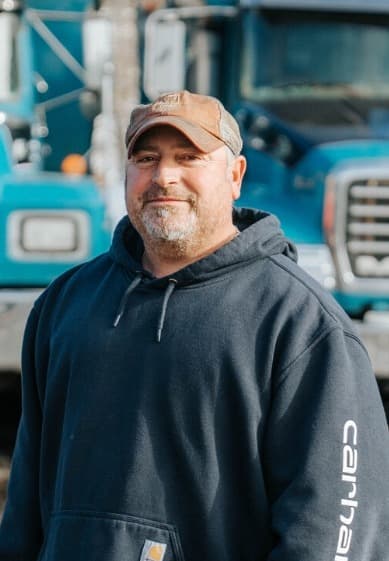
Chris Maisano
CEO, Maisano Brothers Inc. · LinkedIn
Chris Maisano is the dedicated leader of Maisano Brothers Inc., a family-owned company paving Connecticut since 1967. Building on the legacy of his father and uncle, who started out plowing snow and taking on paving jobs with a pickup truck in 1963, Chris has guided the company into a modern era while preserving its reputation for quality and reliability. With decades of hands-on experience in asphalt paving, milling, grading, and reclamation, he is known for delivering lasting results for residential, commercial, and municipal projects. Respected for his expertise and integrity, Chris continues to uphold the Maisano Brothers Inc. tradition of excellence, ensuring every project is completed with the same commitment to craftsmanship and customer care that has defined the company for generations.
We use a combination of industry expertise and AI-assisted tools to create helpful educational content. While we strive for accuracy, some information may be simplified or require updates as industry standards evolve. Our team actively reviews and refines articles to keep them accurate, useful, and up to date. We welcome and value your input if you believe there is inconsistent or inaccurate information provided. Contact us directly with any issues.
Free Estimates
Have a project in mind?
Put this information to work. Request a free estimate and we will help you plan it.