
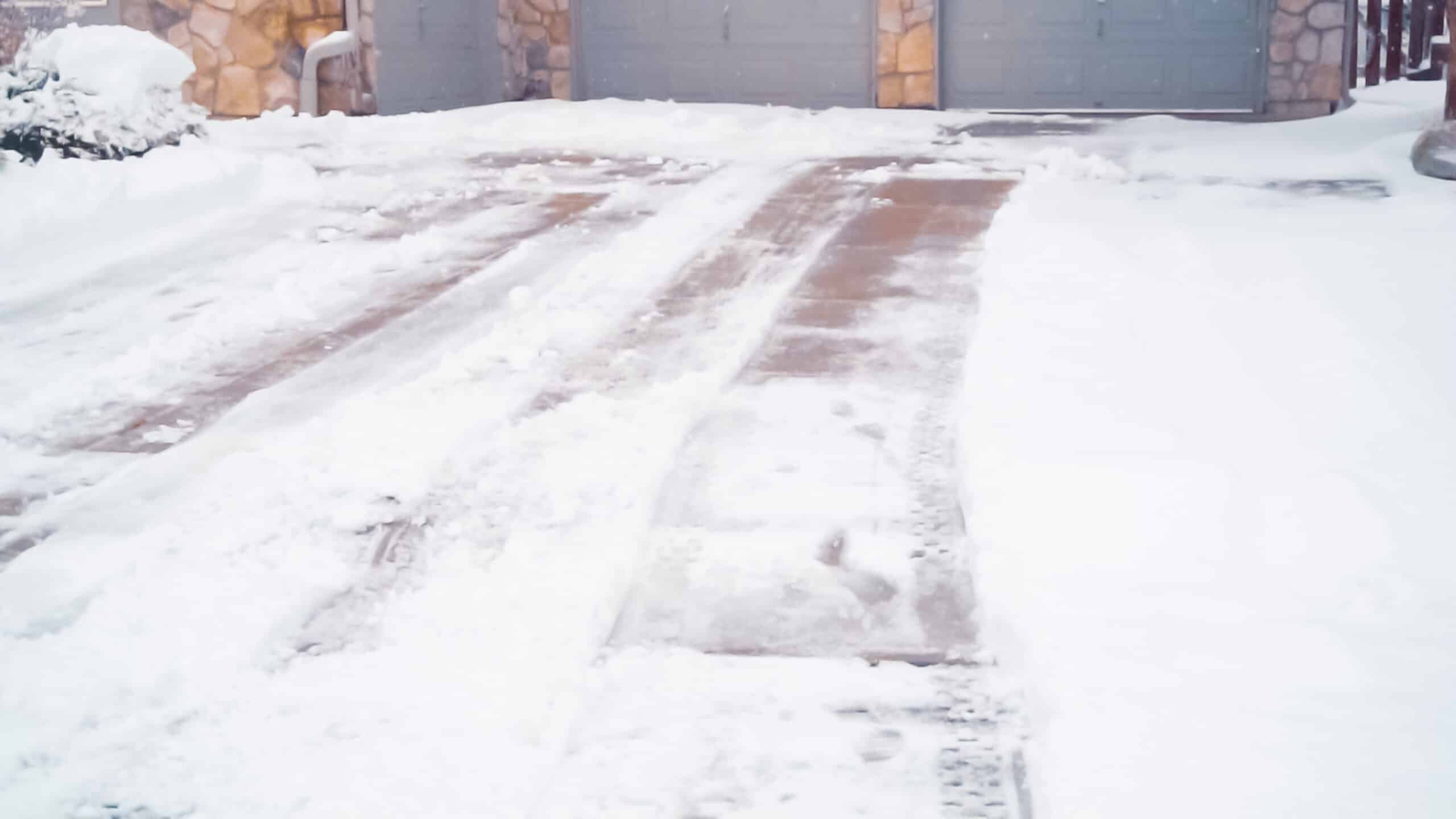
Frost heave is the upward push on pavement that happens when water in the soil underneath freezes. In Connecticut, where winters bring repeated freeze–thaw cycles, it's one of the main reasons driveways crack, bump up, and break down. Frost protection depends on the soil, the water supply, and the pavement and drainage design. A suitable base and water-management measures can reduce the risk, but no generic driveway detail guarantees that movement will never occur. Here's what causes frost heave, what it does to asphalt, and how to tell whether your driveway is vulnerable.
What Is Frost Heave?
When the ground freezes, water in the soil turns to ice. In frost-susceptible soils, frozen layers keep drawing more water up from below, forming growing layers of ice called ice lenses that push the ground, and the pavement on top of it, upward. When it thaws, that ice melts from the top down, leaving the soil saturated and soft before it has a chance to drain. The pavement drops back unevenly, and traffic on the weakened base does further damage. Repeated through a winter, this leads to cracking, bumps, and potholes. Our guide to winter damage on Connecticut driveways shows what this looks like in practice.
Causes of Frost Heave in Asphalt
Soil Composition
How susceptible a soil is to frost depends on its gradation and mineral characteristics, how much water is available, and how hard and long it freezes. Silty soils can be particularly susceptible because they hold water and wick it upward toward the freezing zone. Clays vary, so "clay" alone doesn't define the risk. Clean, coarse sand and gravel are generally much less prone to heaving. The FHWA's guidance on frost and drainage in pavement design covers these factors in detail. Many Connecticut properties sit on glacial till or silty soils, so the material under your driveway matters.
Water Accumulation
Without water, there's no heave. Poor grading, downspouts emptying onto the driveway, low spots, and blocked culverts all let water collect under the pavement where it can freeze.
Freeze–Thaw Cycles
Connecticut winters often swing above and below freezing many times, and winter moisture and temperature changes can contribute to pavement and base distress. Deicers lower the freezing point of water; how well they work and whether meltwater refreezes depend on pavement temperature, product concentration, dilution, and drainage, as the Minnesota Pollution Control Agency explains.
Insufficient Base Layer
A thin or poorly compacted base sits right on frost-susceptible soil and gives the pavement little support. A properly designed base of compacted aggregate spreads loads and separates the asphalt from the soil below. Whether it also drains water depends on its gradation and the drainage around it: dense-graded processed stone is not automatically a free-draining layer. That's why the foundation material below a new driveway matters as much as the asphalt itself.
Effects of Frost Heave on Asphalt Surfaces
Frost heave can lead to several problems:
- Cracking: Uneven lifting and settling open cracks that let in more water, which makes the next winter worse.
- Uneven surfaces: Humps and dips form, creating tripping hazards and spots where water ponds.
- Buckling and breakup: In severe cases, sections lift, break apart, and turn into potholes, often at the edges and the apron.
Reducing Frost Heave Risk in Asphalt
You can't stop the ground from freezing, but you can reduce how much water is there to freeze and how much the pavement feels it:
Proper Soil Preparation
Before paving, remove topsoil, organic material, and soft spots, and compact the subgrade. Unsuitable soil may need to be excavated and replaced.
Quality Base Layer
A base designed for the site's soil, water, and loads is a major part of frost protection, and it's a standard part of a properly done new driveway installation. What matters is what the base and drainage system actually accomplish, measured as compacted thickness by layer and the drainage behind it, rather than a single generic stone depth. Poor soils may call for a thicker base, stabilization, or a geotextile fabric; those are design choices for a particular site, not universal cures.
Improved Drainage Systems
Grade the driveway so water runs off it, direct downspouts away, and add swales, culverts, or trench drains where needed. Professional drainage and grading addresses the cause instead of just the symptoms.
Regular Maintenance
Seal suitable cracks before winter so less water reaches the base, and keep edges and drains clear. Crack sealing is maintenance, not a complete frost-heave prevention system. Prompt driveway repair keeps small problems from spreading.
Use of Frost-Resistant Materials
In frost-prone spots, base material selected and graded for drainage, and a well-compacted asphalt mix suited to the climate, help the pavement ride through freeze–thaw cycles.
Is Your Driveway Protected?
Signs that your driveway is vulnerable include water ponding on or beside it, cracks that reappear in the same places every spring, bumps that rise in winter and settle in spring, and a soft or spongy feel during the spring thaw. If you see heaving, any immediate hazard, such as a raised edge or a broken section, should still be marked or made safe and assessed right away. For the longer-term repair decision, wait until the ground has fully thawed and dried, since some movement settles back. If the same areas fail every year, that points to a base, soil, or drainage problem that needs an inspection to pin down, and our guide on repair vs. replacement can help you decide what comes next.
Conclusion
Frost heave is a fact of life in Connecticut, but its impact can be reduced. A base and drainage design suited to your site, plus routine maintenance such as crack sealing, lowers the risk, though no driveway detail can promise that movement will never happen. If you'd like us to take a look at a driveway that's heaving or cracking, contact us for a free estimate.