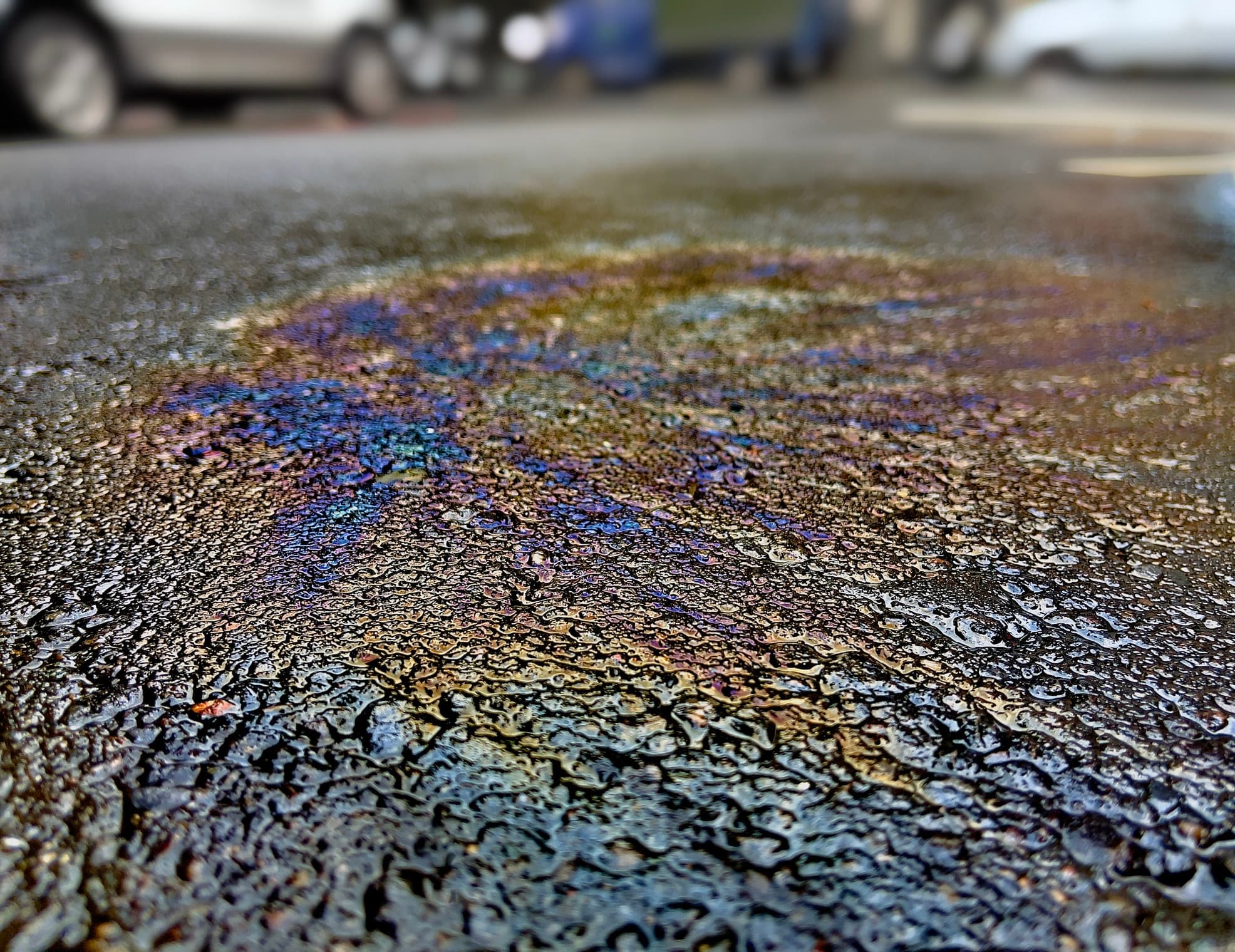
Oil stains on an asphalt driveway are more than a cosmetic problem. Asphalt binder is itself a petroleum product, so petroleum fuels and oils, such as gasoline, diesel, and motor oil, can soften the surface if they sit. Other vehicle fluids don't all behave the same way, but they can still stain and shouldn't be left on the pavement. Fresh spills are the easiest to deal with: absorb the oil right away, then clean what's left. Older, absorbed stains often fade rather than disappear, and whatever you wash off has to be contained, not rinsed into the yard or a storm drain.
Key Takeaways
- Fresh oil is easiest to deal with. Absorb it quickly with plain clay cat litter before it soaks into the asphalt.
- Dish soap or baking soda are worth a try on light, recent surface oil, but they're limited cleaning attempts, not proven fixes for old stains.
- Older, set-in stains usually need a commercial degreaser labeled for asphalt, and may only fade rather than disappear completely.
- Contain contaminated wash water and absorbents for locally approved disposal; keep them out of storm drains, lawns, and gravel.
- A lasting stain can be purely cosmetic. Soft or crumbling asphalt under a stain needs repair, not more cleaning.
Absorbing Fresh Oil with Cat Litter
For a fresh spill, start with cat litter. Plain, non-clumping clay litter is inexpensive and absorbs surface oil well. Spread a thick layer over the stain, grind it in lightly with your shoe, and leave it for several hours or overnight. Then sweep it up, bag it, and ask your town or local disposal authority how it accepts oily waste. The goal is to pull up as much oil as possible before it penetrates deeper into the asphalt. You don't need anything fancy: the cheapest unscented clay litter works fine, and sawdust or a commercial oil absorbent will do the same job.
Using Dish Soap to Break Down Oil
Dish soap cuts grease, which makes it a reasonable first attempt once the bulk of the oil is absorbed. Apply it directly to the stain, add a little warm water, and scrub it into the surface with a stiff-bristled brush. Use as little water as you can, then soak up or collect the dirty water rather than hosing it off the driveway. Results vary: it may lighten a light or newer stain, but don't expect it to remove oil that has soaked in.
Tip: A sound asphalt surface can handle firm scrubbing with a stiff nylon brush. Avoid wire brushes, which can loosen the stone on the surface.
Baking Soda for Mild Stains
Baking soda absorbs a little oil and adds mild abrasion while you scrub. Sprinkle it over the stain so it's fully covered, scrub it in with a brush, and let it sit for about 30 minutes, then sweep up the residue and collect any rinse water. It's a limited household option for small or light stains, and it isn't a reliable way to remove heavy or aged petroleum stains.
Applying Commercial Degreasers for Tough Stains
For stains that don't respond to household methods, commercial degreasers are often the best option. Use a cleaner specifically labeled for asphalt and compatible with any sealer on the driveway; some manufacturers, such as Zep, list the surfaces a degreaser is meant for on the product page and label. Approval for concrete doesn't mean approval for asphalt: some heavy-duty degreasers say on the label not to use them on asphalt, and some contain solvents that can soften the binder. Test a small area, use the prescribed dilution, let it dwell for the recommended time, and scrub with a stiff brush.
Then contain contaminated runoff for locally approved disposal. Block or berm around the area, collect the wash water with absorbent or a wet vacuum, and ask your town or local disposal authority which route accepts it. Check the vacuum's instructions before using it on the liquid, especially if the spill is gasoline or another fuel rather than motor oil. Rinsing a stain away moves the pollutant somewhere else; it doesn't dispose of it. Stormwater programs such as the Alameda County Clean Water Program publish surface-cleaning guidance on keeping wash water out of storm drains, and your local authority's rules are the ones that apply to you.
Power Washing for Deep Cleaning
A pressure washer can help lift oil that a degreaser has loosened, and it's useful for cleaning the whole driveway before sealcoating. Pre-treat the stain with a degreaser, then rinse with a wide fan tip held at a reasonable distance, and collect the runoff the same way: oily wash water shouldn't reach a storm drain, lawn, or gravel area. Go easy: too much pressure, or a narrow tip held close, can strip fine material from the surface and loosen aggregate, particularly on older asphalt. If the driveway is already raveling or cracked, skip the pressure washer and have it looked at instead.
Frequently Asked Questions
What is the best way to remove oil stains from an asphalt driveway?
For a fresh spill, absorb as much oil as possible with clay cat litter or another absorbent, then clean the area with a degreaser labeled for asphalt, scrub as needed, and contain the wash water. Older stains are harder to remove fully because asphalt is porous, so the realistic goal is often to reduce the stain significantly rather than restore a like-new look.
Does cat litter really absorb oil stains from asphalt?
Yes. Plain clay litter absorbs fresh oil sitting on the surface, which limits how much soaks into the pavement. It works best immediately after a spill, not as a cure for old, set-in stains.
Can dish soap remove oil stains from asphalt?
It may lighten light or newer stains, but results vary and it can take several rounds of scrubbing. For deeper or older stains, a commercial degreaser labeled for asphalt usually works better.
Is baking soda effective for cleaning driveway oil stains?
It may help a little with small or mild stains, thanks to light absorption and mild abrasion. It isn't a reliable fix for heavy or aged stains.
When should you use a commercial degreaser on asphalt?
Use one when a stain is older, darker, larger, or still visible after basic cleaning. Confirm the label lists asphalt, follow its directions, and contain the runoff.
Can power washing remove oil stains from asphalt driveways?
It can help, especially after pretreating with a degreaser, but use moderate pressure and a wide tip. Excessive pressure can loosen surface aggregate and worsen existing damage, and the runoff needs to be collected, not washed away.
Do oil stains damage asphalt driveways?
They can. Asphalt binder is petroleum-based, so petroleum oils and fuels can soften it over time, leading to soft spots and crumbling. That's one of the common causes of asphalt deterioration, and it's why prompt cleanup matters. A stain that stays dark on firm pavement may be only cosmetic, but if a stained area has turned soft or started breaking up, it may need driveway repair rather than cleaning.
How can you prevent oil stains on your driveway?
Clean spills quickly, fix vehicle leaks, put a drip pan or mat under a car that leaks, and keep up with routine maintenance. Our guide on how to maintain an asphalt driveway covers the full routine.
Does sealcoating help protect against oil stains?
It can help. Sealcoating adds a surface layer that can slow penetration from oil and other vehicle fluids and make cleanup easier. It doesn't make a driveway stain-proof or fuel-proof, and fuel spills can still damage it, so think of it as a maintenance layer, not a permanent shield.
How often should an asphalt driveway be sealed to help protect against stains?
Every two to three years is a typical interval, but whether a driveway needs resealing depends on its condition, wear, and the sealer used, so follow the product label rather than a fixed calendar. Sealing too often can build up layers that crack and peel.
Will oil permanently stain an asphalt driveway?
Oil can leave a lasting dark mark, especially if it sits for a long time. Quick cleanup and the right degreasing method can often reduce the stain, though there's no guarantee it will disappear. If you plan to sealcoat, oil spots need to be cleaned and prepared as the sealer manufacturer directs, often with an oil-spot primer, so the sealer bonds instead of peeling over them. SealMaster's application guidance is one example of those instructions.
Preventing Future Stains
Removing stains is useful, but prevention keeps your driveway looking good with far less work:
- Prompt cleanup: Deal with spills immediately, before the oil seeps into the asphalt.
- Fix leaks and use a drip pan: A mat under a car with a slow leak protects the surface until the leak is repaired.
- Regular maintenance: Sweep the driveway periodically and treat minor stains before they set.
- Sealcoating: Where the surface is suitable, a sealcoat can slow oil and other fluids from penetrating, which makes future stains easier to clean.
With quick cleanup and routine maintenance, your asphalt driveway can stay clean and in good shape for years.