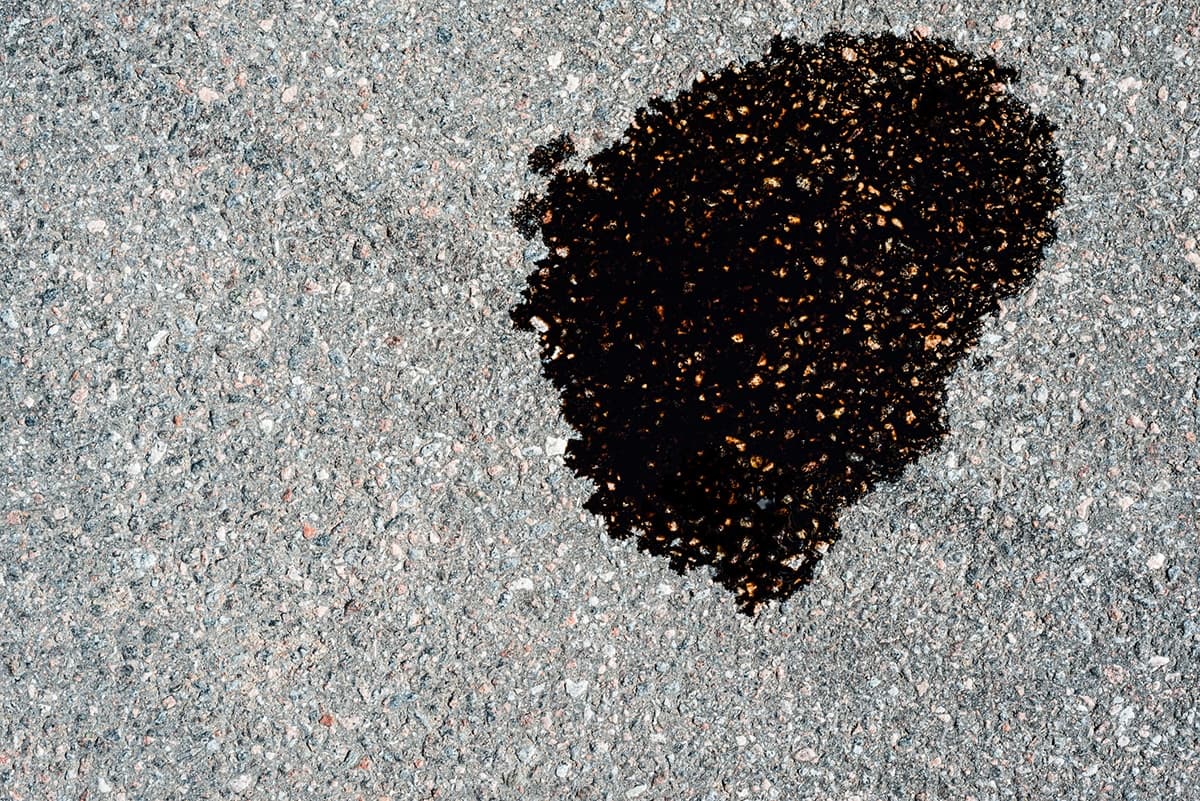
Short answer: for most oil stains on an asphalt driveway, a water-based cleaner/degreaser whose label lists asphalt, scrubbed in with a stiff brush, is the place to start. Zep Industrial Purple lists asphalt among its surfaces; for any other product, check that the current label does too. Treat stains early, test the product on a small spot first, and contain the dirty rinse water instead of washing it into the yard or a storm drain. If the asphalt under an old stain has gone soft or crumbly, cleaning won't fix it. That needs a repair.
Oil stains on asphalt look bad, and they also do damage. Asphalt is held together by a petroleum-based binder, and motor oil, transmission fluid and gasoline slowly soften it. Below we cover how commercial degreasers work, which products to look for, how to use them safely on asphalt, and what to do when a stain won't come out.
Why Oil Stains Are a Problem for Asphalt Driveways
When oil soaks into the surface, it loosens the binder that holds the stone together. Over time that leads to soft spots, raveling (loose stones at the surface), cracking and eventually potholes. In Connecticut, freeze–thaw cycles and road salt find a weakened spot quickly, so a stain that sits all winter can turn into a repair by spring.
Oil also gets in the way of routine maintenance. Sealer won't bond to oily pavement, so driveway sealcoating applied over a contaminated spot can peel or flake. That's why it pays to clean oil stains thoroughly and as soon as you can.
Old stains can mean hidden damage. If a stain is months old, or the asphalt around it feels soft, sticky or crumbly underfoot, the binder has probably broken down. A degreaser may reduce the discoloration but won't restore the pavement.
What Are Commercial-Grade Degreasers?
Commercial-grade degreasers are heavy-duty cleaners made to break down grease, oil and grime on hard surfaces. Most are sold as concentrates you dilute with water. They lift oil out of porous surfaces so it can be rinsed away.
Common ingredients include:
- Surfactants: to lift oil from the surface
- Emulsifiers: to break the oil into small droplets that rinse away
- Solvents (citrus-based or other): to help dissolve hydrocarbons
- Alkaline builders: for heavy cleaning power
A note specific to asphalt: avoid petroleum-solvent products such as gasoline, mineral spirits or parts-washer solvent. They dissolve oil, and they dissolve asphalt binder too. Stick with water-based degreasers and always follow the label's dilution and safety directions.
Commercial-Grade Degreasers for Asphalt Oil Stains
The details below come from the manufacturers' own product pages, not from independent comparison tests. Formulas and labels change, and the same brand often sells several different formulas, so check the exact product's current label and safety data sheet (SDS) before you buy. Confirm that asphalt is a listed surface, that the product is compatible with any sealer on your driveway, and test on an inconspicuous spot first.
Approval for concrete is not approval for asphalt. Some heavy-duty degreasers sold for garage floors and concrete say on the label not to use them on asphalt, so check the exact product, not just the brand.
Oil Eater Original Cleaner/Degreaser
- Where to buy: Home Depot, Walmart and online retailers
- Concentrated, alkaline-based formula that you dilute with water
- The manufacturer describes it as biodegradable and non-flammable; read the current label and SDS for its safety precautions, since "biodegradable" doesn't make oily rinse water safe to discharge
- Labeled for concrete and a range of other hard surfaces; asphalt compatibility is not confirmed on the manufacturer's page, so check the current label or ask the manufacturer before using it on a driveway
Zep Industrial Purple Cleaner & Degreaser
- Where to buy: Walmart, Menards, Tractor Supply and Zep directly
- Professional-strength concentrate; Zep lists unfinished concrete, masonry and asphalt among the surfaces it cleans
- Not for painted surfaces, aluminum or natural stone, so keep it off nearby trim, pavers and stone walls
- Strong product: wear gloves and eye protection
Purple Power Industrial Strength Cleaner/Degreaser
- Where to buy: Home Depot, Walmart, Tractor Supply and auto parts stores
- Concentrate that can be applied with a brush or pressure washer
- Purple Power describes it as biodegradable and non-flammable
- Asphalt and sealer compatibility is not confirmed on the manufacturer's product page, so check the current label or ask the manufacturer before using it on asphalt or a sealcoated driveway
- Purple Power sells several formulas; these notes apply to the Industrial Strength product only, so don't carry its directions over to another Purple Power cleaner
Whichever product you choose, contain contaminated wash water and absorbents. Block or berm around the work area, soak up or collect the runoff, and ask your town or local disposal authority, before you start, which route accepts this waste. Keep it out of storm drains and surrounding soil, including lawns and gravel. Clean-water programs such as Alameda County's surface-cleaning guidance describe the same containment approach; local disposal rules vary, so check yours.
How to Use a Commercial Degreaser on Asphalt Oil Stains
Step-by-step instructions:
- Blot fresh oil first. Soak up any liquid oil with absorbent (cat litter, sawdust or a commercial absorbent) and sweep it up.
- Remove surface debris. Sweep away dirt, leaves and loose gravel.
- Test, then apply. Dilute according to the label, try it on a small hidden spot, then spray or pour it onto the stain.
- Let it dwell. Leave it for the time the label recommends, usually several minutes. Don't let it dry on the surface.
- Scrub with a stiff nylon brush. Work the product into the stain with circular strokes. Avoid wire brushes, which can loosen surface stone.
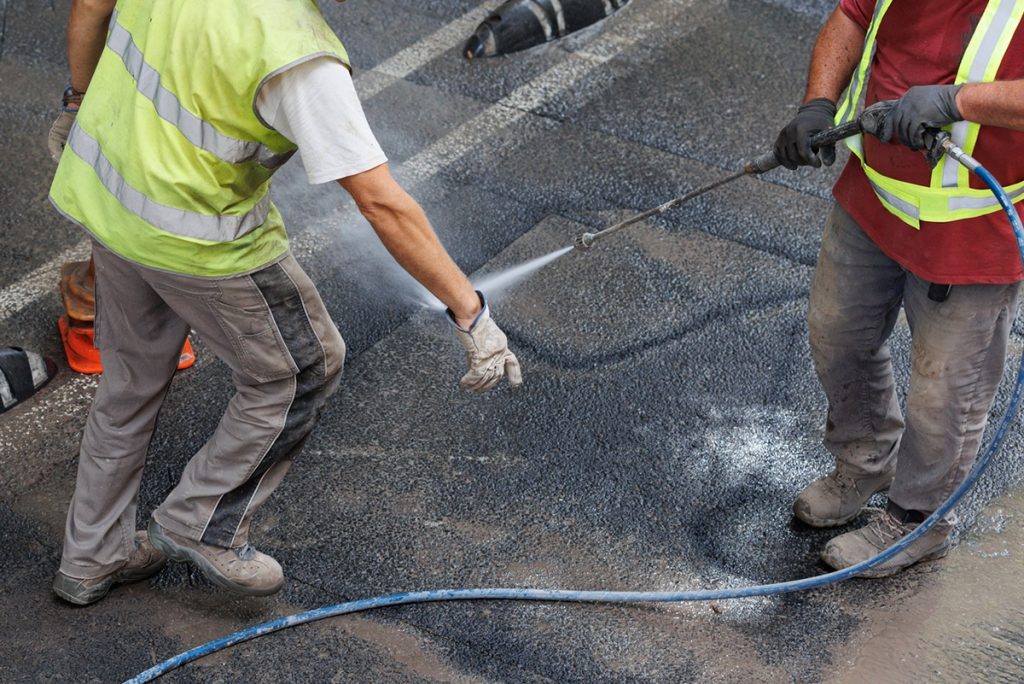
- Rinse and contain. Rinse with as little water as the label allows, using a hose or a pressure washer on a moderate setting held well back from the surface, and collect the runoff with absorbent or a wet vacuum. Repeat if needed.
- Dispose of the waste properly. Keep oily absorbents and collected liquid wash water separate, in compatible, secure containers accepted by your local waste authority. Confirm the disposal route before you start cleaning.
- Let it dry completely before sealing or doing any other work.
Tips and Tricks from the Pros
- Act quickly: The sooner you treat a stain, the less oil soaks in.
- Don't pressure wash before degreasing: Blasting oily pavement with plain water can spread the oil and push it deeper.
- Don't rely on cat litter alone: It absorbs liquid oil but doesn't remove the residue.
- Warm water can help if the label allows it.
- Not every stain will lift completely: An old, absorbed stain may only fade.
- Expect multiple passes: Stubborn stains often take two or three rounds.
- Find the source: A drip pan under a leaking car saves you from cleaning the same spot every month.
For more methods, including household options for light stains, see our guide on ways to remove oil stains from your asphalt driveway.
What If the Stains Won't Come Out?
If oil has soaked deep into the asphalt or has been sitting for years, even a strong degreaser may leave a shadow behind. At that point you have two options:
- Sealcoating the surface. If the stain is only cosmetic and the asphalt is still firm, sealcoating restores an even black finish. Clean the stain thoroughly first, and follow the sealer manufacturer's instructions for oil spots, which may call for an oil-spot primer so the sealer bonds. Sealcoat is a surface treatment: it evens out the color but doesn't restore damaged binder. In Connecticut, sealcoating is usually done in warm, dry weather, roughly late spring through early fall; follow the product label's temperature and rain-free requirements.
- Repairing the affected area. If the asphalt has gone soft or is breaking up, the damaged section needs to be cut out and patched. That's a standard driveway repair, and it's usually far cheaper than replacing the whole driveway.
Final Thoughts
Oil stains are common, but they don't have to shorten the life of your driveway. A water-based commercial degreaser labeled for asphalt, used the right way, can remove or greatly reduce many fresh and moderate stains and limit further damage to the binder. Act fast, use a product labeled for asphalt, test it first, contain the rinse water for locally approved disposal, and fold stain cleanup into your regular asphalt driveway maintenance routine.
If the damage goes deeper than the surface, or you're weighing patching against starting over, our article on repair vs. replacement can help you decide. Maisano Brothers Inc. has been paving Connecticut since 1967. If you'd like us to look at a stained or damaged driveway, contact us for a free estimate.