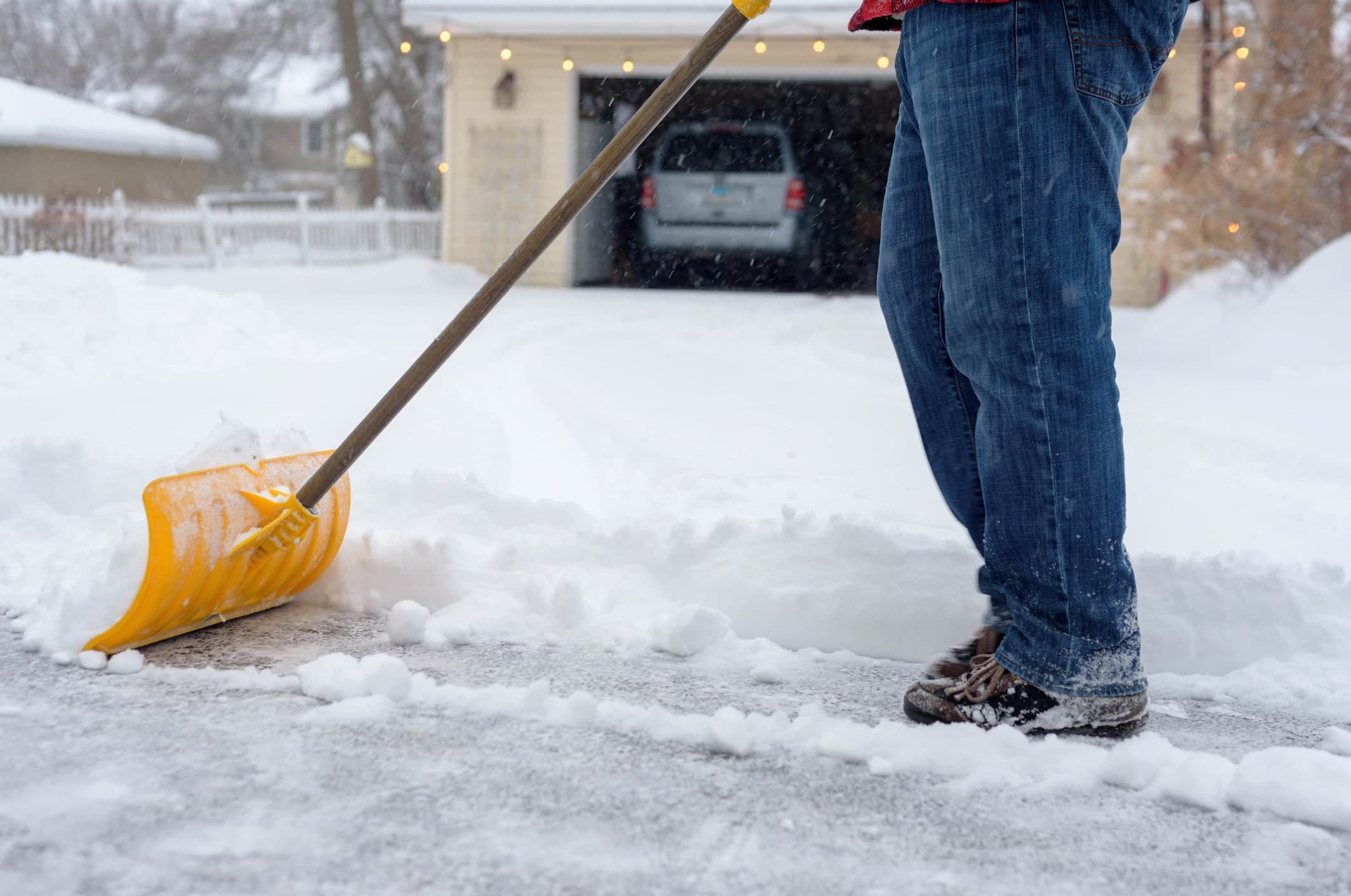
The short answer: yes, you can salt an asphalt driveway. Salt does not chemically eat away at properly installed asphalt. Winter damage can involve moisture in cracks, traffic loads, the pavement's condition, and support weakened during thaws; the presence of salt alone doesn't establish the cause. Clear snow first, choose a de-icer for the pavement temperature, apply the labeled amount, watch for refreezing, and keep cracks sealed.
Key Takeaways
- De-icers work by lowering the freezing point of water, and each product has a practical pavement temperature below which it works poorly.
- Salt doesn't dissolve asphalt. Winter damage can involve moisture, loads, the pavement's condition, and thaw-weakened support, so salt alone isn't the explanation.
- Shovel first, assess pavement temperature, and apply the labeled amount for the area and conditions. More is not automatically better: excess salt is wasted and adds to runoff.
- Non-chloride products like calcium magnesium acetate (CMA) can cut chloride use in sensitive areas; additive blends still contain chloride.
- Crack repair, good drainage, and sealcoating where the surface's condition calls for it help protect a driveway through winter.
Ice and snow make driveways dangerous for people and cars, so salting is a common winter routine. Done carelessly, though, it wastes money, harms lawns and waterways, and can damage nearby concrete and metal. This guide explains how de-icers work, how they affect asphalt, and how to use them responsibly.
The Chemistry of De-Icers
The Role of Freezing Point Depression
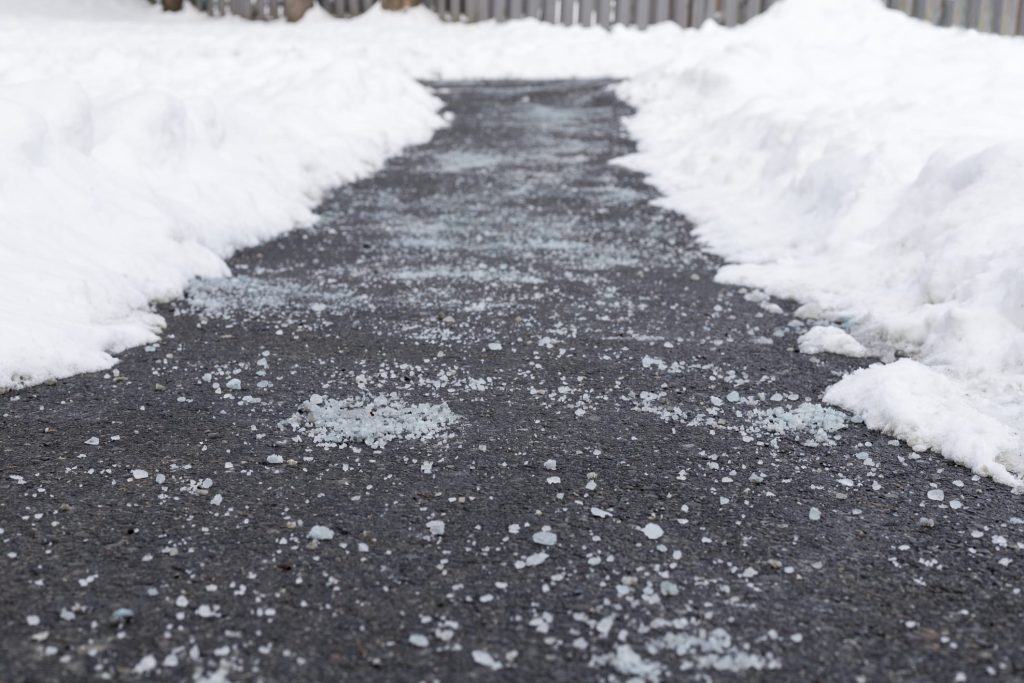
De-icing salts work through freezing point depression. When salt dissolves, it forms a brine that freezes at a lower temperature than plain water. That brine works under the ice, breaking its bond with the pavement so it can be shoveled or melted.
Comparing Common De-Icing Materials
The temperatures below are approximate practical pavement temperatures, rough guidance values rather than guaranteed cutoffs, based on guidance from the Minnesota Pollution Control Agency:
- Sodium chloride (rock salt): The cheapest and most common option. Works down to roughly 15°F; below that it slows dramatically.
- Calcium chloride: Works down to roughly -20°F and acts quickly by drawing in moisture and releasing heat. More expensive, and it can leave a slippery residue if overapplied.
- Magnesium chloride: Works down to roughly -10°F. Often sold in blends.
- Potassium chloride: Only effective in mild cold, around 20°F. Often marketed as gentler on plants, but costly for what it does.
- Calcium magnesium acetate (CMA): A chloride-free option that works down to roughly 20°F. Less corrosive and better for sensitive areas, but much more expensive.
- Beet-based and other agricultural additives: Usually blended with salt or brine to help it stick and work at lower temperatures, which can reduce the total chloride needed. The blend is still a chloride product, not a chloride-free or harmless one.
Eutectic vs. Working Temperatures
The eutectic temperature printed on some packaging is the lowest temperature at which a de-icer can melt ice in the lab. In practice, products slow down long before that point. Pick a product based on its practical temperature and your usual winter conditions, and on very cold days use sand for traction instead of piling on salt.
Physical and Environmental Impacts of Salting
How Salt Affects Asphalt Driveways
Salt does not chemically dissolve properly installed asphalt. Winter damage to the pavement is mostly physical, and water plays a large part:
- Freeze–thaw stress: Water from melting snow or rain can run into cracks and surface voids, refreeze, and expand, slowly widening cracks and loosening the surface. Whether treated pavement stays clear or refreezes depends on pavement temperature, how concentrated or diluted the brine is, further precipitation, and drainage.
- Surface wear: Moisture in open cracks, traffic loads, the pavement's age and condition, and a base weakened during thaws can lead to raveling, potholes, and edge breakup. The presence of salt alone doesn't establish the cause.
Connecticut sees many freeze–thaw cycles every winter, so cracks left open in the fall tend to be worse by spring. Our guide to winter damage on Connecticut driveways shows what to look for, and for repairs after a winter of salting, see how to fix salt damage in spring.
Effects Beyond the Asphalt
A de-icer that is easy on asphalt isn't automatically easy on everything around it:
- Concrete and metal: Chloride de-icers can contribute to scaling on nearby concrete walks, steps, and aprons, and to corrosion of vehicles, railings, and other metal.
- Soil and plants: Salt spray and runoff can burn grass and stress shrubs and trees along the driveway edge.
- Water quality: Chloride doesn't break down; it washes into streams, ponds, and groundwater and stays there.
- Pets and wildlife: Salt can irritate paws, and concentrated runoff can harm aquatic life.
Best Practices for Salting Your Driveway
When to Salt
- Pre-treatment: A light application of brine before a storm helps keep ice from bonding to the pavement.
- After snow removal: Shovel or plow first, then treat only the icy spots that remain.
- Before refreezes: A light treatment on wet pavement before a hard overnight freeze can help prevent black ice. Check treated areas again, since meltwater can refreeze as temperatures drop.
For more on clearing snow without damaging the surface, see our article on snow removal best practices for asphalt.
How Much Salt to Apply
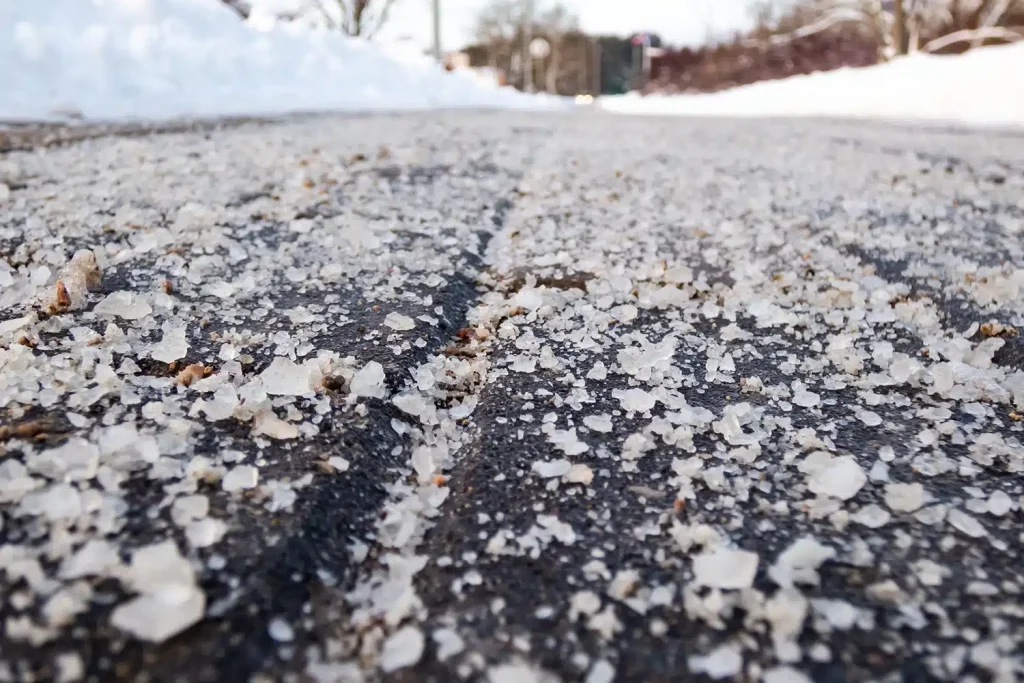
Overapplication is a common mistake. State and local clean-water programs, including the Wisconsin DNR, use a simple area-based rule of thumb: a 12-ounce coffee mug of salt is enough for about 250 square feet, roughly a strip 10 feet wide and 25 feet long. Measure your driveway's area rather than its length to judge how much you need, and follow the product label for the conditions. Spread it evenly, not in clumps, and sweep up leftover crystals once the pavement is dry so you can reuse them.
Shovel first, assess pavement temperature, and apply the labeled amount for the area and conditions. More is not automatically better. Extra salt mostly ends up as wasted material and runoff, and it increases the impact on plants, nearby concrete, and waterways.
Targeting High-Risk Areas
Focus on shaded spots, low areas, the bottom of slopes, and places near downspouts where water collects and refreezes, rather than treating the whole surface.
Maintenance and Prevention Strategies
Regular Sealcoating
Driveway sealcoating is a surface treatment that can help close off surface pores and slow water from getting into a suitable pavement; it doesn't repair cracks or add structural strength. Every two to three years is a typical interval, but whether a driveway needs resealing depends on its condition, exposure, and the sealer used. If it does, follow the product label's temperature and rain-free requirements, which in Connecticut means planning for a warm, dry stretch before winter sets in.
Crack and Pothole Repairs
Filling cracks before winter is a practical way to limit freeze–thaw damage. Small cracks are inexpensive to fix; potholes and spreading cracks are a job for professional driveway repair.
Improving Drainage
Water that pools on a driveway freezes into ice sheets and needs more salt. Correcting low spots and redirecting downspouts through proper drainage and grading reduces ice and the need for de-icing.
Alternative De-Icing Solutions
Blended De-Icers
Blends of sodium chloride with calcium or magnesium chloride may be useful at lower temperatures than rock salt alone, depending on the formulation and application rate.
Lower-Chloride Options
- Calcium magnesium acetate (CMA): Chloride-free and less corrosive, best for areas near gardens or water.
- Beet juice blends: Mixed with salt or brine to improve sticking and performance, which can reduce chloride use. They still contain chloride, so use them sparingly too.
Non-Chemical Methods
- Sand or grit: Adds traction without melting ice; sweep it up in spring so it doesn't clog drains.
- Heated driveways: Electric or hydronic systems may reduce de-icer use within their design capacity, though installation costs are much higher.
The Economics of Salting
Balancing Cost and Performance
Rock salt is cheap but slows down in deep cold. On the coldest days, a small amount of a calcium or magnesium chloride blend can work better than repeated rounds of rock salt.
Long-Term Savings Through Maintenance
Sealing, crack repair, and drainage fixes cost far less than replacing a driveway that has broken down from years of water damage, and better drainage can reduce how much salt you need each winter.
Professional Assistance and Advanced Technologies
When to Call a Professional
If your driveway has widespread cracking, recurring potholes, or ice that forms in the same spots every winter, a professional asphalt contractor can find the cause and recommend repairs, drainage fixes, or sealcoating to protect it.
Ice Management Tools Used on Larger Properties
- Weather and pavement-temperature monitoring: Helps time treatments and avoid overuse.
- Calibrated spreaders: Apply a consistent, measured rate instead of guessing.
- Liquid brine systems: Pre-treat pavement before storms, often using less material than dry salt.
Frequently Asked Questions
Does salt damage asphalt driveways?
Salt doesn't chemically break down asphalt. Water can get into small cracks, refreeze, and expand, and over time that, along with traffic loads, the pavement's condition, and thaw-weakened support, can lead to cracking, potholes, and surface wear. The presence of salt alone doesn't establish the cause.
What type of salt is best for asphalt?
Rock salt (sodium chloride) is fine down to about 15°F. Below that, calcium chloride or magnesium chloride blends may work better, depending on the formulation and application rate.
How much salt should I apply to my driveway?
Much less than most people think. A common rule of thumb is about one 12-ounce mug for every 250 square feet, adjusted for the product label and conditions. Using more is not automatically better: the extra is largely wasted and increases runoff.
Is pre-treating my driveway with brine effective?
It can be. Brine applied before a storm helps keep ice from bonding to the pavement, can reduce the total salt needed, and makes clearing easier.
What environmentally friendly alternatives to salt can I use?
Calcium magnesium acetate (CMA) is chloride-free, and sand adds traction without melting. Beet-based blends can reduce the amount of chloride used, but they still contain it. None of these options is free of downsides, so use any de-icer sparingly.
How does salt affect nearby landscaping?
Salt runoff and spray can burn grass and stress shrubs and trees. Using less salt, keeping snow piles away from plantings, and choosing gentler products reduce the impact.
Should I sealcoat my driveway before winter?
If the driveway's condition calls for it and the surface is suitable, yes. Every two to three years is a typical interval, but the need depends on the driveway's condition and the sealer used. Sealer needs the temperature and rain-free window on its label to cure, so schedule it during a warm, dry stretch before winter.
Can improving drainage help reduce salt usage?
Yes. Good drainage keeps water from pooling and freezing, so you may need to salt less often.
Are heated driveways a better option than salting?
Heated driveways may reduce de-icer use by melting snow and ice within the system's design capacity, but they cost much more to install and run. Our article on whether heated driveways are worth it breaks down the trade-offs.
When should I contact a professional?
If your driveway has significant cracking, frequent ice buildup, drainage problems, or recurring potholes, an asphalt contractor can recommend repairs and winter protection. Request a free estimate from our team.
Conclusion
Salting an asphalt driveway is reasonable when it is done with a light hand. Choose the right product for the temperature, shovel first, use only what you need, and keep cracks sealed and water draining away. Maisano Brothers Inc. has been paving Connecticut since 1967, and that combination is what we see keep driveways in good shape winter after winter.