
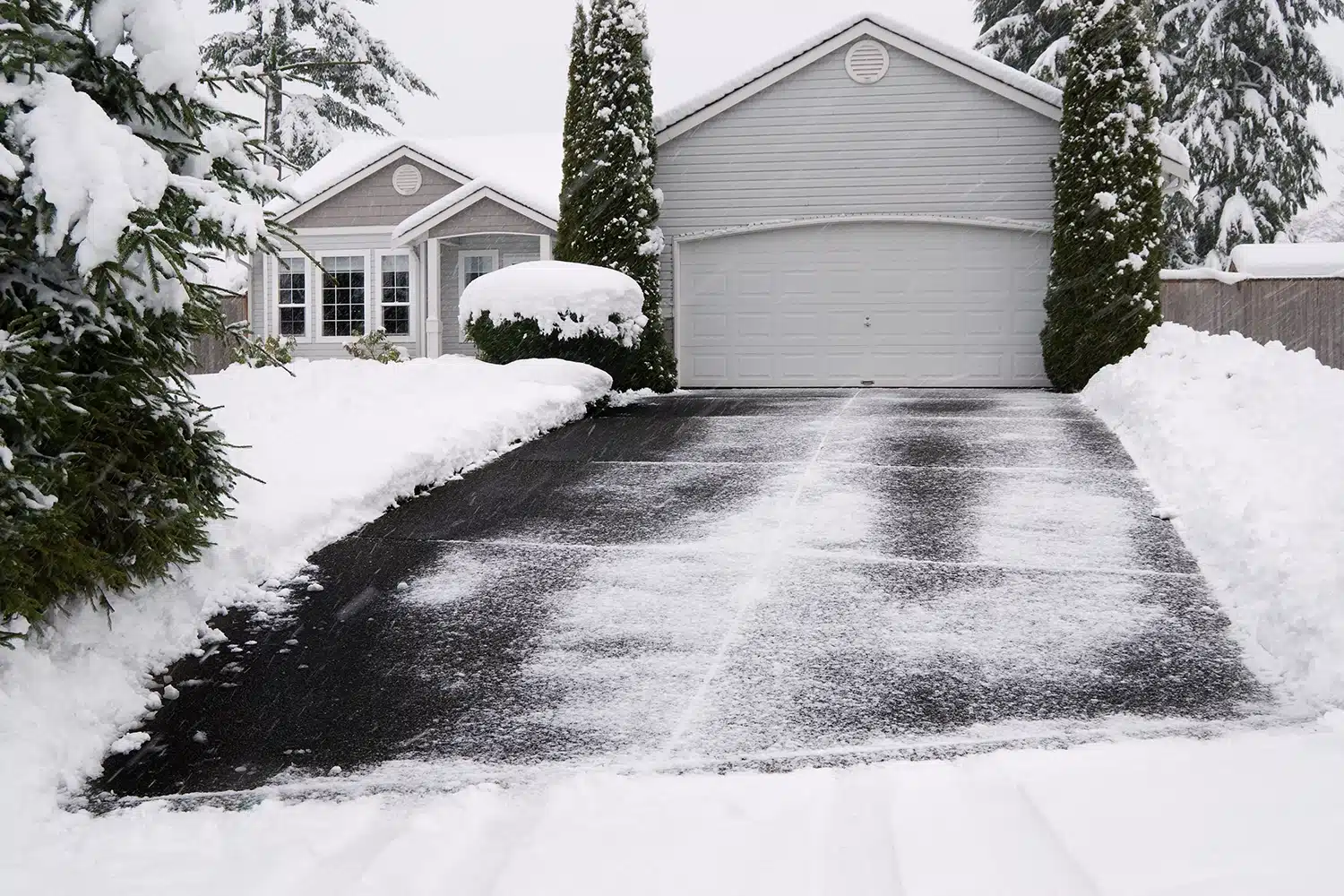
Short answer: a heated driveway is worth it for some Connecticut properties: steep or shaded driveways, homeowners who can't safely shovel, and busy commercial entrances where ice is a liability. It makes the most sense when you're already installing or replacing the pavement. For a typical flat suburban driveway, the installation cost plus operating costs at Connecticut energy prices often outweigh the convenience, and good snow removal or portable heated mats are the practical choice.
Key Takeaways
- Heated driveways melt snow and ice automatically and can reduce shoveling, plowing, and deicer use within their design capacity, which improves safety.
- Hydronic (hot-fluid) systems cost more to install and, depending on fuel prices and system design, can be cheaper to run on large driveways and commercial sites.
- Electric systems are simpler to install but draw a lot of power, and Connecticut's residential electricity bills have been among the highest in the country.
- Less salt, less plow scraping and less refreezing meltwater can help protect the pavement, if meltwater drains away properly.
- The value depends on your driveway's size and slope, energy costs, and whether you're already planning a new surface; retrofits into existing pavement are sometimes possible.
When a Connecticut nor'easter buries your driveway, it's easy to picture one that clears itself, with less shoveling and less waiting for the plow. We've been paving Connecticut since 1967, so we know both the appeal and the realities of heated driveway systems. Below we explain how heated asphalt and concrete driveways work, the system types, the pros and cons, what they cost to run, and how to decide whether one makes sense for your home or commercial property.
What Is a Heated Driveway?
A heated driveway (also called a snow-melt system) warms the pavement from below to melt snow and ice. Heating elements, either fluid-filled tubing or electric cables, are embedded in or just under the asphalt, concrete or pavers. When the system runs, heat moves up through the pavement and keeps the surface above freezing so snow can't build up.
Heated driveways can be installed under:
- New asphalt driveways
- New concrete driveways
- Paver driveways and walkways
The simplest time to add heating elements is during a new driveway installation or a full replacement. Some systems can also be retrofitted into existing asphalt or concrete, for example by saw-cutting channels for cable, if an evaluation shows the existing pavement is suitable. Systems are typically controlled by a thermostat, an automatic snow/moisture sensor, or a manual switch, and they're used on both homes and commercial properties.
Types of Heated Driveway Systems
Hydronic Radiant Systems
Hydronic heated driveways use flexible plastic tubing (typically PEX) laid in a loop pattern in the pavement. A boiler or dedicated heater warms a mixture of water and antifreeze and pumps it through the tubing in a closed loop.
Key characteristics:
- Heat source: A boiler fueled by natural gas, propane or oil.
- Fluid: Water mixed with antifreeze (often propylene glycol) so the loop can't freeze.
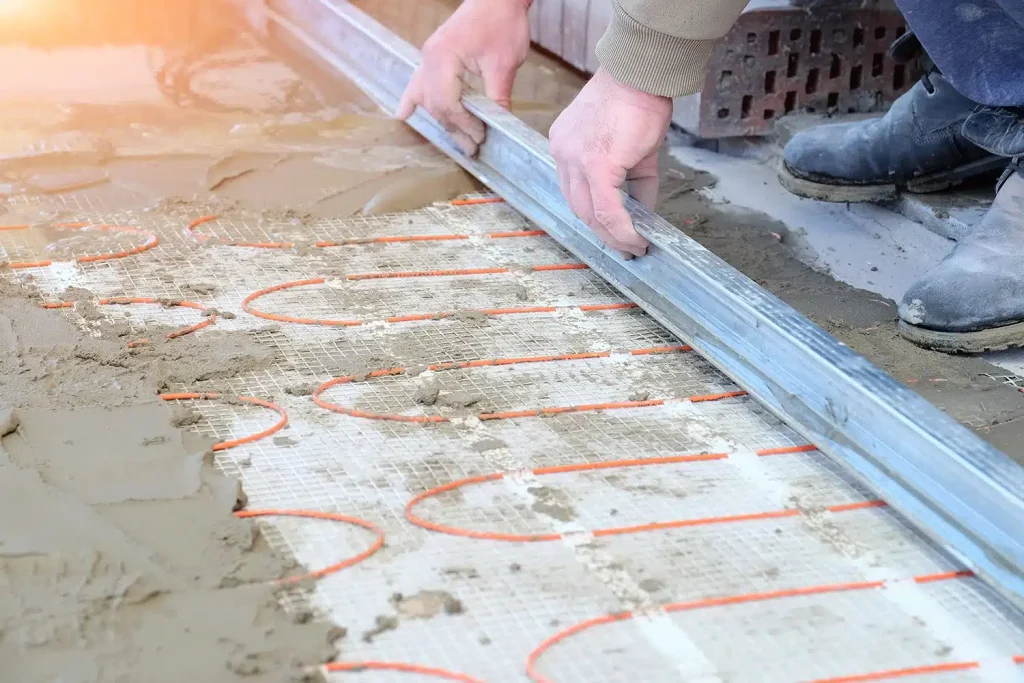
- Tubing layout: Tubes are spaced closely in a serpentine or spiral pattern; the designer sets the spacing based on the heat output needed.
- Surface options: Asphalt, concrete or pavers.
Hydronic systems cost more up front because of the boiler, pumps, manifolds and piping. Depending on fuel prices, efficiency and design, they can be more economical to run on large driveways or commercial lots, especially where natural gas is available.
Electric Radiant Cable Systems
Electric systems use resistance heating cables or pre-built mats embedded in the pavement. Electricity running through the cables heats them, and the warmth moves up to the surface.
Key characteristics:
- Heat source: Electric heating cable or mats.
- Power density: Manufacturer design guides commonly call for roughly 35–50 watts per square foot, depending on climate and paving material.
- Controls: A control panel with a thermostat and usually a snow/temperature sensor.
- Installation: Generally simpler than hydronic, especially in new construction.
One asphalt-specific point: hot-mix asphalt is placed at high temperatures and compacted with heavy rollers, so any cable or tubing under an asphalt driveway must be rated for that, and the paving crew has to coordinate closely with the heating installer. Concrete is placed at different temperatures than hot-mix asphalt, but its placement temperature isn't simply the ambient air temperature; concrete producers control it, as NRMCA guidance on cold-weather concreting explains. Whatever the surface, use a snow-melt system approved for that pavement material and follow both installers' temperature and installation limits.
Electric systems are popular for small and medium residential driveways and walkways. The trade-off is that electric heat usually costs more per unit of heat than natural gas, which matters a lot in Connecticut.
Portable Heated Driveway Mats
Heated driveway mats are heavy-duty, slip-resistant rubber mats with built-in electric heating elements. They sit on top of the existing surface, usually in pairs that line up with your tires.
Key characteristics:
- No demolition: Lay them on the driveway; nothing gets torn up.
- Seasonal use: Plug them in for the winter and store them in spring.
- Targeted melting: They clear two tire tracks, not the whole driveway.
- Check the load rating: Not every snow-melting mat is made to be driven on. Use only a mat the manufacturer rates for your actual vehicle use, and follow its instructions (HeatTrak's driveway mat is one example of a product sold specifically for driveways).
Mats are a reasonable middle ground for homeowners who want some of the benefit without the cost and disruption of a built-in system.
Benefits of Heated Asphalt and Concrete Driveways
Convenience and Time Savings
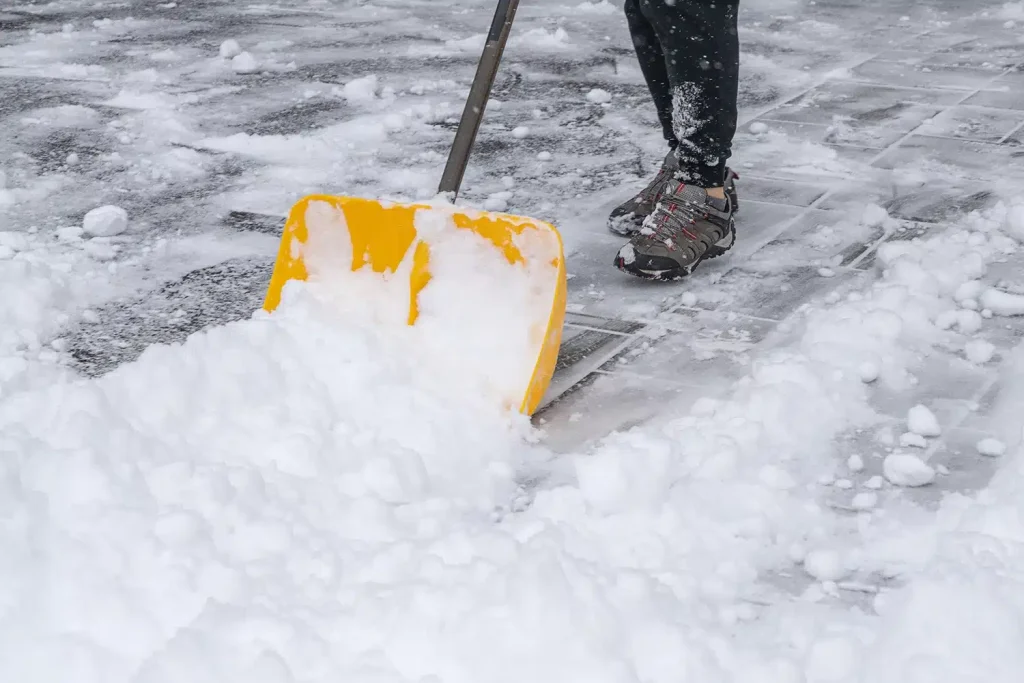
The biggest benefit is simple: less shoveling. A properly sized system can keep up with snowfall as it lands, so the driveway is usable when you need it, including at 5 a.m. before the plow arrives. Performance still depends on the system's capacity, controls and power supply: a power outage, an undersized system or poor drainage that lets meltwater refreeze at the edges can all leave you with snow or ice to deal with.
Improved Safety
Shoveling is hard, cold work, and icy driveways cause falls. A heated driveway reduces the risk of:
- Slips and falls on ice
- Strain and injuries from shoveling or snow blowers
- Long stretches outdoors in bitter cold
For commercial properties, fewer icy surfaces can also mean fewer slip-and-fall claims.
Less Damage from Salt and Deicers
Salt and chemical deicers can be hard on pavement. Meltwater can work into small cracks and add to freeze–thaw damage. We cover the details in our guide to salting asphalt driveways. Salt also harms lawns and plantings and corrodes vehicles.
Within its design capacity, a heated driveway can greatly reduce the need for salt, which helps protect:
- The pavement surface
- The base and subgrade underneath, by keeping meltwater moving off instead of refreezing in cracks
- Nearby lawn and plantings
- Your vehicles and outdoor metal fixtures
Protects Your Pavement Investment
Plow blades and metal shovels gouge and chip pavement, and the combination of scraping, salt and freeze–thaw cycles is a common cause of the cracking, spalling and potholes we see on Connecticut driveways every spring. (Our guide to winter damage on Connecticut driveways explains how it happens.) By melting snow instead of scraping and salting, a heated driveway may help the pavement last longer, provided meltwater drains off and doesn't refreeze along the edges. It isn't a substitute for a sound base and good drainage.
Low Day-to-Day Maintenance
Once installed and commissioned, most systems need little routine attention:
- Occasional checks of the control panel and sensors
- Annual boiler and pump service for hydronic systems
- Keeping drains and edges clear so meltwater can run off
The pavement itself still needs normal care, such as periodic sealcoating for asphalt. Your installer should confirm that any maintenance work is safe for the embedded system.
Drawbacks and Limitations of Heated Driveways
High Upfront Installation Cost
Heated driveways are a major investment. Costs vary widely with the system type, the area heated and the site, and a residential project typically runs well into the thousands of dollars on top of the paving itself. The cost climbs if you're:
- Removing and replacing an existing driveway
- Adding a boiler or upgrading electrical service
- Heating a large area
For context on the paving side, see our 2026 asphalt driveway cost guide; the heating system is priced separately by the heating contractor. Get a written quote that spells out both.
Increased Energy Bills
Running a heated driveway isn't free. What it costs depends on:
- How many square feet are heated
- How often it snows and how hard
- Performance expectations (bare pavement during the storm vs. clear a few hours later)
- Your electricity or fuel rates
Electrical Capacity Requirements
Electric systems draw a lot of power. At design densities around 35–50 watts per square foot, even a modest heated area adds a large load to your panel. Some homeowners need:
- A service upgrade (for example, from 100A to 200A)
- Dedicated circuits and breakers for the snow-melt system
- Zoning so the whole system doesn't run at once
Hydronic systems still use electricity for pumps and controls, but most of the heat comes from the boiler fuel.
Complex Repairs if Something Fails
If a cable fails or a tube leaks, the fix isn't a simple patch. Finding the problem can require thermal imaging or specialized test equipment, and reaching it means cutting into the pavement and patching it afterward. Well-installed systems are designed to be durable, but repairs can be expensive when something does go wrong. Ask the installer about warranties on the heating components and keep the as-built layout drawings.
Retrofits Have Limits
The simplest time to install a heated driveway is when you're already putting in new pavement. Retrofit options do exist: manufacturers such as WarmlyYours document saw-cut installations in existing asphalt and concrete, subject to the pavement's suitability. Whether a retrofit makes sense depends on:
- The condition, thickness and cracking of the existing pavement
- The disruption and repair work the installation method requires
- Existing grades and drainage
If your driveway is in good shape, have it evaluated for a retrofit before assuming it has to be replaced. If it's near the end of its life anyway, adding heat during the replacement is usually the cleaner option.
Electricity Use and Operating Costs
You can estimate an electric system's energy use with simple math. Take a 300-square-foot heated area (two tire tracks and an apron, for example) designed at 40 watts per square foot:
- 300 sq ft × 40 W/sq ft = 12,000 watts, or 12 kW
- If it runs 4 hours during a storm: 12 kW × 4 hours = 48 kWh
- Storm cost = 48 kWh × the per-kWh charges that apply to the extra electricity you use
That's an example, not a universal design load. Your installer sizes the actual output for the area, climate and performance you want. For the rate, use the per-kWh supply and delivery charges on your Eversource or United Illuminating bill, not the bill total divided by kWh: dividing the total includes fixed monthly charges that don't rise when the system runs. For context, a U.S. Energy Information Administration analysis published May 2025, covering 2024 residential bills, placed Connecticut's residential electricity bills among the nation's highest; check your current tariff for today's rates. Across a winter with many storms, plus idle time in cold weather, the total adds up. Automatic sensors and timers are essential to avoid paying to heat dry pavement.
Managing Energy Use
You can keep consumption under control by:
- Targeted coverage: Heating only tire tracks, the apron or a steep section instead of the whole driveway.
- Zoning: Splitting large areas into zones that don't all run at once.
- Automatic controls: Using snow and temperature sensors so the system runs only when needed.
- Idle settings: On some hydronic systems, holding a low idle temperature during cold snaps so the system reaches melting temperature faster.
Connecticut homeowners can choose a third-party electricity supplier for the supply portion of the bill; the state's EnergizeCT rate board lists the offers. Delivery charges stay with your utility regardless, so compare carefully and read contract terms before switching.
Hydronic Operating Costs
For hydronic systems, the main cost is boiler fuel: natural gas, propane or oil. Depending on fuel and electricity prices and the system's efficiency, gas-fired systems can be cheaper to run than large electric systems, especially for:
- Long driveways
- Large parking areas
- Commercial sites with significant snow-melt needs
The trade-off is a more complex mechanical system up front in exchange for potentially lower operating costs over its life.
Residential vs. Commercial Applications
Residential Properties
For homeowners, the main benefits are comfort, safety and convenience. Typical cases include:
- Short driveways and walkways where full coverage is affordable
- Steep or shaded driveways where ice lingers and traction is a problem
- Homes where the owner can't safely shovel because of age or health
- Custom homes where a snow-free driveway is a priority
Many residential systems heat critical sections (tire tracks, the area by the garage, the apron at the street, front walks and steps) rather than every square foot.
Commercial and Municipal Properties
On commercial sites, heated pavement is usually about safety and keeping operations running. Common applications include:
- Hospital and medical entrances
- Hotel drop-offs and valet areas
- Store and office entrances
- Parking garage ramps and loading docks
- Municipal walkways, steps and transit platforms
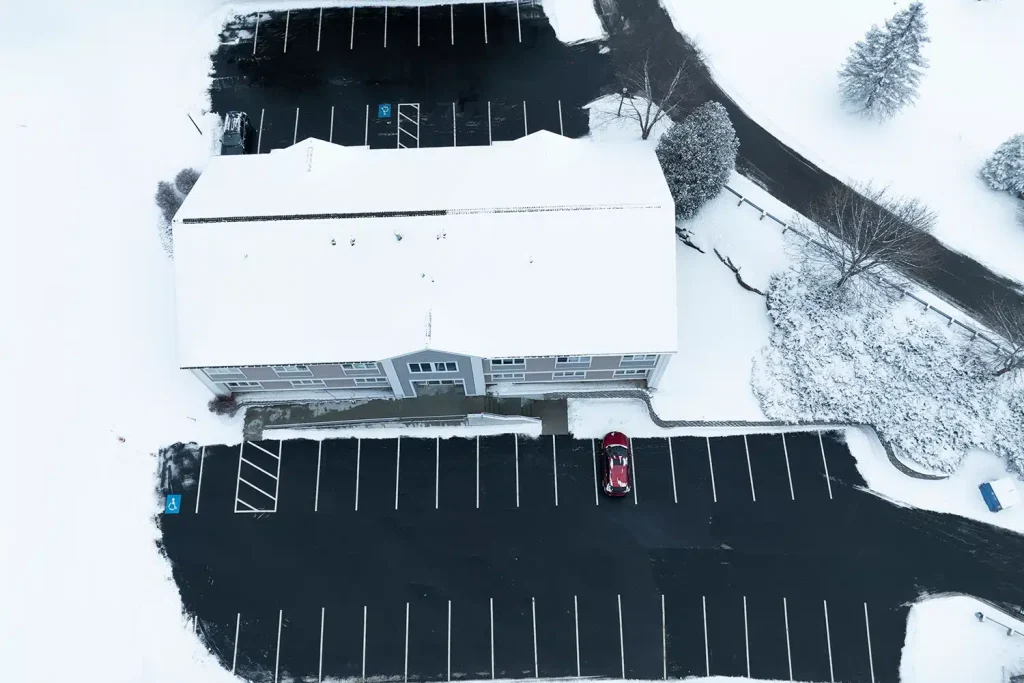
Heating an entire parking lot is rarely practical. Most commercial properties heat the critical walkways and ramps and rely on snow plowing for the rest of the lot.
Is a Heated Driveway Right for You?
Whether a heated asphalt or concrete driveway makes sense depends on:
- Driveway size and layout: Is it short and sunny, or long, shaded and steep?
- Budget: Can you justify the installation cost and Connecticut energy rates?
- Health and lifestyle: Is shoveling a real challenge or risk for you?
- Existing pavement: Are you already planning to replace the driveway?
- Surface choice: If you're still deciding on material, our asphalt vs. concrete driveway guide for Connecticut compares the two.
For some properties, especially steep drives and accessibility needs, a heated driveway is a real quality-of-life upgrade. For many others, good snow-removal habits, an occasional plow and perhaps a set of heated mats are the more practical answer. Our snow removal best practices for asphalt cover how to clear a driveway without damaging it.
FAQs About Heated Asphalt and Concrete Driveways
Do heated driveways really work in heavy snow?
Yes, if the system is designed for it. The key is sizing it for your climate and expectations. Heavy-snow areas call for higher heat output, closer cable or tube spacing, and controls that start the system when snow begins rather than after it piles up.
Are heated driveways more suitable for asphalt or concrete?
Both work with hydronic or electric systems. Asphalt is placed hot and rolled, so the heating components must be rated for it and the work carefully coordinated; with either material, use a system approved for that pavement and follow both installers' limits. Beyond that, the choice comes down to budget, appearance and repairability. What matters most is a properly designed system installed over a stable, well-drained base.
How much does it cost to install a heated driveway?
It varies widely with location, system type and the area heated, but expect a project well into the thousands of dollars on top of the paving. Hydronic systems usually cost more up front than electric. If you're already planning a full replacement, adding heat then is usually simpler than retrofitting later; get comparable quotes for both approaches to compare the cost.
Will a heated driveway significantly increase my electric or gas bill?
Yes, whenever it runs. Cost depends on heated area, installed output, runtime, controls and your applicable energy charges. For electric systems, that means watts per square foot, run time and the per-kWh charges on your bill, and Connecticut's rates are high. Hydronic systems add to your gas, propane or oil use. Snow sensors, timers, zoning and heating only critical areas keep costs reasonable.
Can an existing driveway be converted into a heated driveway?
Sometimes. Saw-cut retrofit methods can place heating cable in existing asphalt or concrete, but only after the existing pavement has been evaluated for condition and suitability. If the driveway needs replacing anyway, adding heat during the rebuild is usually simpler.
How long do heated driveway systems last?
Embedded cables and tubing are protected inside the pavement and are designed for long service lives when installed correctly; check the manufacturer's warranty for specifics. Boilers, pumps and controls are mechanical equipment and will likely need service or replacement during the system's life.
Do heated driveways damage the pavement?
A properly designed system shouldn't. Reducing salt, plow scraping and refreezing meltwater may help pavement last longer, as long as meltwater drains away. Problems such as cracking usually trace back to poor design or installation, which is why the heating and paving work should be done by experienced professionals who coordinate with each other.
Are heated driveway mats a good alternative to a built-in system?
For many homeowners, yes. Mats cost far less, need no construction and can be put out only when needed. The trade-offs: they clear only two narrow tracks, you have to set them up, plug them in and store them each season, and you need a mat that's rated for driving on. Not every snow-melting mat is.
If you're planning a new driveway and want to talk through whether a heated system fits, we can review your site, slope and drainage and coordinate the paving with your heating installer. Contact us for a free estimate and to talk it through.