
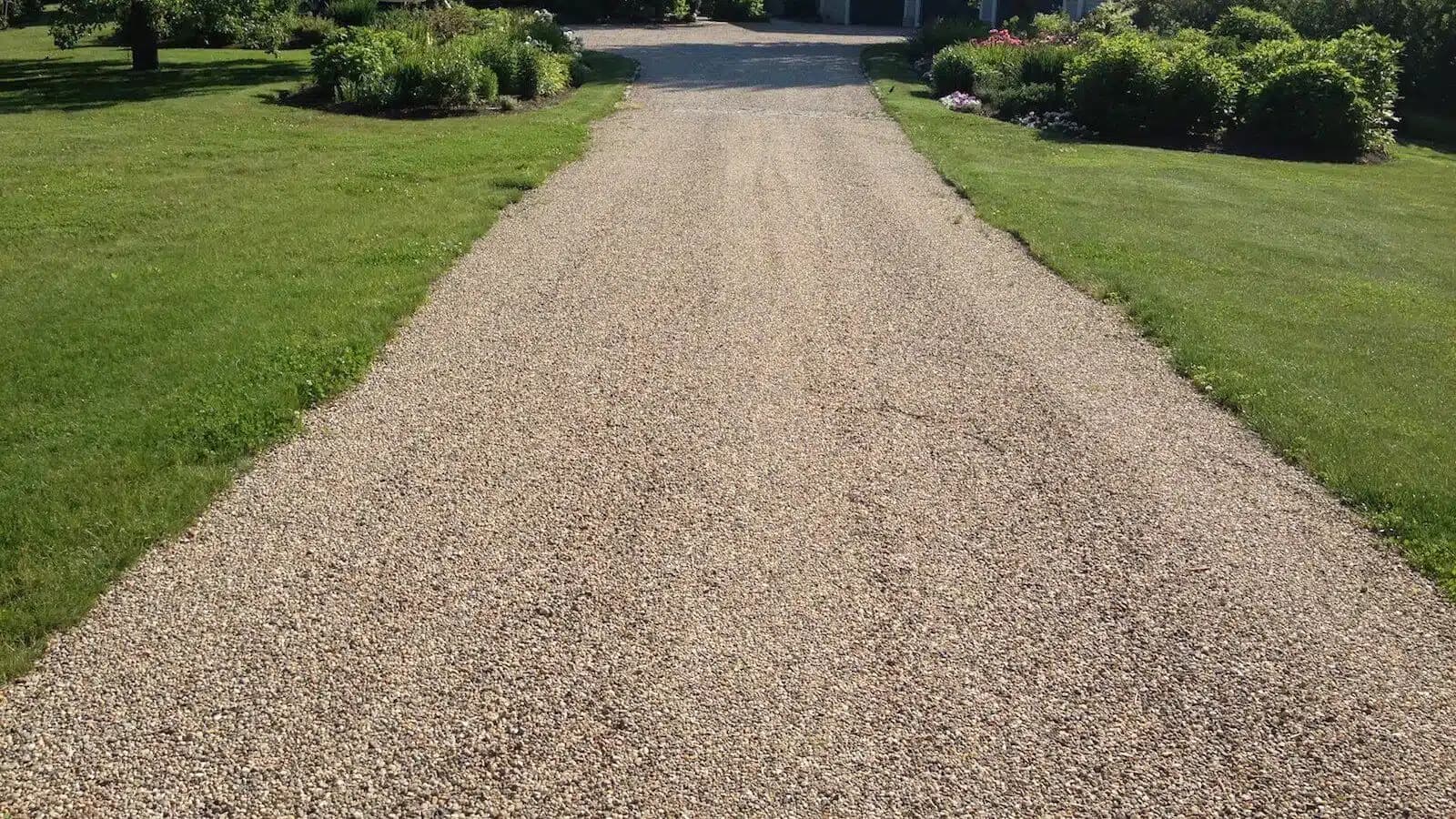
A chip seal driveway, also called tar-and-chip, is a stone-textured surface made by spraying liquid asphalt binder over a prepared base and pressing a layer of crushed stone into it. It may cost less up front than a hot-mix asphalt driveway for a comparable project, and it has a rustic, natural look that suits many Connecticut homes, especially longer rural and country driveways. Here's how chip seal works, what it's good (and not so good) at, how it's installed, and how to maintain it.
What Is a Chip Seal Driveway?
A chip seal driveway is built by applying a layer of liquid asphalt binder to a compacted stone base, then immediately spreading clean crushed stone over it. Rollers press the stone into the binder, which holds it in place as it cures. The result looks like a stabilized stone driveway but behaves more like pavement: it sheds water and is far less prone to washing out than loose gravel, though it can't guarantee against rutting or washouts if the base or drainage is poor. Many driveways get two layers (a "double chip seal") for a tougher surface. Learn more about our chip seal driveway service.
One distinction is worth knowing. Conventional chip sealing, the kind highway agencies use, is commonly a surface treatment applied over existing pavement. A chip seal driveway built directly on a compacted aggregate base is a related but different system, a bituminous surface treatment on stone. This article mainly covers that new-driveway system, and also notes where chip seal goes over existing pavement. Either way, chip seal is a wearing surface, not added structural strength: WSDOT describes chip sealing as a preservation treatment that doesn't add structural strength, so it won't cure an inadequate base or pavement underneath.
Benefits of Chip Seal Driveways
Cost-Effective
Chip seal may cost less to install than hot-mix asphalt or concrete for a comparable project, especially where the existing base is suitable, which makes it popular for long driveways. Pricing depends on length, base condition, and the number of layers, so compare dated written quotes that include preparation, the number of applications, cleanup, and expected renewal work; for comparison, our asphalt driveway cost guide gives illustrative budgeting examples for hot-mix, not a quote or a statewide average.
Aesthetic Appeal
The look comes from the stone you choose. Different stone colors and sizes let you match a farmhouse, a wooded lot, or a stone wall, and the texture blends naturally with the landscape.
Durability
Over a well-built base, chip seal holds up to everyday residential traffic and weather. The stone surface also provides good traction. Lifespan depends heavily on the base, drainage, traffic, and snow removal, and the surface is renewed periodically rather than lasting indefinitely.
Low Maintenance
Chip seal isn't usually sealcoated. When the surface wears and stones loosen, chip-seal renewal uses an appropriate binder-and-aggregate treatment. Conventional asphalt maintenance also depends on its condition. Between renewals, upkeep is mostly sweeping loose stone and fixing small spots.
Quick Installation
Once the base is ready, the chip seal itself can often be applied in a day, depending on the size of the driveway. Some loose stone will work off during the first weeks; your contractor should tell you how they handle sweeping and loose-stone cleanup, and when and how the driveway can be used in the first days.
5 Common Questions About Chip Seal Driveways
How Long Does a Chip Seal Driveway Last?
There's no single answer. The expected performance depends on the prepared base or existing pavement, binder and aggregate selection, drainage, traffic, and application conditions, plus how it's plowed. Expect to renew the surface periodically with a fresh application; ask your contractor what renewal interval to plan for on your driveway. A well-built hot-mix driveway generally goes longer between major treatments, which is the main trade-off when chip seal costs less up front. Our chip seal vs. asphalt driveway guide compares the two in more detail.
What Is the Installation Process?
The installation process involves several steps:
- Preparation: The base is graded for drainage and compacted, with new processed stone added where needed.
- Application of binder: Liquid asphalt binder is sprayed evenly over the surface.
- Spreading of stone: Crushed stone is spread over the binder right away, while it's still tacky.
- Compaction: Rollers embed the stone into the binder. A second layer may follow for a double chip seal.
Can It Be Applied Over Existing Driveways?
Often, yes. Chip seal can go over a solid gravel driveway once it's regraded and compacted, or over existing asphalt that's still structurally sound. A soft, poorly drained, or badly broken base needs to be fixed first, or the new surface will fail with it. If you're weighing options for an old gravel driveway, also see our page on gravel to asphalt driveways.
How Does Weather Affect a Chip Seal Driveway?
Chip seal handles Connecticut weather well when water drains away from it. Standing water and a saturated base are the main enemies, especially through freeze–thaw cycles. Installation has its own weather requirements, separate from the asphalt plants' operating season: the binder and stone need warm, dry conditions, so chip seal is applied in the warmer months when the binder manufacturer's and contractor's temperature and weather limits are met.
Is a Chip Seal Driveway Suitable for All Areas?
It's a great fit for long residential and rural driveways with light traffic. On a driveway, it's less suited to steep sections with tight turns, where tires scuff stones loose, and to areas where heavy trucks turn regularly. (Chip seals are used on many busier public roads too; suitability depends on the system and its specification.) If you want a smooth surface for basketball, skateboards, or easy shoveling, hot-mix asphalt is usually the better choice.
Maintenance Tips for Chip Seal Driveways
Regular Inspection
Walk the driveway each spring after the snow melts. Look for loose stone, bare spots where binder is exposed, cracks, and areas where water collects.
Periodic Renewal
When the surface wears thin, a fresh application of binder and stone renews it. Chip seal isn't normally sealcoated, since a sealer would coat over the stone and change its look.
Cleaning
Keep the surface clear of leaves and debris, which hold moisture, and sweep loose stone back off the edges and lawn.
Prompt Repairs
Fix potholes, soft spots, and drainage problems as soon as you see them. Small problems grow quickly once water gets into the base.
Snow Removal
Plows and steel shovel blades can scrape stone loose. Ask your plow contractor to raise the blade slightly or use shoes, and use a plastic or rubber-edged shovel on walks and edges. Our article on snow removal best practices has more tips.
Installation Considerations
Base Preparation
The base determines how long any driveway lasts. Make sure it's properly graded for drainage and compacted before any binder goes down.
Material Quality
Clean, properly sized stone and the right binder application rate help the stone bond and stay put.
Professional Installation
Chip seal requires a binder distributor, a stone spreader, and rollers, and getting the binder rate and timing right takes experience. It isn't a practical DIY project.
Conclusion
Chip seal driveways can be a cost-effective, attractive alternative to hot-mix asphalt and concrete, especially for long rural driveways. The trade-offs are a shorter renewal cycle, some loose stone, and a rougher surface, and it's only as good as the base or pavement under it. If you'd like to know whether chip seal makes sense for your property, contact us for a free estimate.