
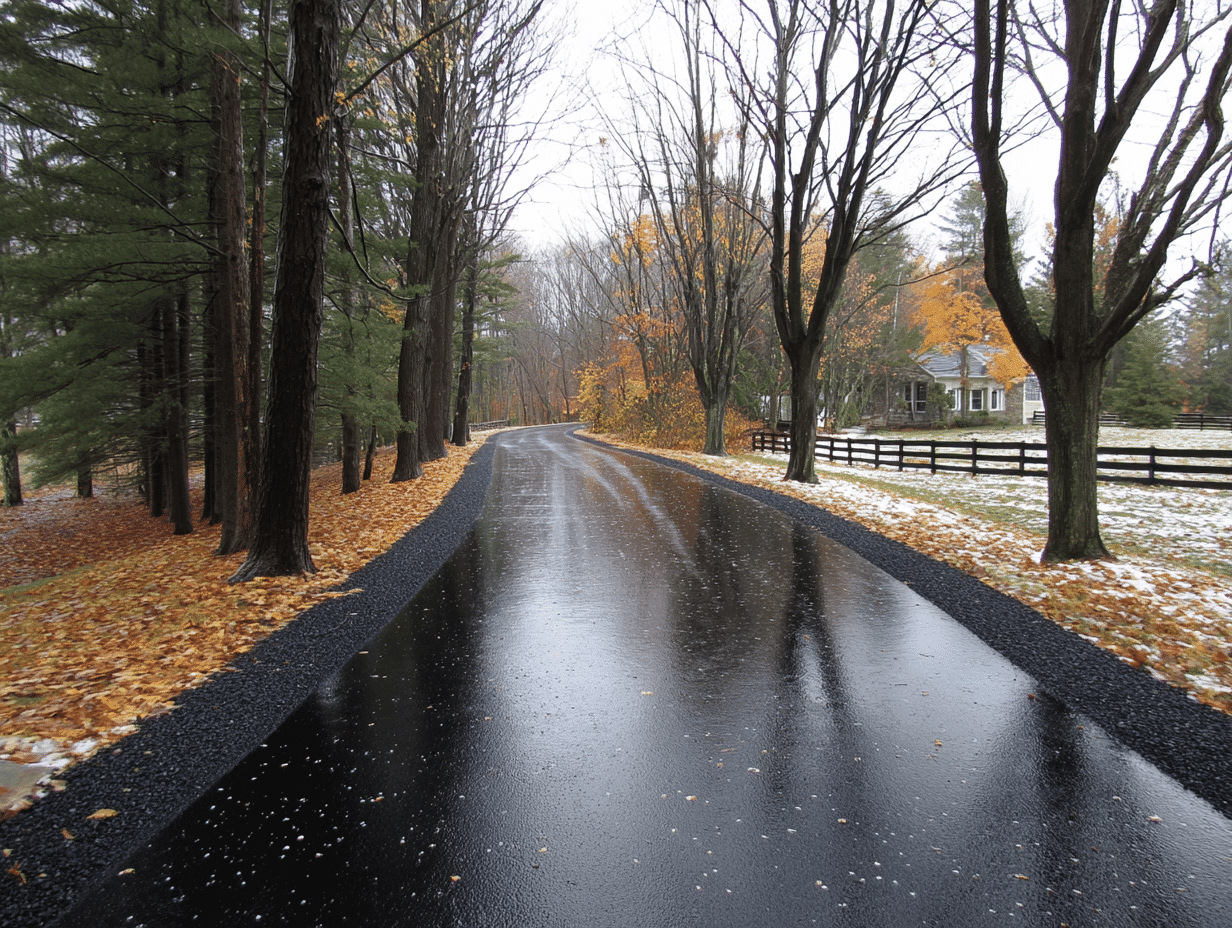
The word "asphalt" is familiar to anyone who has driven down a road or had a driveway paved, but its roots go back to ancient Greek, and people still pronounce it several different ways. In American English a common pronunciation is AS-fawlt. Here is where the word came from, how its meaning changed, and why you hear it said differently around the world.
Ancient Origins of the Word "Asphalt"
English got the word by way of Latin from the Greek ἄσφαλτος (ásphaltos), the name for natural bitumen. Merriam-Webster traces it from Middle English aspalt, from Late Latin aspaltus, from Greek asphaltos. The dictionary entry does not establish where the Greek word itself came from.
The material itself is older than the name: natural bitumen seeps to the surface in a number of places around the world, and people found uses for it long before the word reached English.
The Evolution of Its Meaning
For most of history, "asphalt" meant natural deposits: bitumen seeping from the ground or floating on lakes. The famous La Brea "Tar" Pits in Los Angeles are actually natural asphalt seeps. In the 19th century the meaning broadened to include asphalt refined from crude oil. Engineers found that mixing asphalt binder with crushed stone and sand produced a strong, flexible pavement, which we now call asphalt concrete, and it became the backbone of modern road building. Our article on what asphalt is and how it is made explains the modern material.
Regional Differences in Pronunciation
Pronunciation varies across the English-speaking world, and within any one region individual speakers vary too:
- American English: commonly AS-fawlt, with an "s" sound.
- British English: AS-falt is common, and the "ash" variant is heard especially in British usage.
- Elsewhere: you'll hear both "as" and "ash" forms, and local habits differ from place to place.
Merriam-Webster lists the "ash" pronunciation as a recognized variant, especially in British usage, so none of these are wrong; they reflect how the "s" before "ph" can shift in natural speech.
Misconceptions and Clarifications
Asphalt is often called "tar," but the two are different materials: asphalt binder comes from petroleum, while tar is a separate product. The tar most people mean in paving is coal tar, though not all tar comes from coal. That difference matters for sealers. Coal-tar sealcoats were once common, but Connecticut law (CGS § 13a-98o) has prohibited coal-tar sealants on state and local highways since 2017 (it isn't a blanket ban covering every private driveway), and asphalt-emulsion sealers are the common alternative for driveway sealcoating.
In the U.S., "blacktop" is a casual name for asphalt pavement, the same material used for a typical new asphalt driveway. In the UK, "asphalt" can also mean mastic asphalt, a dense waterproof surfacing that differs from the asphalt concrete common on American roads and driveways. Our asphalt glossary defines more of these terms.
Historical Name Variations of Asphalt
- Ancient Greek: ἄσφαλτος (ásphaltos), the word for natural bitumen, found in classical writers.
- Latin: asphaltus and the later form aspaltus, used for bitumen in Roman and medieval texts.
- Middle English: aspalt, borrowed from Late Latin.
- Modern English: "asphalt," respelled to match the Greek, now used worldwide.
Fun Facts About the Name "Asphalt"
The La Brea seeps, despite the "tar" in their name, are asphalt, and they have preserved Ice Age fossils. Asphalt is also one of the most reused construction materials today; our article on recycling asphalt explains how old pavement becomes new.
Final Thoughts
From the Greek ásphaltos to today's engineered pavements, the word "asphalt" has always described something that holds things together. However you say it, AS-fawlt, ASH-falt, or somewhere in between, the history behind the name matches the durability of the material.
Glossary term: Binder is the asphalt component that holds the stone and sand together to form asphalt concrete.
Have a paving, sealcoating, or repair question? Maisano Brothers Inc. has been paving Connecticut since 1967. Contact us for a free estimate.