
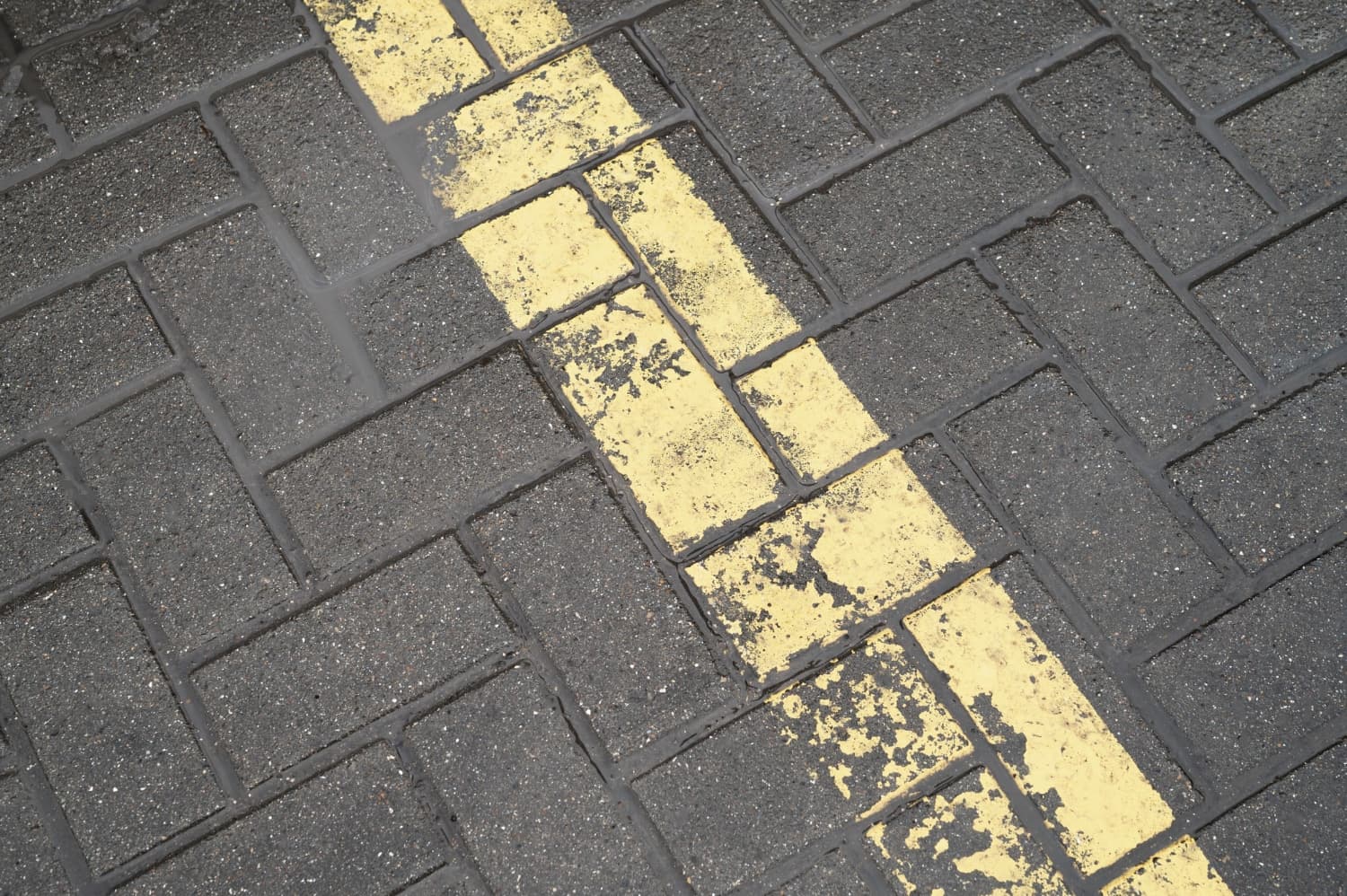
Stamped asphalt can provide a patterned appearance, like brick, cobblestone, or slate, over a suitable asphalt pavement. It's used on driveways, walkways, aprons, crosswalks, and commercial entryways, and it avoids the individual joints that let weeds grow and frost move pavers around. Whether it costs less than pavers or stamped concrete on your project depends on the scope, so compare itemized quotes.
What Is Stamped Asphalt?
Stamped asphalt is hot mix asphalt (HMA) that is imprinted with a pattern while the surface is still hot and workable. After the pattern is set, a colored surface coating is applied to give the look of brick or stone. Depending on the product, the coating can also help protect the surface from sun, water, oil, and wear.
Because the pattern is pressed into one continuous asphalt surface, there are no individual paver joints to shift or grow weeds. It's still asphalt, though: it can crack, move with frost, and need repairs like any asphalt pavement, and the decorative treatment doesn't replace a properly designed base and drainage.
How Is Stamped Asphalt Installed?
Stamped asphalt relies on the fact that asphalt softens when hot and sets as it cools. The basic steps:
- Surface preparation
Either a new layer of HMA is placed on a properly built base, or an existing sound asphalt surface is reheated with an infrared heater. The surface has to be hot enough to take the imprint without cracking. - Stamping
Steel or flexible templates in patterns such as running-bond brick, herringbone, or slate are laid on the hot surface and pressed in with a plate compactor or roller. - Coloring and sealing
Once the asphalt cools, a color coating is applied in the number of coats its manufacturer specifies. It adds color and, depending on the product, can help the surface resist abrasion, water, and aging.
Coatings aren't interchangeable. Manufacturers such as StreetBond offer different coating products for different traffic exposures and applications, and one product's test results don't carry over to every stamped-asphalt installation. Ask which coating system will be used, and follow its manufacturer's preparation, traffic, weather, and recoating requirements, including what it says about slip resistance.
Common Applications for Stamped Asphalt
Stamped asphalt suits both residential and commercial properties:
- Driveways, aprons, and walkways
- Crosswalks and traffic-calming areas
- Parks and plazas
- Commercial entryways and drop-off areas
- Decorative borders and medians
Benefits of Stamped Asphalt Paving
- Aesthetic versatility
It can mimic brick, cobblestone, slate, and more, adding curb appeal while keeping a single seamless surface. - Durability
Underneath the pattern it is still asphalt, so it keeps asphalt's flexibility under traffic and through temperature swings. Coating choice, texture, drainage, traffic, and maintenance all influence how well it performs. - No paver joints
There are no paver joints for water and weeds to work into. Periodic recoating, as the coating manufacturer specifies, keeps the color fresh, and cracks still need prompt repair. - Cost
It can cost less than decorative pavers or stamped concrete, but that depends on the area, pattern, coating, and site prep. Compare dated, itemized quotes for the same scope. - Quick installation
Residential jobs often take days rather than weeks, depending on size, prep, and weather.

Glossary Term Spotlight: Thermoplastic Coating
A thermoplastic material softens when heated and hardens again as it cools. It is used on some decorative crosswalks and pavement markings. Stamped-asphalt coatings vary by manufacturer and product, so ask which product your contractor uses and how often it needs recoating.
Stamped Asphalt vs. Stamped Concrete
Both give you a patterned, decorative surface, but they behave differently over time. For a broader comparison, see our guide to asphalt vs. concrete driveways in Connecticut.
- Installation time: Stamped asphalt is usually faster to install and open to traffic; concrete needs a longer cure before it can carry vehicles.
- Flexibility: Asphalt flexes with freeze–thaw movement; concrete is rigid and relies on control joints to manage cracking.
- Maintenance: Asphalt is easier to patch and recoat; concrete repairs are harder to blend in.
- Cost: Stamped asphalt is often the lower-cost option, but compare itemized quotes for the same area and prep before assuming it.
- Look: Asphalt patterns focus on brick, stone, and slate; concrete offers a wider range of textures, colors, and custom styles.
How Long Does Stamped Asphalt Last?
The pavement under the pattern should perform much like a standard asphalt surface built on the same base. Many well-built, well-maintained asphalt driveways last roughly 15 to 30 years; that's a planning range that depends on construction, drainage, traffic and maintenance, not a guarantee. Our guide on how long an asphalt driveway lasts in Connecticut covers what to expect. The pattern and color coating won't necessarily last as long as the pavement under them: the coating wears faster, especially in tire paths, so plan on periodic recoating.
For walkways, crosswalks, and other pedestrian areas, think about wet-weather traction and accessibility, not just appearance. Texture and coating choice affect how slippery the surface is when wet.
Maintenance Tips for Stamped Asphalt
- Recoat when wear and the coating manufacturer's guidance call for it, to keep color and protection.
- Go easy on de-icers and avoid metal plow blades and shovel edges that can scrape the coating.
- Repair cracks promptly so water can't get in and freeze.
- Sweep or rinse periodically to remove debris, leaves, and stains.
For winter care, our article on salting asphalt driveways explains how to use de-icers without overdoing it, and prompt crack and driveway repair keeps small problems from spreading under the pattern.
Is Stamped Asphalt Right for You?
If you want a decorative look for a driveway, walkway, or commercial entrance, stamped asphalt offers a patterned surface without individual paver joints. Compare itemized prices and maintenance needs for the same site before choosing between stamped asphalt, pavers, and stamped concrete. It is still asphalt, so the quality of the base matters just as much as on any new driveway installation. On commercial properties it is often used to set off an entrance or crosswalk within a larger parking lot paving project.
Cost depends on the area, pattern, and site prep. Stamping and coating add to the price of a standard asphalt surface, so start with our 2026 asphalt driveway cost guide for the baseline and ask for an itemized quote for the decorative work.
Final Thoughts
Stamped asphalt puts the look of stone or brick on a flexible, repairable asphalt surface. Installed on a solid base with good drainage and recoated as the coating manufacturer recommends, it can be a practical choice for homeowners and property managers alike. Maisano Brothers Inc. has been paving Connecticut since 1967 from our yard in Northford. Thinking about stamped asphalt for your property? Ask us about it and we will look at the area with you and give you a free estimate.