
Key Takeaways
- Sealcoating is a surface treatment that can help protect a suitable asphalt surface from water, UV rays, and some automotive fluids. It doesn't add structural strength or make pavement fuel-proof.
- Resealing every two to three years is typical guidance, not a fixed schedule; whether a driveway needs it depends on its condition and the sealer used.
- On new asphalt, waiting at least 90 days after paving is typical guidance; the sealer's label and the pavement's condition decide. A minimum wait doesn't mean new asphalt needs sealing right afterward.
- In Connecticut, late summer to early fall is usually a good time to seal.
- Repair cracks, potholes, loose surface stone, and settled areas before sealcoating; sealer doesn't fix damage.
Sealcoating may help protect a suitable asphalt surface, but timing depends on pavement condition and the selected product. Many homeowners wait until cracks or potholes appear, but sealcoat works best as prevention: applied on a sound surface at the right time, it helps shield the surface from water, sunlight, chemicals, and everyday wear. Repair defects first and follow the manufacturer's preparation, weather, and reopening instructions.
What Is Asphalt Sealcoating?
Sealcoating is the process of applying a thin protective coating over asphalt pavement. The coating acts as a barrier against the elements and slows the aging (oxidation) and hardening of the asphalt binder underneath, which helps the pavement stay flexible longer.
Driveway sealers come in different formulations, including asphalt-emulsion products. Connecticut's Public Act 17-113 has barred coal-tar pavement sealants on state and local highways since October 2017. That law is limited to those public highways; it doesn't ban coal-tar sealer on every private driveway, as UConn's explanation of its scope notes. Separately from what the law requires, many owners prefer a non-coal-tar sealer for environmental reasons. Ask your contractor which product they use.
Why You Should Seal Your Driveway
Protection Against Water Damage
Water is one of the biggest threats to asphalt. It seeps into small cracks and surface pores, weakens the base, and in a Connecticut winter freezes and expands, leading to potholes and structural failure. A fresh sealcoat on sound pavement helps the surface shed water; it won't stop water that gets in through open cracks or poor drainage.
Prevents UV Damage and Oxidation
Sunlight and air gradually age (oxidize) the asphalt binder, making the surface brittle and prone to cracking. Sealcoating takes the brunt of that UV exposure and slows oxidation.
Resists Oil and Chemical Damage
Oil, gasoline, and other automotive fluids can soften asphalt and cause surface deterioration. Sealer can slow penetration and make spills easier to clean up, but it doesn't make pavement fuel-proof, and fuel spills can still damage both the sealer and the asphalt below.
Improves Appearance
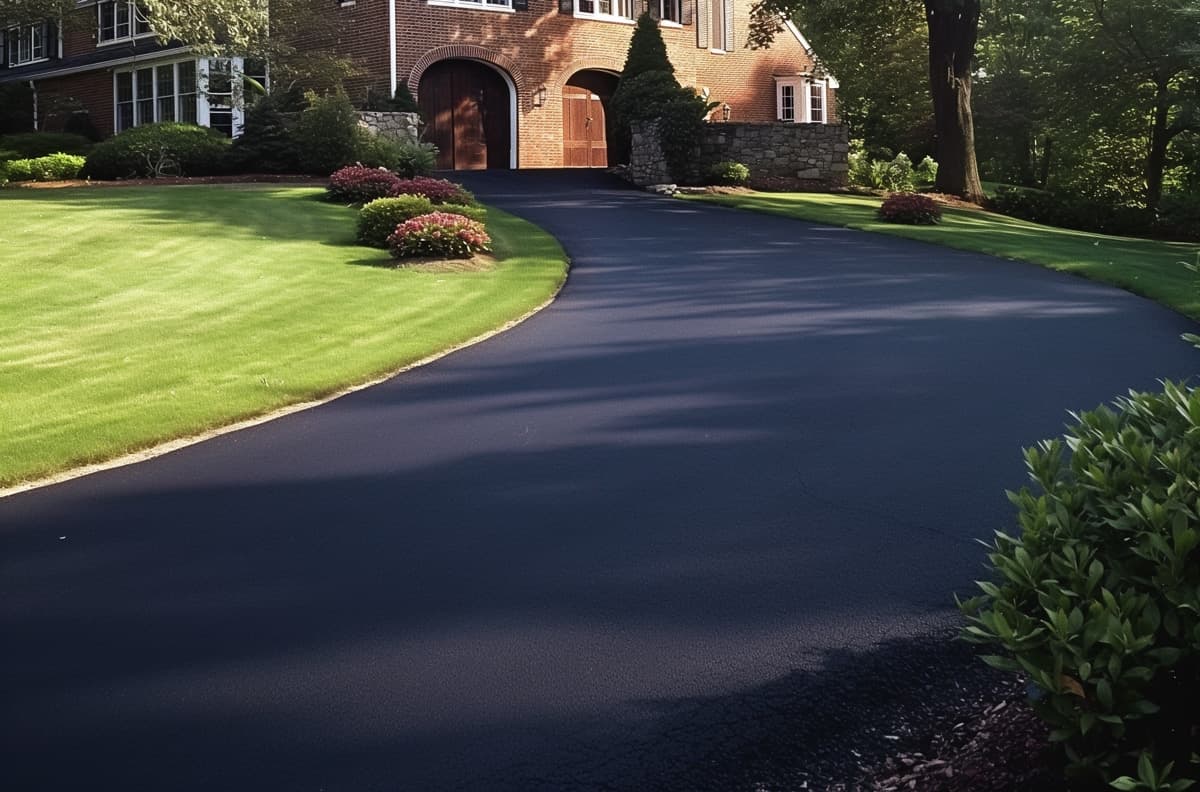
A freshly sealed driveway has a smooth, dark finish that improves curb appeal and makes your property look well maintained.
Extends Driveway Lifespan
Sealcoating at appropriate intervals, together with crack filling, timely repairs, and good drainage, can help a driveway reach the long end of its expected life and delays the need for major repairs or replacement. Our guide on how long an asphalt driveway lasts in Connecticut explains what else affects lifespan.
When Should You Sealcoat Your Driveway?
Timing depends on the pavement's condition and the product you use, so start with the sealer manufacturer's instructions.
- New asphalt: waiting at least 90 days after paving is typical guidance; the sealer's label and the pavement's condition decide. Manufacturers' guidance differs; SealMaster's general guidance, for example, gives its own initial waiting interval.
- Existing driveways: resealing every two to three years is typical guidance, but the need depends on the surface's condition, the existing coating, and the sealer used.
- Seal in warm, dry weather, with temperatures that meet the product's minimum (commonly around 50°F and rising) and no rain in the forecast.
In Connecticut, mid-August through September is often the sweet spot: the pavement is warm and dry, and the new coat has weeks to cure before the first hard freeze. Our guide on late-summer and early-fall sealcoating explains why.
Signs Your Driveway May Be Ready for Sealcoating
No single sign settles it. Look at the overall surface condition, what coating is already on it, and what treatment it actually needs:
- Faded gray color instead of deep black (on its own, color isn't enough to say sealing is due)
- Small surface cracks forming, which should be filled first
- A rough, dry texture
- Water soaking in rather than beading after rain
Loose stones on the surface (raveling), structural cracking such as alligator-pattern cracks, or areas that keep settling usually need repair before any sealer goes on. If left untreated, these issues can turn into larger problems like potholes. Learn how those develop in our guide on pothole repair and patching.
Sealcoating vs. Repairs: What's the Difference?
Sealcoating is a preventive treatment, not a repair.
If your driveway already has cracks or potholes, those should be filled or patched before it's sealed. Otherwise, water keeps working underneath and the damage continues. Professional driveway repair can take care of that first.
When damage is widespread, sealing isn't enough, and the choice becomes resurfacing or replacement. Learn more in our guide on resurfacing vs. replacement.
DIY vs. Professional Sealcoating
DIY Sealcoating
Store-bought sealers are available, and a careful homeowner can apply them. The results depend heavily on preparation and weather: if the surface isn't thoroughly cleaned, cracks aren't filled first, or the coat goes on too thick, the sealer may wear unevenly or peel early.
Professional Sealcoating
Professional crews clean and prepare the surface, fill cracks, and apply sealer evenly with spray or squeegee equipment, timed to the weather and following the product's instructions. The result is usually more uniform coverage. Ask any contractor which sealer they use and how they prepare oil spots and patches. See how we approach our driveway sealcoating service.
How Sealcoating Fits Into Long-Term Maintenance
Sealcoating is one part of a complete asphalt maintenance plan:
- Regular inspections
- Crack filling or sealing
- Drainage maintenance
- Timely repairs
Winter can undo a lot of that work, especially with careless plowing or heavy salt use, so fill cracks in the fall and go easy on deicers.
Frequently Asked Questions
How often should you sealcoat a driveway?
Every two to three years is typical guidance, not a requirement. Whether a driveway needs resealing depends on its condition, the existing coating, and the sealer used, so inspect the surface and follow the product label.
When is the best time of year to sealcoat?
Warm, dry weather from late spring through early fall. In Connecticut, mid-August through September often works well, because the coat has time to cure before cold weather.
How long does sealcoating take to dry?
It depends on the product and the weather, so follow the sealer's reopening instructions. As a rough guide, many sealers dry enough for foot traffic within about a day and for vehicles within one to two days, longer in cool, humid, or shady conditions.
Can you sealcoat over cracks or potholes?
No. Fill cracks and patch potholes first. Sealer doesn't bridge or repair damage.
How long does sealcoating last?
That varies with the product, traffic, climate, and how the surface was prepared, which is why resealing intervals are given as a range, typically two to three years, with the surface's condition and the sealer used deciding when it's actually due.
Is sealcoating really necessary?
It isn't required. On a sound, suitable surface it can help slow UV and water damage as part of routine maintenance, but it isn't a substitute for crack repair, drainage, or structural repairs.
What happens if you don't sealcoat your driveway?
Unsealed asphalt tends to fade, and its surface tends to oxidize and become brittle faster, which can lead to more surface cracking. How much difference sealing makes depends on the pavement, its traffic, and its exposure.
How much does sealcoating cost?
It depends on the driveway's size and condition, including how much crack filling is needed. Our sealcoating calculator estimates how much sealer the job needs, in gallons and pails, from the area and number of coats; actual coverage depends on the product and surface. It doesn't price installation, so contact us for a site-specific quote.
Can I sealcoat my driveway myself?
Yes, but good results depend on thorough cleaning, crack filling, thin even coats, and the right weather. Professional application usually gives more uniform coverage.
Will sealcoating make my driveway slippery?
A sealed surface can be smoother than bare asphalt, especially when wet. Traction depends on the product's texture, any sand or aggregate its manufacturer approves adding, and how it's applied. Ask your contractor which product they use and how they address traction.
How long should I wait to seal a new driveway?
Waiting at least 90 days after paving is typical guidance; the sealer's label and the pavement's condition decide. That minimum wait isn't a reason to seal: the Asphalt Institute notes that a well-designed, well-built low-traffic pavement may not need sealing for about two to five years.
Does sealcoating protect against oil stains?
It can slow oil and chemical penetration and make spills easier to clean up, but it doesn't completely prevent stains and doesn't make the driveway fuel-proof.
Protect Your Driveway
Sealcoating is one practical way to look after a sound asphalt surface. By helping shed water, slowing oxidation, and reducing surface wear, it can help your asphalt stay in good condition as part of a broader maintenance plan. Maisano Brothers Inc. has been paving Connecticut since 1967 and offers sealcoating for residential driveways. Get your free estimate, and we'll look at the surface and tell you whether it needs repairs, sealing, or neither yet.