
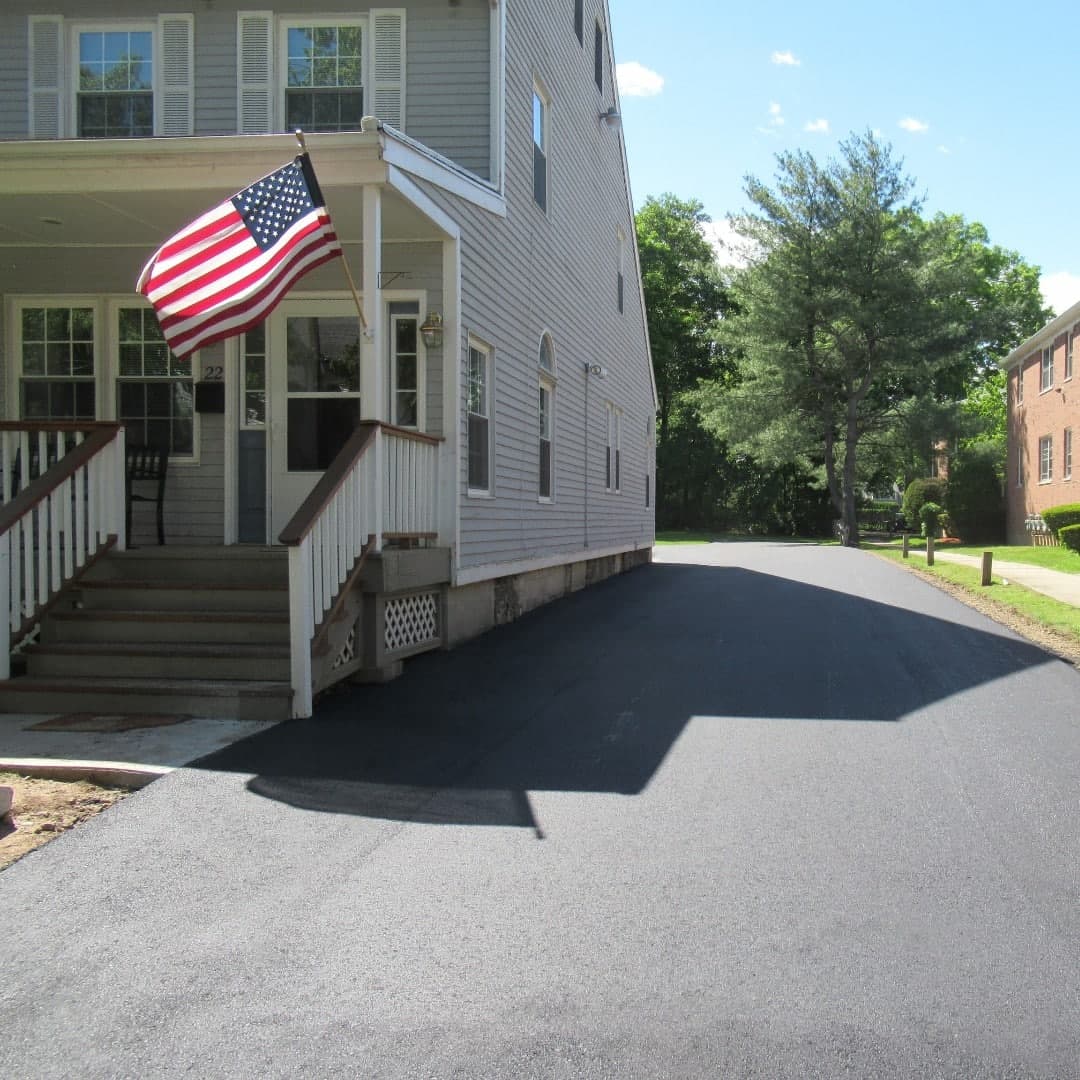
Short answer: new hot-mix asphalt gains early stability as it cools. Follow your contractor's reopening instructions, and take care with tight turns and concentrated loads, especially in hot weather. Our usual guidance, which your crew will confirm for your site, is that a new driveway is usually walkable after about a day and drivable after about three days in mild weather. There is no single full-cure date that makes every pavement immune to marking or deformation.
Key Takeaways
- Foot traffic: usually walkable after about a day.
- Cars: usually drivable after about three days in mild weather; your crew may ask you to wait longer during a heat wave.
- Heavy loads: trucks, campers, and dumpsters need a separate answer, based on what the pavement was built to carry.
- No full-cure date: the binder keeps aging slowly over the years, but there is no point at which every pavement stops being sensitive to heat and concentrated loads.
- Hot weather: asphalt is softer when it's hot, so tight turns and point loads can mark it, even after its first year.
What Happens After Asphalt Is Laid?
Hot-mix asphalt is placed and compacted while it's hot, and it becomes usable mainly by cooling and gaining enough stability for the loads it will carry. That is why the first day or so matters most. After that, the binder that coats the stone continues to age gradually over the life of the pavement. That aging isn't a countdown to a finished state: asphalt stays temperature-sensitive, so on a hot afternoon a tire turning in place, a kickstand, or a trailer jack can still mark it. The Asphalt Institute's engineering FAQs discuss how asphalt behaves with temperature and time.
When Can You Walk, Drive, and Park on It?
On a typical residential driveway, our usual guidance, which your crew will confirm for your site, is walking after about a day and driving after about three days in mild weather. Temperature, the mix, the pavement thickness, and the site can change those times, so your crew's instructions for your driveway come first. Our guide on caring for a new asphalt driveway covers the first months in more detail.
Frequently Asked Questions
1. How Long After Paving Can You Walk on It?
Our usual guidance is that new asphalt is walkable after about a day, and your crew will confirm that for your site. Avoid high heels, dragging anything sharp across it, and setting down things like ladders or furniture with small feet that concentrate weight.
2. Can I Drive on Fresh Asphalt Right Away?
No. Our usual guidance is that a new driveway is drivable after about three days in mild weather, and your crew may ask you to wait longer if it's very hot. When you do start driving on it, go slowly, drive straight in and out, and avoid sharp turns, especially near the edges.
3. How Does Weather Affect New Asphalt?
Hot weather keeps the surface softer, so be extra careful on hot afternoons, both in the first weeks and in later summers. Cool weather shortens the time crews have to compact the mix while it's hot, which is one reason paving is scheduled around the weather. In Connecticut, the paving season runs roughly April through November, weather permitting, and it's one reason the best time to pave in Connecticut is usually late spring or early fall.
4. Is There a Point When Asphalt Is Fully Cured?
Not in a way you can mark on a calendar. The binder continues to age gradually, but there is no single date after which every pavement reaches a final hardness or can't be marked. The practical milestones are the ones in your contractor's aftercare instructions: when to walk, when to drive, and when heavier loads are allowed.
5. When Should New Asphalt Be Sealed?
Sealcoat is a surface treatment; it doesn't help new asphalt set, doesn't restore structural strength, and doesn't make pavement fuel-proof. Our usual practice is to wait at least 90 days after paving before the first coat. Reaching that minimum doesn't by itself mean the driveway needs sealing; the pavement's condition and the sealer manufacturer's instructions decide. After that, we generally recommend resealing a driveway every two to three years, depending on its condition and the sealer used. Ask us about driveway sealcoating when the time comes.
6. How Can I Protect New Asphalt?
Change where you park from day to day, don't use sharp tools on the surface, and keep heavy trucks, campers, and dumpsters off it unless your contractor confirms the pavement was built for that load. Use suitable load-spreading supports under outriggers or container feet only where the equipment instructions permit them. They spread a concentrated load, but they don't make a pavement suitable for a load it wasn't designed to carry.
7. What If It Rains After Paving?
Light rain after the asphalt has been compacted generally doesn't cause problems. Contractors avoid paving in heavy rain, and standing water on the base before paving is a reason to reschedule. If the forecast looks doubtful, ask your contractor how they'll handle it.
8. Are There Precautions for High-Traffic Areas?
For commercial lots and shared driveways, reopening depends on the loads and the areas involved, so there is no single waiting period. Your contractor should give you a reopening plan for each area and type of traffic, approved by the contractor, as part of the paving process.
What to Expect Over Time
The First Day
The asphalt is cooling and gaining early stability, and it's at its most vulnerable. Keep everyone and everything off it until your crew says otherwise.
The First Week
Our usual guidance is walking after about a day and driving after about three days in mild weather. Keep heavy vehicles and equipment off.
The First Months
Power steering scuffs and parking divots are common in this period, especially in summer heat. Vary where you park and don't turn the wheel while stopped.
The Years After
Asphalt keeps aging gradually and stays sensitive to heat. Tight turns and concentrated loads can still leave marks in hot weather after the first year, so the same habits remain worthwhile.
Maintenance Tips for New Asphalt
Keep it clean: Sweep or blow off leaves and debris so they don't stain the surface or hold moisture against it.
Clean up spills quickly: Petroleum fuels and oils can soften asphalt binder. Other vehicle fluids, such as antifreeze, don't all affect binder the same way, but clean up any spill promptly using a method compatible with asphalt; for set-in marks, see our guide to removing oil stains from asphalt.
Spread concentrated loads: Use suitable load-spreading supports under trailer tongues and similar point loads only where the equipment instructions permit them. Vehicle jacks and stands need a surface and setup that meet the equipment manufacturer's instructions and can carry the load safely (one jack-stand manual, for example, calls for a hard, level surface); don't assume plywood makes softened asphalt suitable for vehicle support. Boards spread weight; they don't make the driveway suitable for a heavy vehicle it wasn't built to carry, so ask before bringing one on.
Protect the edges: Unsupported edges are the weakest part of a new driveway. Don't drive off the edge. Follow your contractor's designed edge or shoulder detail and maintain drainage; loose topsoil is not a substitute for structural edge support.
Conclusion
New asphalt is ready for light use within days, once it has cooled and your crew gives the go-ahead. There is no single full-cure date, so a little care on hot days and with heavy loads, in the first season and after, helps prevent the scuffs and dents people notice on a driveway. If you're planning a new driveway or have questions about one we installed, contact Maisano Brothers Inc. for a free estimate or advice.