
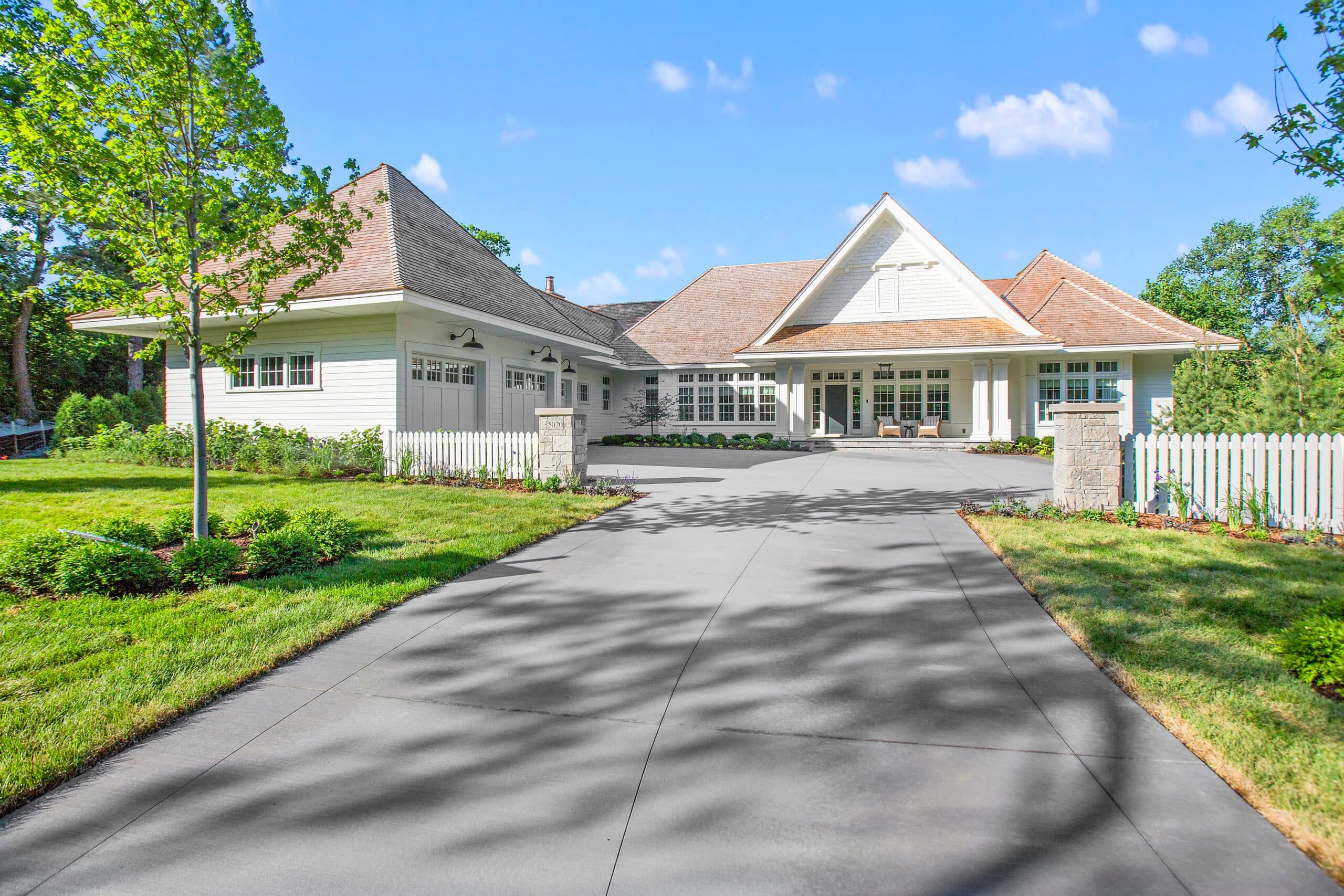
When planning a driveway paving project, residential or commercial, the material you choose affects both the budget and how the driveway holds up. Asphalt concrete (the technical name for blacktop), concrete, stamped concrete, and interlocking pavers can all work. Concrete and suitable paver systems aren't limited to light or decorative use. No surface is best for every property. Compare alternatives using the same project scope, expected loads, drainage needs, maintenance plan, and local installed quotes. Here's how asphalt compares, including where the other materials have the edge.
Short answer: asphalt usually costs the least up front of the common paved driveway surfaces, is ready to drive on sooner, and is often straightforward to patch or resurface, but it needs periodic crack filling and, depending on its condition, sealcoating. Our published planning ranges (October 2026, generic budgeting figures, not quotes) are about $4–$10 per square foot for a new asphalt driveway and about $8–$15+ for concrete; pavers vary with the system. Many well-built, well-maintained asphalt driveways last roughly 15 to 30 years, a planning range rather than a guarantee, while concrete often lasts longer when properly designed, built and maintained. The right choice depends on your site, drainage, loads, budget and the look you want.
1. Cost-Effectiveness
Initial Costs
Asphalt usually costs less to install than concrete. Maisano Brothers Inc.'s published ranges are about $4–$10 per square foot for a new asphalt driveway and about $8–$15+ per square foot for concrete. These are generic planning ranges for a typical new driveway on a prepared stone base, not a quote or a statewide average. Excavation, removal and disposal, drainage, base work, compacted thickness, access, and site conditions can move a project within or above the range. Paver pricing varies with the system and installation, so compare it using a quote for the same scope. Our guide to how much an asphalt driveway costs explains what moves the price. The gap matters most on long or wide driveways.
Maintenance Costs
Asphalt needs regular upkeep: filling cracks as they appear and, where its condition calls for it, periodic sealcoating. We generally recommend resealing a driveway every two to three years as typical guidance, but whether yours needs it depends on its condition and the sealer used. Concrete needs less routine care, but when it cracks or spalls, repairs are harder to make and tend to show.
Many well-built, well-maintained asphalt driveways last roughly 15 to 30 years; that's a planning range that depends on construction, drainage, traffic and maintenance, not a guarantee. Concrete driveways often last longer when properly designed, built and maintained. Whether asphalt's lower installation cost makes it cheaper over the life of the driveway depends on service life, maintenance, site preparation, drainage, traffic, and local prices, so compare lifetime costs on the same scope.
2. Installation and Curing Time
Faster Installation
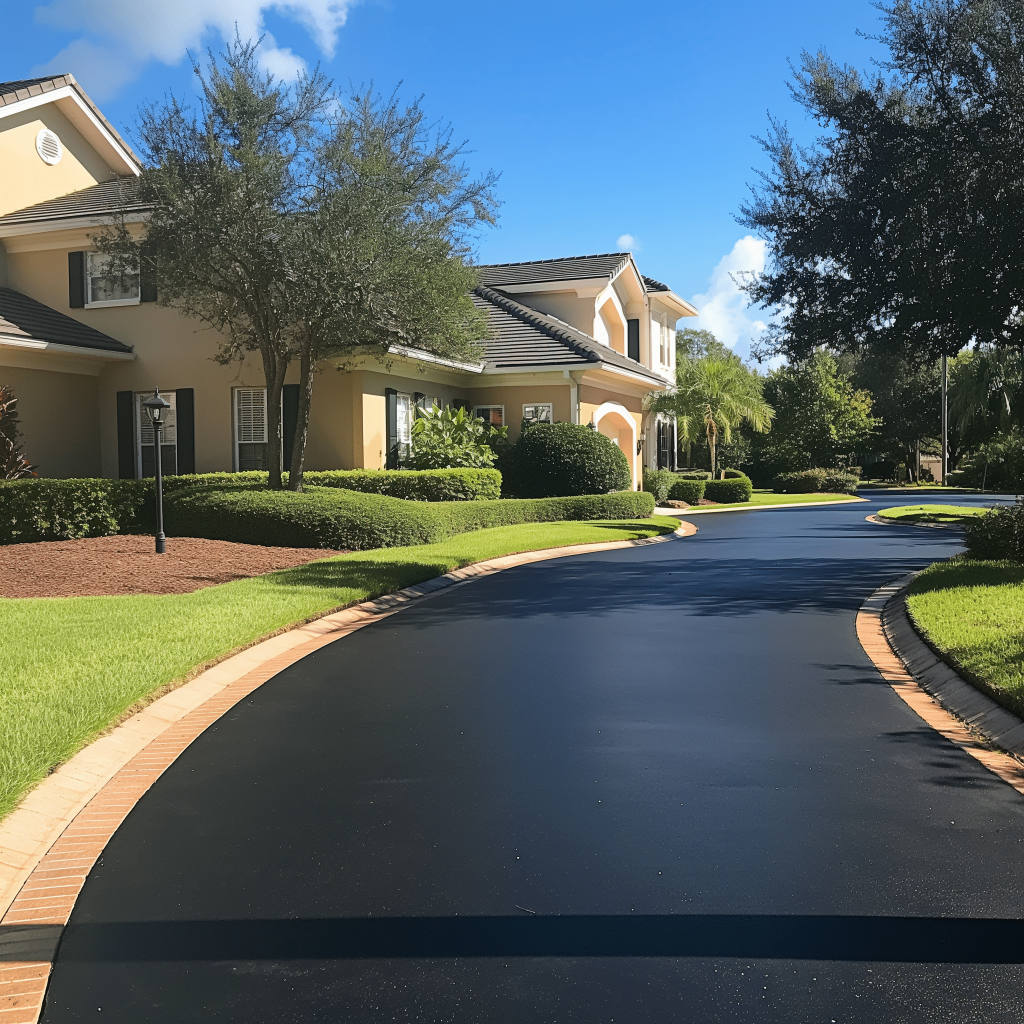
Most residential asphalt driveways are paved in a day or two once the base is ready. New asphalt is usually walkable after about a day and drivable after about three days in mild weather; that's our usual guidance, which your crew will confirm for your site. See our guide to how long a new asphalt driveway takes to cure. Concrete has to reach adequate strength before it can carry vehicle weight, and the timing depends on the mix, the weather, and the project's instructions.
Quick Use
Getting back on the pavement sooner means less disruption at home and less downtime for a business. That's a big reason asphalt is a common choice for parking lots, where every day closed costs money.
3. Durability and Flexibility
Weather Resistance
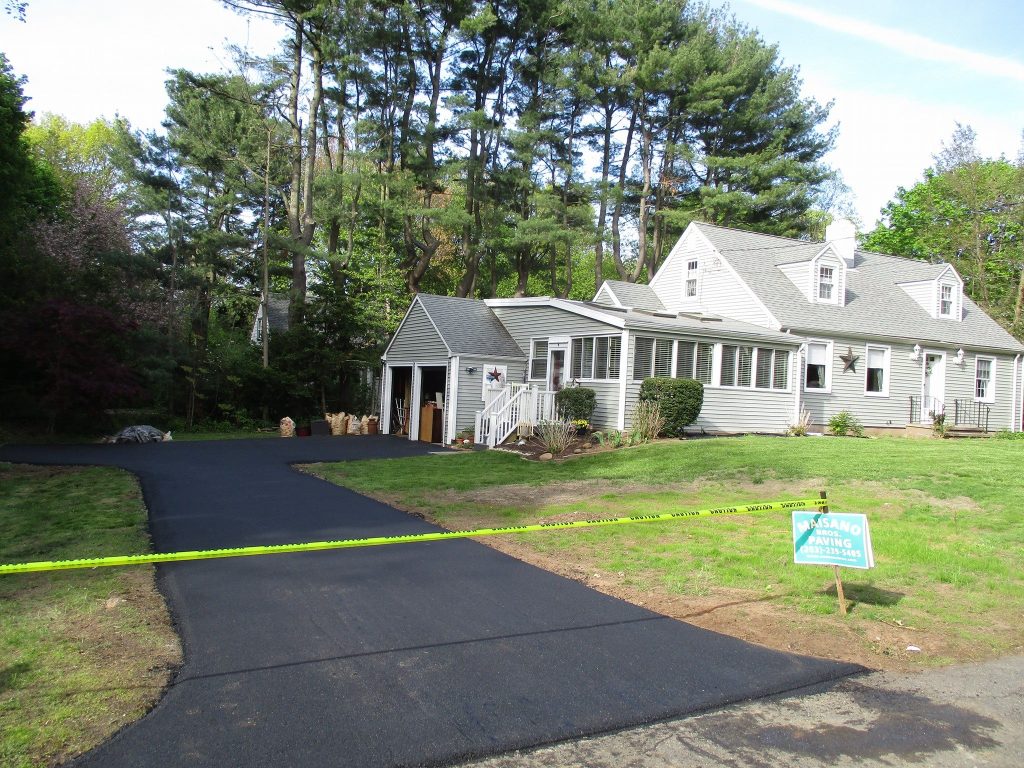
Asphalt is flexible, while concrete is rigid and relies on control joints to manage cracking. Flexibility alone doesn't decide how a driveway handles frost: soil type, water, freezing conditions, drainage, and a pavement section designed for the site matter for every material. Concrete's resistance to deicer scaling depends on its mix, air entrainment, finishing, and curing, and newer concrete is most vulnerable (see NRMCA's guidance on scaling). No pavement is immune to water getting under it. Our asphalt vs. concrete comparison for Connecticut goes deeper on winter performance.
Easier Repairs
Asphalt is often straightforward to patch or resurface. Cracks can be filled, damaged sections cut out and patched, and a worn surface resurfaced. Repair cost, access, and appearance depend on the damage and the material, so compare the proposed repair method for each option. The trade-off is that asphalt does need that attention: it oxidizes and turns gray over time, and it can soften and scuff in summer heat. Concrete holds its light color and shape in heat, which is part of its appeal.
4. Safety and Comfort
Skid Resistance
A properly finished asphalt surface has a textured feel that gives good traction in wet weather. Its dark color also absorbs sunlight, which helps snow and ice melt off faster on sunny winter days.
Noise
Pavement noise comparisons usually concern tire noise at highway speeds. Those results don't carry over directly to the low speeds of a driveway or parking lot, so noise isn't a strong reason to choose one driveway material over another.
5. Environmental Benefits
Recyclability
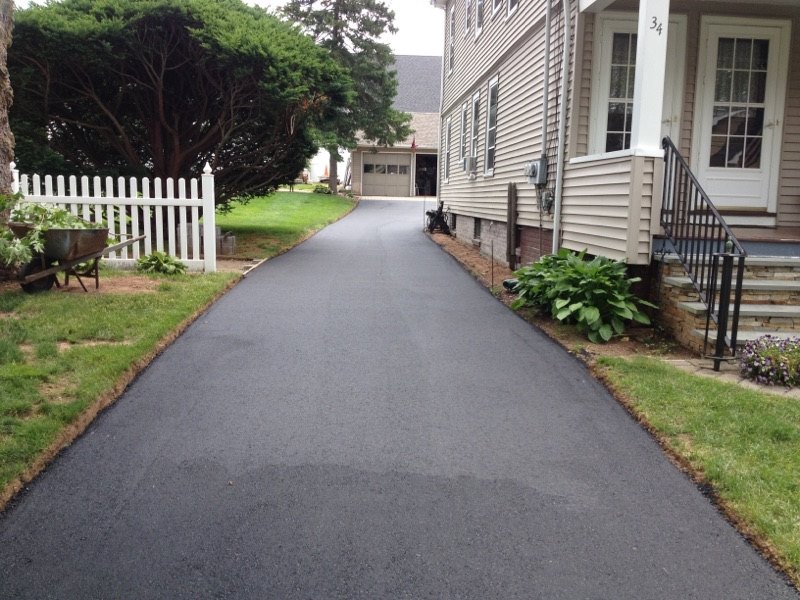
The National Asphalt Pavement Association reports, from its industry survey of the 2024 construction season, that asphalt pavement remains America's most recycled material. Old asphalt is milled or broken up and reused as reclaimed asphalt pavement (RAP) in new mixes, which reduces the need for new stone and binder.
Energy Efficiency
Warm mix asphalt technologies let plants produce and place asphalt at lower temperatures than conventional hot mix, which reduces fuel use and emissions at the plant.
Conclusion
No surface is best for every property. Asphalt usually offers a lower upfront cost, quick installation, and easy repair. Concrete and pavers can carry everyday traffic too, and they make sense when their service life, appearance, or design fits your priorities and budget. Compare alternatives using the same project scope, expected loads, drainage needs, maintenance plan, and local installed quotes. Either way, the base underneath matters as much as the material on top.
Asphalt driveway projects in Connecticut
Our project pages show asphalt driveway work in practice. On this Branford, CT driveway paving project, the existing driveway was milled and then repaved with new asphalt.
Is your driveway cracked, crumbling, discolored, or looking neglected? Call Maisano Brothers Inc.
If you're unsure whether to repair, resurface, or replace, or which material fits your property, we're happy to take a look. Maisano Brothers Inc. has been paving Connecticut since 1967. Call us at (203) 239-5405 or request a free written estimate.
Frequently asked questions
Which driveway material is cheapest to install?
Of asphalt and concrete, asphalt usually costs less up front: about $4–$10 per square foot versus about $8–$15+ in our published October 2026 planning ranges, which are illustrative, not quotes. Paver pricing depends on the system, so compare quotes for the same scope.
How long does an asphalt driveway last compared with concrete?
Many well-built, well-maintained asphalt driveways last roughly 15 to 30 years; that's a planning range that depends on construction, drainage, traffic and maintenance, not a guarantee. Concrete often lasts longer when properly designed, built and maintained.
Which driveway material is easiest to repair?
It depends on the damage. Asphalt is often straightforward to patch or resurface: cracks can be filled, damaged sections cut out and patched, and a worn surface resurfaced over a stable base. Concrete repairs can be harder to hide and sometimes mean replacing a whole slab. Repair cost, access, and appearance vary with the damage and material, so compare the proposed repair method for each option.