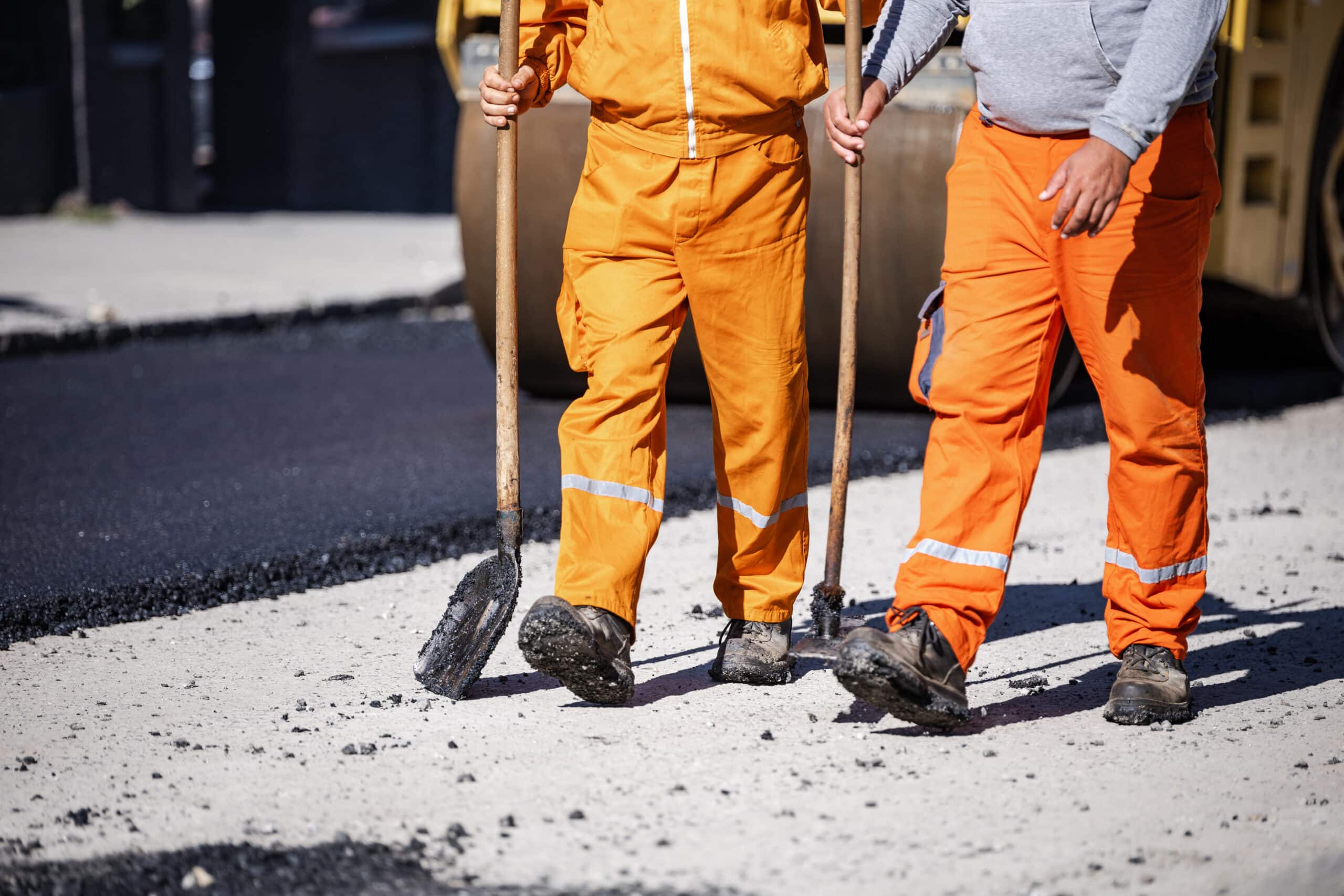
Every step of the asphalt paving process happens on foot: standing on fresh hot mix, walking loose stone, and dealing with oil and tack coat. The right boots are about safety and performance, not just comfort. Below are five boots listed on their manufacturers' sites when we reviewed them in 2026, compared on their manufacturers' published specifications. These are manufacturer-specification comparisons, not tested performance rankings; we did not test these boots. One of them, the Red Wing Classic Moc, is a lifestyle boot included only for comparison, not as a recommendation for asphalt work. Select footwear for the actual heat, impact, puncture, traction, and other hazards on your job, with your employer's PPE requirements and the manufacturer's instructions controlling the choice. Prices, sizes, and availability change often, so check the manufacturer's site before you buy.
What to Look for in Asphalt Paving Boots
Hot mix is laid at several hundred degrees, so the outsole is a key consideration alongside impact, puncture, and traction hazards. Check for:
- A heat-resistant outsole: ideally with a heat rating the manufacturer actually states. Keep in mind that an outsole rating describes the sole material, not the whole boot, and it isn't a safe continuous-exposure limit for your foot.
- A flat wedge sole: less likely than deep lugs to mark a fresh mat or pick up hot mix.
- Slip and oil resistance: tack coat, diesel, and wet stone are everyday hazards.
- The right toe protection: an ASTM F2413-rated safety toe if your job requires one. ASTM F2413 is an industry standard for protective footwear; it isn't the wording of OSHA's construction foot-protection rule, 29 CFR 1926.96. Footwear requirements depend on the work and its hazards, so follow your employer's or site's PPE rules. This list isn't a PPE compliance assessment.
- Comfort: a supportive footbed and good fit for long shifts.
1. Thorogood American Heritage 804-4200
Relevant if: your job requires a safety toe and you want a wedge sole
- Pros: Steel safety toe, Goodyear welt construction, slip-resistant MAXWear Wedge outsole, made in the USA with U.S. and globally sourced components
- Cons: Not waterproof or insulated; Thorogood doesn't publish a specific heat rating for the outsole
Notes: A U.S.-made wedge boot with a steel safety toe. See the 804-4200 on Thorogood's site for current specs.
2. KEEN Utility Cincinnati 6" Waterproof (Carbon-Fiber Toe)
Relevant if: a published outsole heat rating matters to you
- Pros: Heat-resistant rubber outsole rated to 572°F (300°C) by KEEN, lightweight carbon-fiber safety toe, waterproof membrane, Goodyear welt
- Cons: Waterproofing can make it warmer in peak summer heat
Notes: The most specific published outsole heat rating among the boots listed here. That 572°F figure is KEEN's rating for the outsole material, not a rating for the whole boot, not a limit your feet can safely tolerate for long periods, so don't stand still on a fresh mat any longer than the work requires. See KEEN's Cincinnati product page.
3. Timberland PRO Wedge 6"
Relevant if: your site doesn't require a safety toe
- Pros: Heat-, oil-, slip-, and abrasion-resistant non-marking rubber outsole; 24/7 Comfort System footbed; electrical hazard protection
- Cons: Soft toe only; no specific heat rating published
Notes: A soft-toe wedge boot for sites without a safety-toe rule. See the Timberland PRO Wedge 6" work boot (TB153009214) on Timberland's site for current specs. Timberland's comfort and outsole descriptions are manufacturer claims, not evidence that it's suited to standing on hot mix.
4. Red Wing Heritage Classic Moc 875
Included for comparison only: a lifestyle boot, not recommended for asphalt paving work
- Pros: Traction Tred wedge outsole, full-grain oiled leather, Goodyear welt, resoleable, made in the USA
- Cons: No safety toe; sold as a Heritage (lifestyle) boot rather than a rated work boot; premium price
Notes: Red Wing sells it as a Heritage lifestyle boot, not a rated work boot, and it has no safety toe or published outsole heat rating. We list it only so you can compare it against the work boots above; it isn't a recommendation for hot-asphalt work. See the Classic Moc 875 on Red Wing's site.
5. Iron Age Groundbreaker IA5016
Relevant if: your job requires metatarsal protection
- Pros: Steel toe, external metatarsal guard, EH-rated, listed by Iron Age as meeting ASTM F2413; Iron Age rates it resistant to slip, oil, heat, and chemicals
- Cons: Rubber lug outsole rather than a wedge; heavier and bulkier than the others
Notes: The metatarsal guard addresses impact hazards common around milling and heavy equipment. It has a lug outsole rather than a wedge, so check it against your hot-mix exposure. See the Groundbreaker IA5016 on Iron Age's site for current specs.
Which Boot Should You Choose?
These are manufacturer-specification comparisons, not tested performance rankings, so there's no overall winner here. Start from the hazards on your job and your employer's PPE requirements, then compare published specifications:
- Safety toe on a wedge sole: Thorogood American Heritage 804-4200 (steel toe) or KEEN Utility Cincinnati (carbon-fiber toe)
- A published outsole heat rating: KEEN Utility Cincinnati, whose outsole KEEN rates to 572°F (300°C)
- No safety-toe requirement: Timberland PRO Wedge 6" (soft toe)
- Metatarsal protection: Iron Age Groundbreaker IA5016
- Not recommended for asphalt work: Red Wing Classic Moc 875, a lifestyle boot listed for comparison only
Bonus Tip: Don't Forget the Insole
A cushioned insole cuts fatigue, and rotating two pairs lets each dry out. Connecticut's paving season runs roughly April through November, so the same boots see cold, wet spring mornings and hot July afternoons; our post on how summer heat affects asphalt explains why the surface stays hot so long.
Need Help With a Paving Project?
Maisano Brothers Inc. has been paving Connecticut since 1967. If you're planning a driveway or commercial parking lot paving project, contact us to talk it through and get a free estimate.