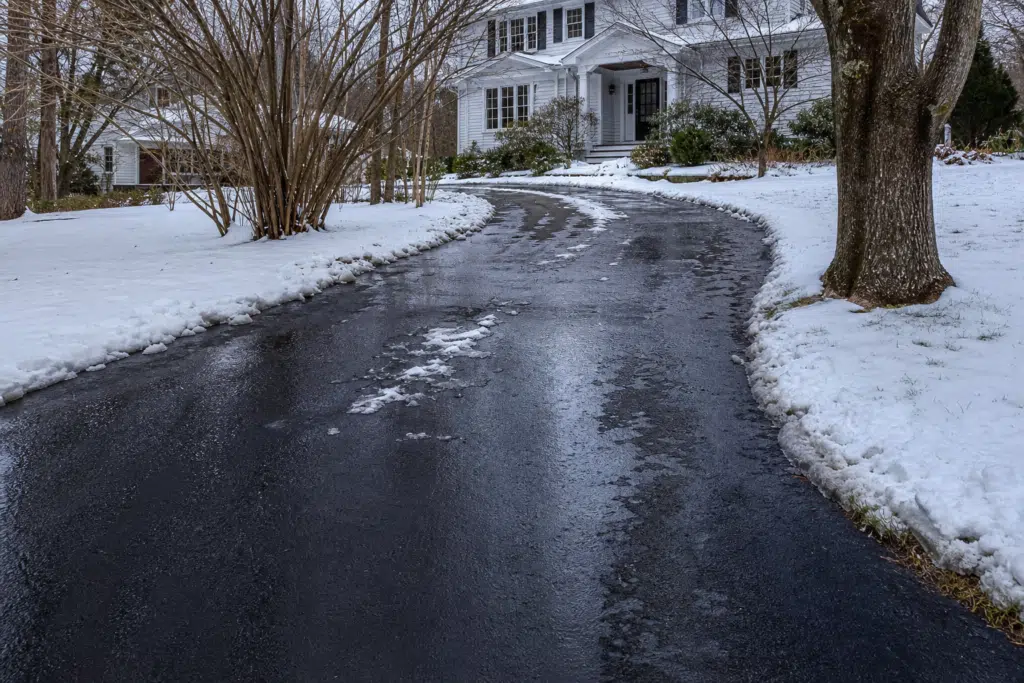
If a Connecticut driveway turns slick after every storm, a heated driveway can sound like the perfect fix. It can be a serious upgrade, especially for steep, shaded, or high-use driveways where snow and ice create real access problems. But it is not a simple add-on, and it is rarely the cheapest path.
The better question is whether the system solves a problem that matters enough to justify the added cost. If you are already planning a full replacement through asphalt paving services or comparing options for residential paving services, that is usually the right time to discuss heating. For a broader comparison, Maisano Brothers also has a related guide on heated asphalt and concrete driveways.
Key Takeaways
A heated driveway is usually worth considering when safety, access, and winter convenience matter more than upfront cost.
Quick answer
- Heated driveways are most useful on long, steep, shaded, or high-use driveways.
- They can reduce shoveling, salting, and ice buildup.
- They cost more than standard asphalt because the system must be built into the driveway.
- Base prep, grading, and drainage matter even more than they do on a normal paving job.
- New installations are usually better candidates than retrofits.
What a heated driveway actually does
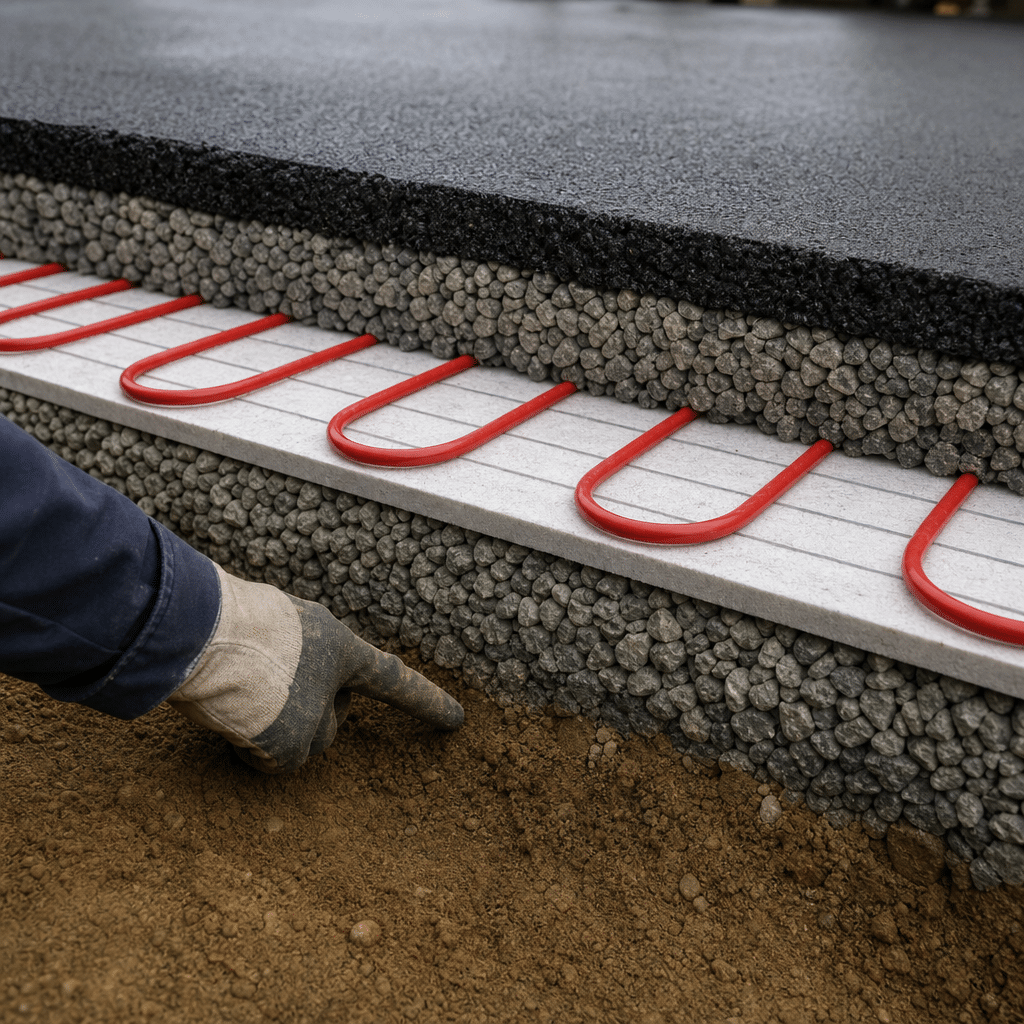
A heated driveway uses electric cables or hydronic tubing below the pavement to warm the surface from underneath. When the system runs, it helps melt snow before it bonds to the asphalt and limits the ice that forms after storms.
Electric systems are often simpler for smaller residential areas. Hydronic systems are more complex, but they may make sense for larger driveways or properties where operating efficiency matters over time.
When it makes sense for Connecticut homeowners
The strongest candidates are driveways where winter creates more than a mild inconvenience. A short, flat driveway may not justify the cost. A steep driveway that refreezes every night is a different conversation.
Good candidates include
- Steep residential driveways
- Long or wide paved approaches
- Homes with mobility concerns
- Driveways with heavy shade and frequent refreeze
- Properties where snow removal is a recurring problem
What changes in the paving process
A heated driveway is not a normal overlay. The heating layout has to be planned before the asphalt goes down, and the base has to be stable enough to protect both the pavement and the system underneath it.
Base prep matters more than ever
Soft areas, poor compaction, and weak subbase material can cause movement under the heating system. That is why asphalt grading should be part of the planning before the system is installed.
Drainage has to be deliberate
Melting snow creates water. If that water pools in low spots or refreezes along the edges, the system loses much of its value. Drainage should be designed as part of the driveway, not treated as an afterthought.
Retrofits are harder
Adding heat to an existing driveway usually means major reconstruction. For most homeowners, it makes more sense to consider the upgrade during a full replacement or new asphalt driveway installation.
Is it worth the money?
It depends on the problem you are trying to solve. If you are looking for the lowest-cost driveway, heating is not the right answer. If winter access is a constant frustration, the convenience and safety may be worth the premium.
Operating cost depends on the system type, the driveway size, and how often it runs. Installation cost depends on the heating system, base condition, drainage work, and paving scope. The asphalt cost calculator can help frame the standard paving side before you compare the added heating cost.
When a standard driveway is still the better move
A standard asphalt driveway is still the smarter choice for many homes. It costs less, is simpler to maintain, and avoids the complexity of a heating system. If the driveway is flat, easy to clear, and not prone to ice, the extra investment may not return enough value.
The right decision should fit how the driveway is used. A premium system only makes sense when the site and winter conditions call for it.
Questions to ask before you commit
- Is my driveway a strong candidate for a heated system?
- Would this be part of a replacement or a retrofit?
- Which system type fits the driveway size and layout?
- How will drainage be handled after snow melts?
- What operating cost should I expect?
- What happens if the heating system needs repair later?
FAQs
Can a heated driveway be added to any driveway?
Not always. Some properties are much better candidates than others, and retrofits can be expensive.
Is a heated driveway better for new construction?
Usually yes. It is easier to build the heating system into a new driveway than to cut into an existing one.
Does it eliminate all snow removal?
It can reduce snow and ice significantly, but performance depends on the system, storm conditions, and how the driveway drains.
Is it a luxury upgrade?
Yes, but that does not make it unreasonable. For the right property, it can be a practical safety and access improvement.
Should I talk to a paving contractor first?
Yes. The heating system, base, drainage, and asphalt all need to be planned together.
Bottom line for CT homeowners
A heated driveway can be worth it in Connecticut when winter access is a real problem and the driveway is being rebuilt correctly from the base up. If you want to compare a heated option with a standard asphalt driveway, contact Maisano Brothers Inc. or request an estimate.