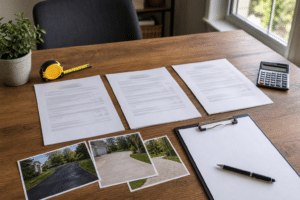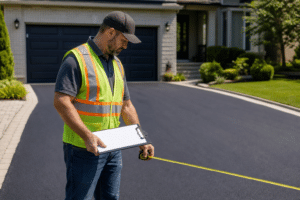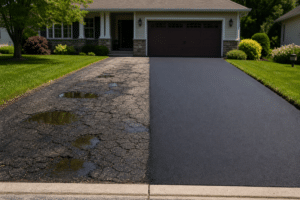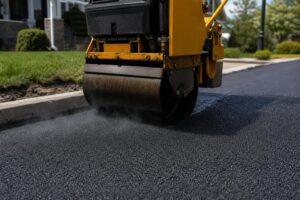
If you have three driveway paving estimates in front of you, the hard part is not finding the cheapest number. It is figuring out whether those numbers describe the same job. One contractor may include excavation, base repair, and cleanup while another leaves those items out. One may specify a thicker asphalt surface. Another may quote a bare-bones overlay that looks cheaper only because important work is missing.
This guide shows you how to compare bids by value, not just price. If you want a rough budget baseline before reviewing written proposals, the asphalt cost calculator can help frame the conversation.
Key Takeaways
A useful estimate should be detailed enough for you to compare scope, materials, prep work, exclusions, and payment terms side by side.
Quick answer
- Compare scope before comparing price.
- Check thickness, base prep, drainage, and cleanup line by line.
- Make sure exclusions are clearly listed.
- Ask why one bid is much higher or lower than the others.
- Do not treat verbal promises as part of the bid unless they are written down.
Why driveway paving bids vary so much
The same driveway can produce very different prices because contractors do not always assume the same conditions. Some inspect the site carefully, some include more prep. Others carry better insurance and overhead or underbid to win the work, then rely on change orders later.
Site conditions change the price
Slope, drainage, soft soil, access, existing pavement condition, and driveway length all affect the final number.
Material and thickness affect the price
A thicker asphalt mat or stronger base costs more, but it also changes durability. A quote that skips thickness details is hard to compare.
Prep work changes the price
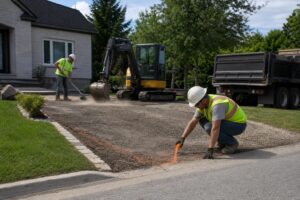
Excavation, hauling, grading, compaction, and cleanup are not always included. If they are not listed, ask before assuming they are part of the job.
HomeGuide notes that driveway estimates should identify excavation, base prep, installation, and cleanup so homeowners can compare offers more accurately: HomeGuide driveway cost guide.

What to compare line by line
1. Scope of work
Is the contractor removing the old driveway, paving over the existing surface, repairing the base, or starting from scratch? Those are different jobs.
2. Thickness and material
Ask what thickness is planned and whether the mix or depth changes in areas that carry more weight.
3. Base preparation
Look for excavation depth, stone base, compaction, and asphalt grading details.
4. Drainage adjustments
If water pools now, the estimate should explain how the contractor plans to improve the slope or runoff.
5. Cleanup and disposal
Old asphalt, soil, and debris should not become a surprise expense.
6. Warranty and payment terms
A strong estimate explains the warranty, deposit, payment schedule, and any conditions that can change the price.
Signs one quote is too low
The work was not really scoped
A low number may be based on assumptions instead of a careful site review.
The base work is thin or missing
If one estimate skips excavation or compaction, it may not belong in the same comparison as the others.
The contractor is counting on change orders
A low starting price can become a higher final bill if the contractor expects to add costs later.
The estimate feels rushed
If the contractor barely looked at the driveway, the bid may be too incomplete to trust. The FTC also advises consumers to get written details and compare offers carefully before hiring: FTC home improvement guidance.
Signs one quote may be the smarter choice
It includes more prep
A higher price may be worth it if it includes better excavation, drainage correction, or a stronger base.
The contractor explains the differences clearly
If the contractor can explain why the estimate is higher or lower, that is usually a good sign.
The scope is specific
Specificity is better than vague confidence. You should be able to understand what you are buying.
The process sounds repeatable
Good contractors can explain the order of operations without improvising every answer.
A simple side-by-side comparison method
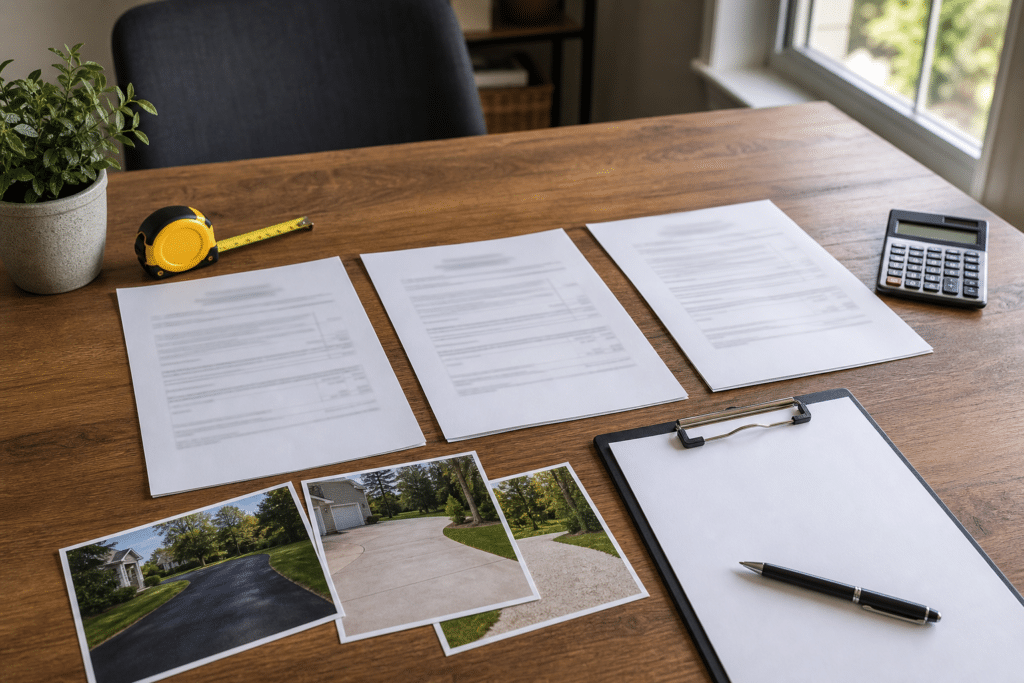
Create a quick checklist with columns for scope, base prep, thickness, drainage, cleanup, exclusions, warranty, and payment terms. Then mark each bid against the same categories. This keeps the decision grounded in facts instead of gut feeling.
If one estimate is clearly more complete, the comparison usually becomes easier. A quote that includes proper base work and cleanup may cost more up front, but it can be the better long-term value.
Questions to ask before you decide
- What exactly is included in this price?
- What work is excluded?
- How thick will the new asphalt be?
- How deep is the base going to be?
- What happens if you uncover a problem after excavation?
- Is cleanup and disposal included?
What to do after you compare
Once the scope is clear, call back the contractor with the strongest proposal and ask any final questions. If the estimates still feel too different, ask for a revised scope so the bids are built on the same assumptions.
It also helps to review the broader asphalt paving services, residential paving services, and estimate request process before choosing a contractor.
FAQs
Should I always get three bids?
Three is a good baseline. It gives you enough comparison without dragging the process out too long.
Is the cheapest quote ever okay?
Yes, but only if the scope matches the others and nothing important is missing.
What if one estimate is much higher than the rest?
Ask why. It may include more prep, better materials, or a more realistic plan.
Can I compare estimates over the phone?
Not reliably. Written estimates are better because you can compare the details item by item.
What if two bids look the same?
Then compare warranty terms, communication quality, recent work, and how clearly each contractor explains the scope.
Compare the real job, not the headline number
The best bid is not automatically the lowest bid. It is the one that clearly describes the work and gives you the best chance of a durable driveway. If you want help comparing paving estimates, contact Maisano Brothers Inc. or request an estimate.