
Key Takeaways
- Asphalt usually costs less up front than concrete, while concrete often costs more initially but may last longer.
- Asphalt typically lasts about 15 to 20 years with maintenance, while concrete can last 30 years or more with proper care.
- Asphalt is generally better suited to colder freeze-thaw climates because it is more flexible, while concrete is more rigid and more sensitive to movement and cracking.
- Asphalt needs more routine maintenance such as sealcoating and crack repair, but repairs are usually easier and less expensive than concrete repairs.
- Concrete offers more color, texture, and pattern options, making it a stronger choice for homeowners who want a more customized look.
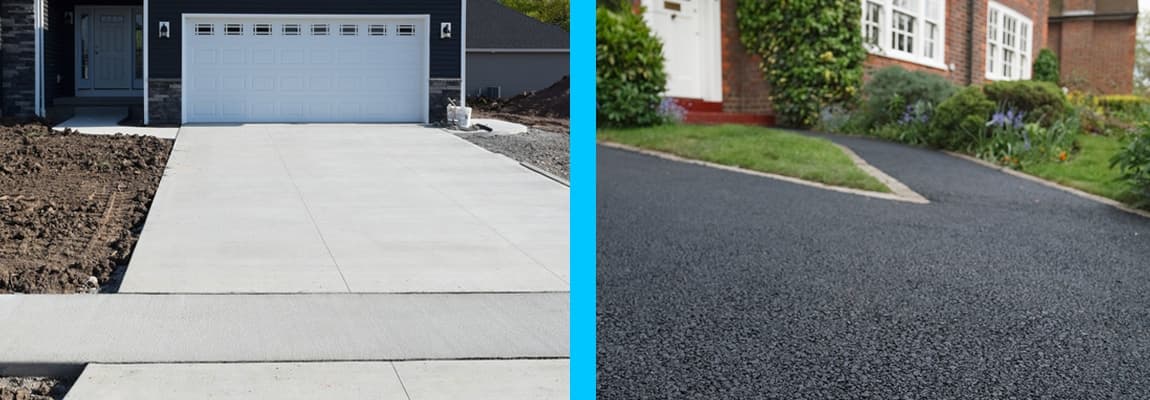
Choosing between an asphalt driveway and a concrete driveway is one of the biggest decisions homeowners make when planning a new installation. Both materials can create a durable, attractive surface, but they perform differently when it comes to cost, maintenance, appearance, climate resistance, and long-term repair needs.
If you are trying to decide between the two, the right answer usually comes down to your budget, your property, your local conditions, and how you plan to use the driveway.
What Is the Main Difference Between Asphalt and Concrete?
The biggest difference is how the material behaves over time. Asphalt is more flexible, which helps it handle freeze-thaw conditions and minor movement in the base. Concrete is more rigid, which can make it very durable in the right conditions but also more prone to cracking when movement occurs.
Asphalt is made with aggregates and asphalt binder, while concrete is made with cement, sand, stone, and water. Because of these differences, the two materials cure, age, and perform differently over time.
Cost Comparison: Asphalt vs Concrete
For many homeowners, budget is where the decision starts. In general, asphalt tends to have a lower upfront cost than concrete.
Understanding the true cost of an asphalt driveway helps put this into perspective. While asphalt is typically more affordable initially, long-term costs depend on maintenance, repairs, and lifespan.
Concrete usually costs more upfront but may last longer under the right conditions. The better value depends on how long you plan to stay in your home and how you maintain the surface.
Lifespan and Durability
Asphalt Driveway Lifespan
Asphalt driveways typically last 15–20 years with proper maintenance. Their flexibility makes them well-suited for areas with temperature fluctuations and seasonal movement.
Over time, asphalt can oxidize, fade, and develop cracks if not maintained properly, but it can often be repaired or resurfaced effectively.
Concrete Driveway Lifespan
Concrete driveway installations can last 30 years or more when properly installed and maintained. However, because concrete is rigid, it can crack when the base shifts or when exposed to harsh freeze-thaw conditions.
Repairs to concrete are often more visible and more difficult to blend compared to asphalt.
Maintenance Differences
Asphalt Maintenance
Asphalt requires more routine maintenance, including sealcoating and crack filling. The benefit is that repairs are typically easier, faster, and more affordable.
- Sealcoating every 2–3 years
- Crack filling to prevent water intrusion
- Patching and resurfacing options
Concrete Maintenance
Concrete requires less frequent maintenance but can be more difficult to repair when issues occur.
- Occasional sealing
- Joint maintenance
- More complex repairs if cracking occurs
Appearance and Design Options
Concrete offers more customization options, including stamped patterns, colors, and decorative finishes. This makes it a popular choice for homeowners focused on design and aesthetics.
Asphalt provides a clean, smooth, and uniform appearance that works well for most residential properties. It is more limited in design but offers a classic and practical look.
Climate Considerations
Your location plays a major role in choosing the right material. In regions like the Connecticut climate, asphalt often performs better due to its flexibility and ability to handle freeze-thaw cycles.
Concrete can still perform well but requires proper installation techniques to minimize cracking caused by temperature changes.
Installation Time and Usability
Asphalt can typically be installed faster and used sooner than concrete. In many cases, an asphalt driveway can be completed in one to two days.
Concrete requires a longer curing time, which means you may need to wait several days before using the surface.
Repair and Long-Term Flexibility
Asphalt offers more flexibility when it comes to repairs. It can often be patched, resurfaced, or restored without replacing the entire driveway.
Concrete repairs, while possible, are often more noticeable and may require more extensive work.
Which Is the Better Choice?
Choose Asphalt If You Want:
- Lower upfront cost
- Better performance in colder climates
- Faster installation
- Easier repairs and maintenance
Choose Concrete If You Want:
- Longer potential lifespan
- More decorative options
- Less frequent maintenance
Final Thoughts
Choosing between asphalt and concrete comes down to your priorities. Asphalt is often the best choice for homeowners looking for a cost-effective, durable solution that performs well in colder climates. Concrete is a strong option for those prioritizing aesthetics and long-term durability.
The right decision depends on your budget, maintenance expectations, and how your driveway will be used over time.
Whether you choose asphalt or concrete, Maisano Brothers Inc. delivers expert installation built for Connecticut weather. Get a free estimate and let us help you pick the right material for your residential driveway.
Frequently Asked Questions
Usually yes. Asphalt at roughly $3 to $7 per square foot and concrete at roughly $4 to $10 per square foot, though actual pricing varies by site and project scope.
Usually no. The current article says asphalt typically lasts 15 to 20 years with maintenance, while concrete can last 30 years or more with proper care.
Asphalt is often the better choice in cold climates because its flexibility helps it handle freeze-thaw movement better than concrete.
Asphalt typically needs more routine maintenance, including periodic sealcoating and crack repair, while concrete usually needs less frequent maintenance but can be harder to repair when problems develop.
Yes. Petroleum products can soften asphalt and contribute to surface deterioration over time. If you’re dealing with stubborn stains, explore the best commercial degreasers for removing oil stains from asphalt to properly clean and protect your surface.
Yes. Concrete offers more options for color, texture, pattern, and stamped finishes, while asphalt is more limited aesthetically.
Asphalt is typically installed faster and can often be used sooner, while concrete takes longer to cure and requires more patience before regular use.