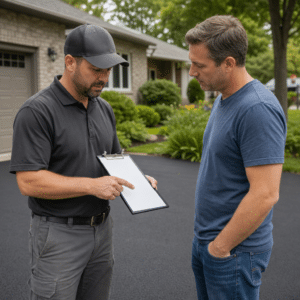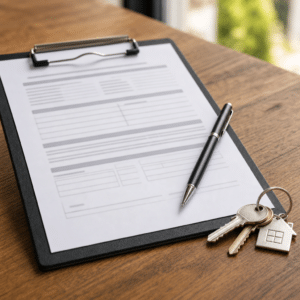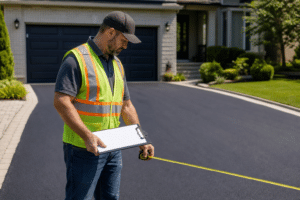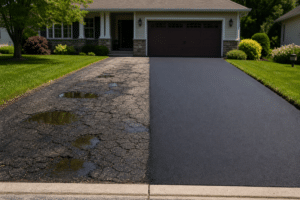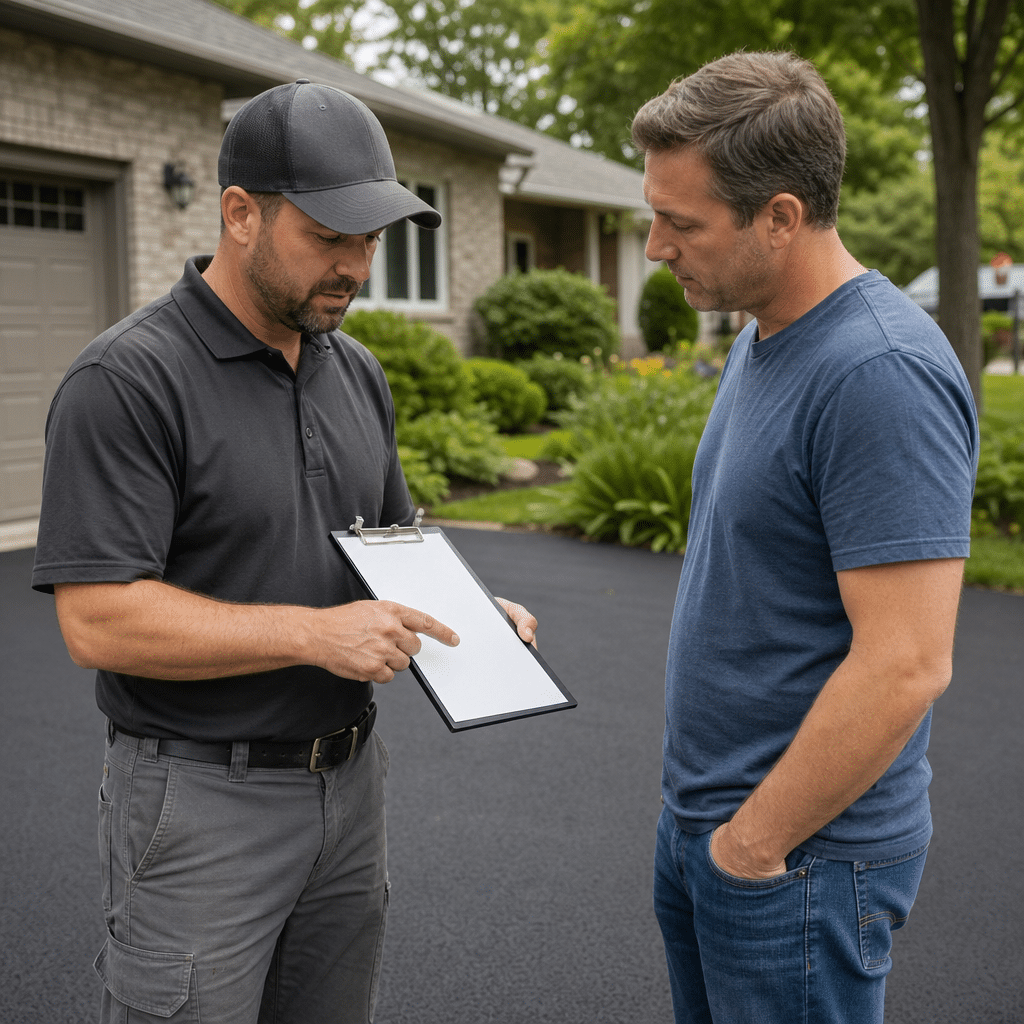
A driveway paving warranty is only useful if you understand it before the job starts. Some warranties protect against clear workmanship or material defects. Others sound impressive but exclude the problems homeowners care about most. Before you accept a proposal, ask what the warranty covers, what it excludes, how long it lasts, and how a claim is handled.
A good asphalt paving company should be able to explain warranty terms in plain language. If the explanation is hard to follow before you sign, it may be even harder to use later.
Key Takeaways
A good warranty should be clear about coverage, exclusions, claim process, maintenance requirements, and length of protection.
Quick answer
- Ask which defects the warranty covers.
- Confirm the length of coverage and the claim process.
- Read the exclusions before signing.
- Keep the warranty with your contract and invoice.
- Compare warranty wording, not just the number of years.
What a warranty should usually cover
A reasonable driveway paving warranty should address problems caused by defects in materials or workmanship. On new asphalt driveway installation, that may include premature breakup, unusual settling tied to installation issues, or early failure that clearly points back to the work.
The warranty should also explain what the contractor will do if a covered problem appears. Some warranties cover labor only. Some cover part of the repair. Some are limited to inspection. The wording matters.
1. Workmanship defects
If the driveway fails because it was installed incorrectly, that should be central to the warranty.
2. Material problems
If the supplied material is faulty, the warranty should explain whether and how that is covered.
3. Early cracking or breakup
Some companies offer limited protection against premature cracking or breakup. That does not mean every crack is covered, but the threshold should be clear.
ACI recommends that paving contracts specify warranty length and the types of failures covered: ACI contract guidance.
What is usually excluded
Most warranties do not cover normal wear, damage from snowplows, oil abuse, neglect, heavy vehicle abuse, or outside forces the contractor cannot control. If another trade damages the driveway or drainage is altered after installation, that is often outside the warranty.
Typical exclusions
- Heavy vehicle abuse
- Improper snow removal
- Neglect or poor maintenance
- Damage from third parties
- Standing water caused by unrelated site conditions
- Normal wear, aging, or surface oxidation
A warranty is not a free repair plan for every future issue. It is a limited safety net for defects. If the driveway needs routine maintenance later, sealcoating may become part of the long-term care plan.
Questions to ask before you sign
- How long does the warranty last?
- What failures are covered?
- What is excluded?
- Who decides whether a claim is valid?
- Does the warranty cover labor, materials, or both?
- What maintenance is required to keep it valid?
- How do I submit a claim?
How to compare warranties between contractors
Do not compare years alone. A shorter warranty with clear coverage can be better than a longer warranty full of loopholes. Ask whether the warranty is tied to maintenance requirements and whether those requirements are realistic for a homeowner.
The FTC’s home repair guidance is a good reminder to get important terms in writing and keep records: FTC home improvement guidance.
What a warranty claim process should look like
A useful warranty should tell you how to report a problem, who inspects it, what records you need, and how long a response typically takes. If the pavement fails early, you should not have to chase a mystery contact or guess whether photos are enough.
- Know who to contact first.
- Keep photos, invoices, and the contract together.
- Ask how long inspection usually takes.
- Ask whether repair, replacement, or another remedy applies.
How maintenance affects warranty value
Some warranties depend on proper maintenance. That may include avoiding harsh chemicals, limiting heavy equipment, keeping drainage clear, and following sealcoating recommendations. Those requirements are not unusual, but they should be written clearly.
If a contractor tells you to maintain the driveway a certain way, ask for that guidance in writing.
What a strong warranty looks like in practice
A good warranty protects the homeowner from obvious installation problems and shows that the contractor is willing to stand behind the work. It should be specific enough that you can explain it in normal language after reading it once.
A weak warranty often hides behind broad language. If it sounds generous until you read the exclusions, slow down and ask for clarification before signing.
Why warranty clarity matters later
A warranty is often forgotten when the driveway looks good, then becomes important months later if something starts to fail. Clear wording tells you whether the issue is a claim, a maintenance concern, or normal wear that falls outside coverage.
If you are comparing warranty language against the rest of the offer, review the asphalt paving services, FAQ, and written estimate together so the terms line up with the job itself.
FAQs
Is a one-year warranty enough?
It depends on the scope and wording. The key is what the warranty covers, not just the number of years.
Should warranties cover cracking?
They should at least explain whether cracking is included and under what conditions.
Does maintenance matter?
Yes. Poor maintenance can weaken or void warranty protection.
Should I keep a copy of the warranty?
Absolutely. Keep it with the contract, invoice, and project photos.
Can I ask for better warranty wording?
Yes. If a term is unclear, ask for it to be clarified before work begins.
Know what protection you are buying
A warranty should make you more confident, not more confused. If you need help reviewing a paving proposal or warranty, contact Maisano Brothers Inc. or request an estimate.