Key Takeaways
- Fresh oil stains are easiest to remove by absorbing them quickly with inexpensive materials like cat litter before the oil penetrates the asphalt surface.
- Dish soap works as an effective degreaser and, when combined with scrubbing, can break down oil residue trapped in the porous surface of asphalt pavement.
- Mild stains can often be removed with household solutions such as baking soda, which helps absorb oil while gently scrubbing the asphalt.
- Older or stubborn oil stains may require commercial degreasers designed to lift petroleum-based contaminants from asphalt driveways.
- Preventing oil stains through regular cleaning and periodic driveway sealcoating helps protect the asphalt binder and keeps the driveway looking clean and well maintained.
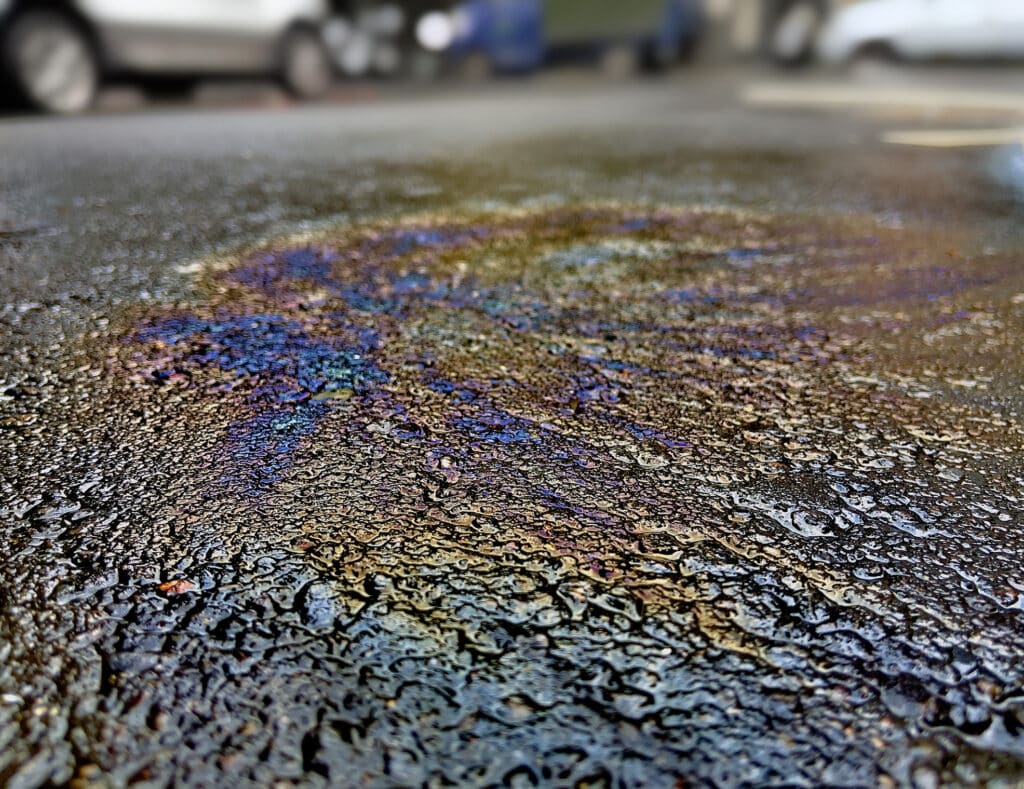
Oil stains on an asphalt driveway can be unsightly and challenging to remove, but with the right techniques, you can restore your driveway to its original condition (or close to it). Here’s a detailed guide on how to effectively tackle oil stains:
Absorbing Fresh Oil with Cat Litter
One of the simplest methods for dealing with fresh oil stains is to use cat litter. This highly absorbent material works best when the spill is still recent. Spread a thick layer of cat litter over the stain and allow it to sit for at least 24 hours. The litter will soak up the oil, making it easier to clean. After the time has passed, simply sweep up the litter and dispose of it. This method is especially useful for fresh spills, as it helps to prevent the oil from penetrating deeper into the asphalt.
No need to get expensive! The least expensive cat litter will help absorb the oil stains from your driveway.
Using Dish Soap to Break Down Oil
Dish soap is a powerful degreaser, making it an effective tool for removing oil stains. Apply a generous amount of dish soap directly onto the oil stain. Use a stiff-bristled brush to scrub the soap into the asphalt, breaking down the oil. After thoroughly scrubbing, rinse the area with warm water to wash away the soap and loosened oil. This method may need to be repeated for older or more stubborn stains, but it’s a simple and readily available solution that works well for many homeowners.
Any dish soap in addition to scrubbing should help you achieve the desired result.
Note: Durable materials like concrete and asphalt can handle rigorous scrubbing. Don’t hesitate to use some elbow grease and a sturdy brush to effectively tackle those tough oil stains.
Baking Soda for Mild Stains
Baking soda is another common household item that can be used to treat oil stains. Its mildly abrasive nature helps to break down oil while also absorbing it. To use this method, sprinkle baking soda over the stain, ensuring it covers the area completely. Scrub the baking soda into the stain with a brush and let it sit for about 30 minutes. Then, rinse the area thoroughly with water. Baking soda is particularly effective on smaller or less severe stains and offers a gentle cleaning option that’s safe for asphalt.
Applying Commercial Degreasers for Tough Stains
For more persistent oil stains that don’t respond well to household remedies, commercial degreasers are often the best option. These products are specifically designed to break down and lift tough oil stains from surfaces like asphalt. Follow the manufacturer’s instructions carefully, applying the degreaser to the stain and allowing it to sit for the recommended amount of time. Afterward, scrub the area with a stiff brush and rinse thoroughly with water. Commercial degreasers are powerful and effective, making them ideal for larger or older stains that have been set into the asphalt.
Power Washing for Deep Cleaning
When dealing with large, stubborn stains or when you want to clean a larger area of your driveway, power washing can be an excellent solution. A power washer uses high-pressure water to blast away dirt, grime, and oil from the surface of the asphalt. For the best results, pre-treat the stain with a degreaser before power washing. This combination helps to lift the oil from the asphalt, leaving your driveway clean and stain-free. Power washing is not only effective for oil stains but also for general maintenance, keeping your driveway looking its best.
Frequently Asked Questions
For a fresh spill, first absorb as much oil as possible with an absorbent such as clay cat litter, then clean the area with a degreasing cleaner and scrub as needed. Older stains are harder to fully remove because asphalt is porous, so the goal is often to reduce the stain significantly rather than restore a perfect like-new appearance.
Yes. Plain clay cat litter can absorb fresh oil sitting on the surface, which helps limit how much oil penetrates the pavement. It works best immediately after the spill, not as a guaranteed cure for older set-in stains.
Yes, dish soap can help break down surface oil because it acts as a degreaser. It is most effective on light or newer stains and may need repeated scrubbing. For deeper or older stains, a stronger asphalt-safe degreaser may work better.
Baking soda can help with small or mild stains because it provides light absorption and mild abrasion during scrubbing. It is a reasonable household option, but it is usually less effective on heavy petroleum stains than dedicated degreasers.
Use a commercial degreaser when the stain is older, darker, larger, or still visible after basic cleaning methods. Follow the product label carefully and make sure the cleaner is suitable for asphalt surfaces.
Power washing can help, especially after pretreating the stain with a degreaser, but it should be used carefully. Excessive pressure can damage surfaces, and pros note that the correct pressure matters because too much pressure can crack asphalt.
Yes. Petroleum products can soften or weaken asphalt because asphalt binder itself is a petroleum-based material, making it vulnerable to fuels and oils. That is why prompt cleanup matters.
The best prevention is to clean spills quickly, keep the driveway maintained, and use sealcoating as part of a broader maintenance plan. A sealed surface can make cleanup easier and offers added protection from vehicle fluids.
Yes, sealcoating can help resist penetration from oil and other vehicle fluids, though it does not make the driveway stain-proof. It is best viewed as a protective maintenance layer, not a permanent shield.
A common industry rule of thumb is about every 2 to 3 years, but the right interval depends on traffic, weather, and the condition of the driveway. Some sources suggest longer intervals in lighter-use situations, so this is better stated as a typical range rather than a hard rule.
Oil can leave a lasting dark mark on asphalt, especially if it sits too long, but quick cleanup and the right degreasing method can often reduce the stain and help protect the pavement from further damage.
Preventing Future Stains
While these methods can effectively remove existing oil stains, prevention is key to maintaining the appearance of your driveway. Here are a few tips to help prevent future oil stains:
- Prompt Cleanup: Address any oil spills immediately to prevent the oil from seeping into the asphalt.
- Regular Maintenance: Keep your driveway clean by regularly washing it and addressing minor stains before they become more significant problems.
- Sealcoating: Consider sealcoating your driveway every few years. Sealcoating creates a protective barrier that helps prevent oil and other substances from penetrating the asphalt, making future stains easier to clean.
By using these methods and maintaining your driveway, you can keep it looking clean and well-maintained for years to come.