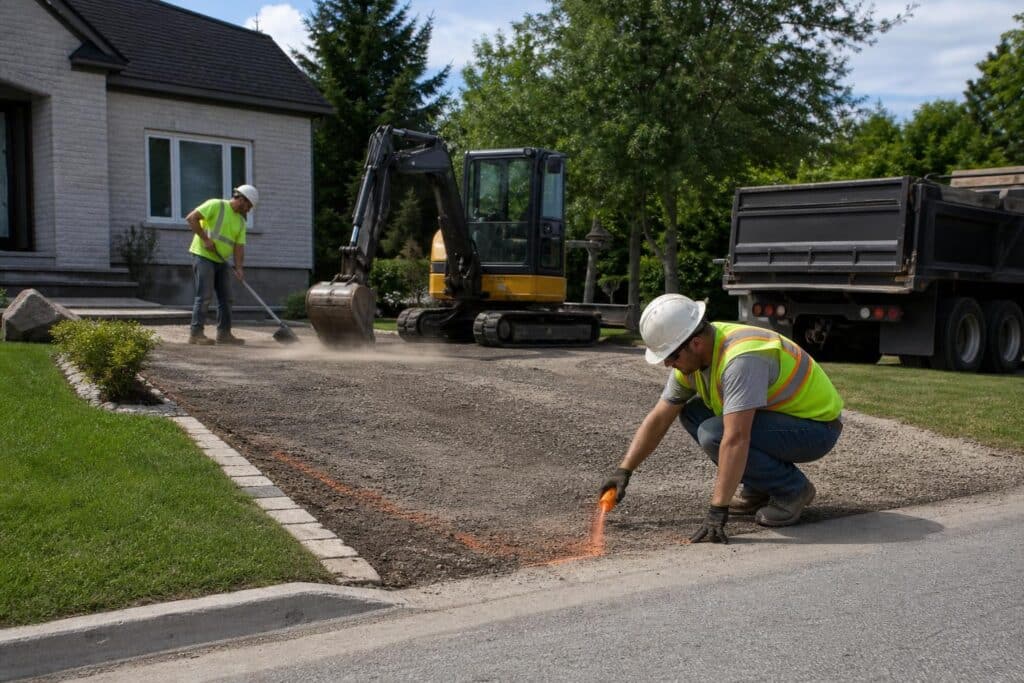
If you’re planning a new driveway, resurfacing an older surface, or paving a parking area, the work starts before the asphalt truck arrives. In this guide, you’ll learn the seven prep steps that make a paving job go smoother: clearing access, confirming scope, handling drainage, marking utilities, protecting nearby surfaces, coordinating timing, and checking the site one last time before work begins.
Good prep does more than save time. It helps the crew set the right elevations, avoid conflicts with buried or fragile fixtures, and finish a cleaner, more durable surface.
Why prep matters before the first load arrives
Asphalt paving is a construction project, not just a material drop. The better the site is prepared, the easier it is for the contractor to grade the surface correctly, complete any needed base repair, and place a smooth overlay when that is the right solution.
Preparation also helps reduce delays, vehicle conflicts, utility problems, cleanup issues, and confusion about what is included in the job. A few hours of planning can save a lot of backtracking later.
1. Clear the work area
Remove anything that could block equipment or slow the crew down.
That usually includes:
- cars and trucks
- basketball hoops
- planters
- patio furniture
- trailers
- storage items
- trash cans
If the crew cannot reach the paving area cleanly, the project can stall before it starts. Clearing the site also gives the contractor room to work edges, transitions, and corners without damage.
2. Confirm the scope before paving day
The most common project problems start with assumptions. Before the crew arrives, make sure everyone agrees on what is being done and what is not.
Ask:
- Is this a new install, an overlay, or a repair?
- Are base repairs included?
- Will old material be removed?
- Is cleanup included?
- Who handles striping or markings on a commercial site?
This conversation matters because the right prep depends on the project type. A simple residential driveway needs a different setup than a commercial lot with traffic control, multiple users, or phased work.
3. Pay attention to grading and drainage
Water is one of asphalt’s biggest enemies, so the site needs to shed it correctly. When the surface holds water, the pavement wears faster and weak spots show up sooner.
Walk the property and point out:
- low spots
- soft spots
- areas that already collect water
- edge breakdown
- runoff paths
- places where a slope feels wrong
If you’re dealing with a problem area, ask whether grading or additional base repair should be included before paving. Even a great asphalt surface will struggle if the water has nowhere to go.
4. Mark utilities and protect fixtures
If the work involves digging, edge work, or any kind of deeper prep, utility markings matter.
Before paving day:
- call 811 if digging is part of the job
- identify sprinkler heads, drain covers, or landscape lighting
- point out buried service lines if you know their location
- mark anything fragile or hidden near the work zone
The official 811 Before You Dig guidance exists for a reason: buried lines are easy to miss and expensive to hit. If the site also has drains, lights, or decorative edges, flag those too so the crew can protect them.
5. Make access and staging easy
The crew needs a clear path for trucks, rollers, and handwork.
Check for:
- locked gates
- low branches
- narrow entrances
- parked vehicles nearby
- obstacles along the route in and out
- areas where material or equipment can be staged
If access is tight, tell the contractor ahead of time so they can plan for truck position, equipment layout, and turning room. Small access problems can slow a job down fast.
6. Coordinate people, timing, and weather
If the property is shared or busy, timing matters almost as much as the paving itself.
For example:
- tell tenants when vehicles must be moved
- notify employees or customers about closure windows
- keep deliveries away from paving time
- make sure someone is available onsite to answer questions
- watch the forecast and build in flexibility for weather delays
The best paving crews can work efficiently, but they still need the site to be ready. Coordination keeps the job from turning into a stop-and-start mess.
7. Protect landscaping and nearby surfaces
If the paving area sits near grass, beds, fencing, or finished concrete, protect those areas before work starts.
Good paving crews are careful, but it helps to point out:
- fresh landscaping
- fragile edging
- sprinkler heads
- decorative stone
- garage aprons
- walkways
A quick walk-through before work starts is usually enough to catch trouble spots. For a public utility-focused reference, 811 Before You Dig explains why buried-line marking matters before excavation starts.
Residential vs. commercial prep
Residential prep is usually simpler: clear the driveway, move vehicles, and give the crew access. If this is a home project, residential paving is a good place to see how that work fits into the bigger project.
Commercial prep usually needs more coordination:
- traffic control
- tenant notices
- staging areas
- reopening plans
- after-hours scheduling
- signage or striping coordination
For larger sites, commercial paving is the better fit.
The bigger the site, the more important the prep plan becomes.
Common mistakes to avoid
- leaving vehicles in the work area
- assuming the contractor knows where everything is buried
- forgetting to plan for rain or weather delays
- not telling occupants when the site will be unavailable
- failing to ask what prep work is included in the estimate
- skipping a final walk-through before the crew starts
FAQs
How far in advance should I prepare my property?
For most residential projects, a day or two is enough. Larger commercial jobs may need more lead time because of traffic control, tenant coordination, or phased access.
Do I need to remove everything from the driveway or parking area?
Yes. Anything inside the work zone should be moved before the crew arrives so equipment, material, and handwork can move without interruption.
Should I warn my neighbors?
If access, noise, or temporary parking changes may affect them, yes. A quick heads-up can prevent complaints and confusion, especially in tight neighborhoods or shared lots.
What if I find a drainage issue before paving?
Bring it up before the job starts. Drainage problems are much easier to correct during prep than after asphalt is already in place, and the contractor can decide whether grading or repair is needed.
Does prep differ for resurfacing and new paving?
Yes. New paving usually needs more site preparation than a simple overlay because the crew may need to adjust elevations, fix the base, or correct drainage before the new surface goes down.
What should I ask the contractor before paving day?
Ask what prep work they expect from you, what they will handle, and whether any site issues could change the scope. That short conversation often prevents the biggest surprises.
Sources
- 811 Before You Dig: Before You Dig
Are you ready for paving day?
If you want a paving project to go smoothly, the prep matters. Maisano Brothers Inc. can review the site, confirm the scope, and help you plan the work the right way. If you’re ready to move forward, contact us and we’ll take it from there.